Sequence-of-Returns Risk
Stryg for at vise menuen
Two investors each retire with $1,000,000. Both experience the same average annual return of 7% over 20 years. Both withdraw $60,000 per year. One runs out of money at year 17. The other still has $1,200,000 at year 20.
Same average return. Same withdrawals. Completely different outcomes.
This is sequence-of-returns risk – the risk that the timing of investment losses, not just their magnitude, determines whether a retirement portfolio survives. It matters only when you are withdrawing from a portfolio. During the accumulation phase, sequence of returns is irrelevant – bad years early actually become buying opportunities.
The numbers average out the same way. The sequence doesn't.
Why Withdrawals Make It Lethal
The mechanism is straightforward. When you withdraw from a portfolio that has just dropped 30%, you are selling more shares to raise the same dollar amount. Those shares are gone – they can't participate in the recovery. The more you withdraw during a down period, the fewer shares remain to benefit when prices rise again.
This creates a permanent drag that average return calculations completely hide:
- During accumulation: bad early years are irrelevant – you keep buying at lower prices;
- During withdrawal: bad early years are catastrophic – you sell at lower prices and reduce the base that recovers;
- The danger zone: roughly the five years before and five years after retirement – when the portfolio is largest and withdrawals begin.

The risk that the order in which investment returns occur significantly affects the long-term outcome of a portfolio during the withdrawal phase. Two portfolios with identical average returns can produce dramatically different final balances depending on whether losses occur early or late in retirement.

Sequence-of-returns risk is why the 4% rule has caveats. The rule was derived from historical data, but it implicitly assumes a range of sequence outcomes. Retiring into a major bear market – as someone who retired in 2000 or 2008 discovered – tests the 4% rule far harder than retiring at the start of a bull market does.
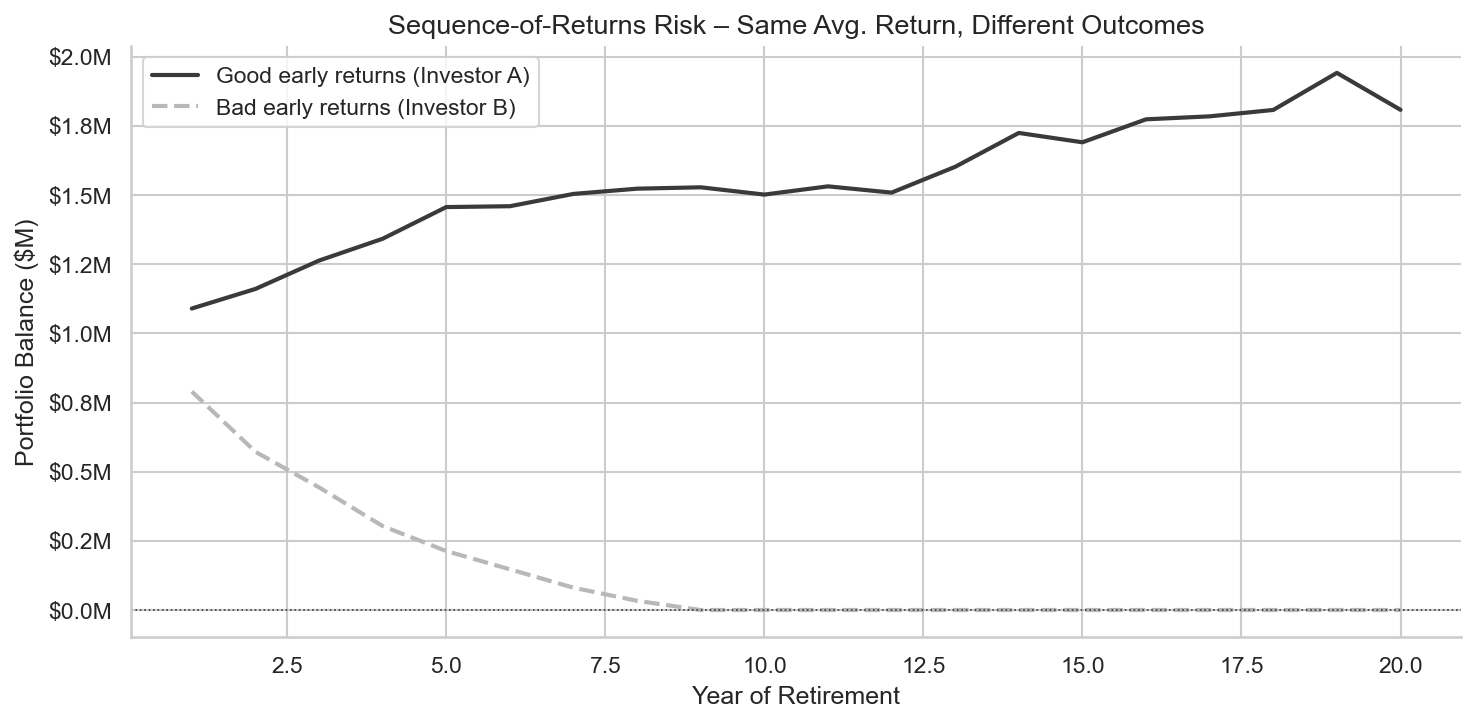
1. Two investors retire with identical portfolios and withdraw the same amount annually. Investor A experiences strong returns in the first five years. Investor B experiences large losses in the first five years. Both achieve the same average return over 20 years. What is the most likely outcome?
2. A 35-year-old investor experiences three consecutive years of −20% returns early in their career. They continue contributing throughout. How does this compare to a retiree experiencing the same three-year sequence?
Tak for dine kommentarer!
Spørg AI

Spørg AI

Spørg om hvad som helst eller prøv et af de foreslåede spørgsmål for at starte vores chat
