Many-to-One and One-to-Many
Swipe um das Menü anzuzeigen
Many-to-One and One-to-Many are essentially inverse perspectives of the same relational concept, especially in the context of databases.
Many-to-One
From the perspective of the "many" side, a record can have a relationship to one record in another table. This is essentially a straightforward foreign key relationship. In a many-to-one connection, numerous records from one table can correspond to a single record in another table. It's the most common type of relationship in relational databases.
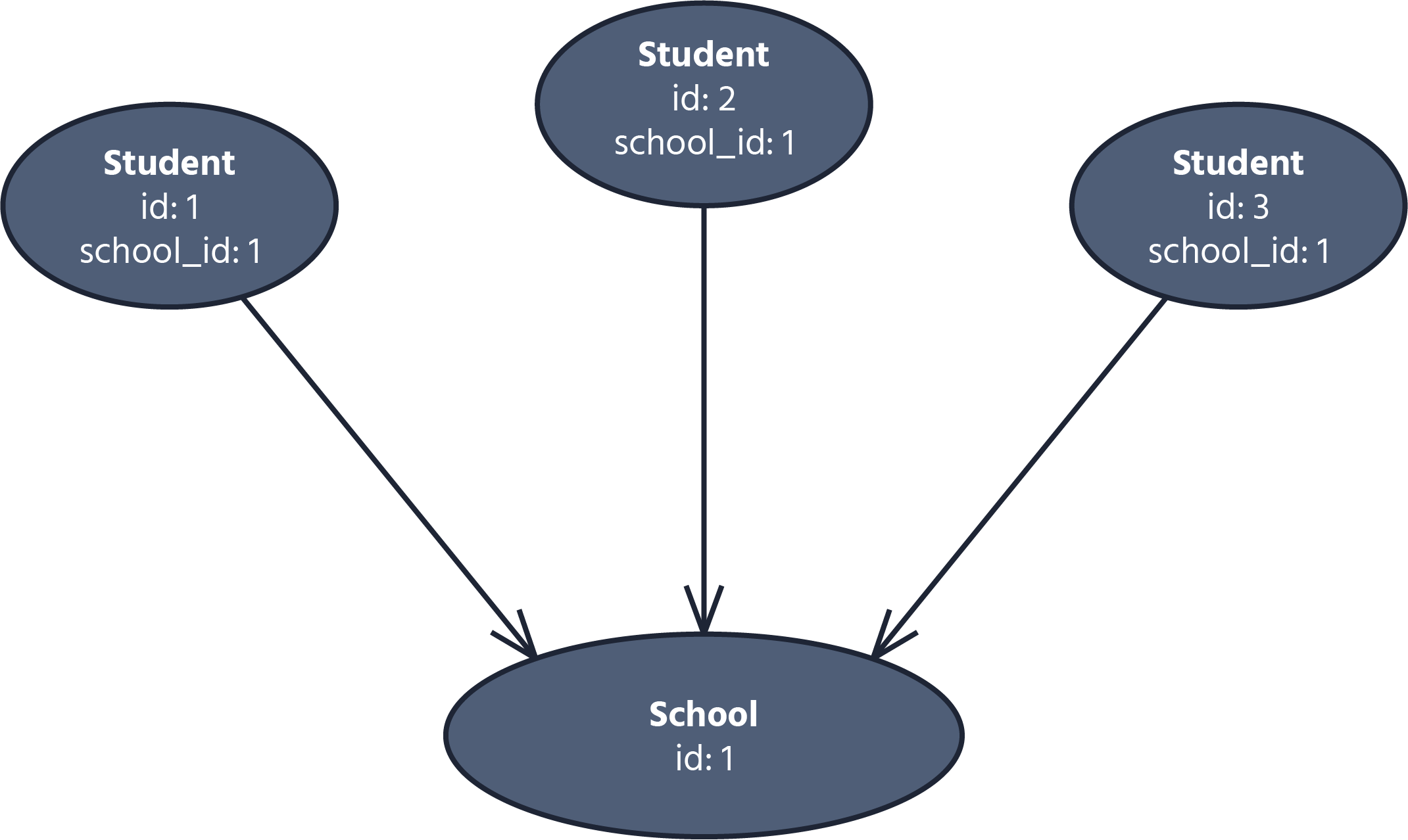
For instance, every Student has a reference to a School, indicated by the school_id.
One-to-Many
This is a relationship where a single record from one table can link to multiple records in another table. This particular table has a list of primary keys serving as a singular foreign key. Such a relationship is uncommon in relational databases and doesn't establish robust dependencies. Therefore, it's generally considered a poor practice in the context of relational databases, though it may find use in non-relational databases.
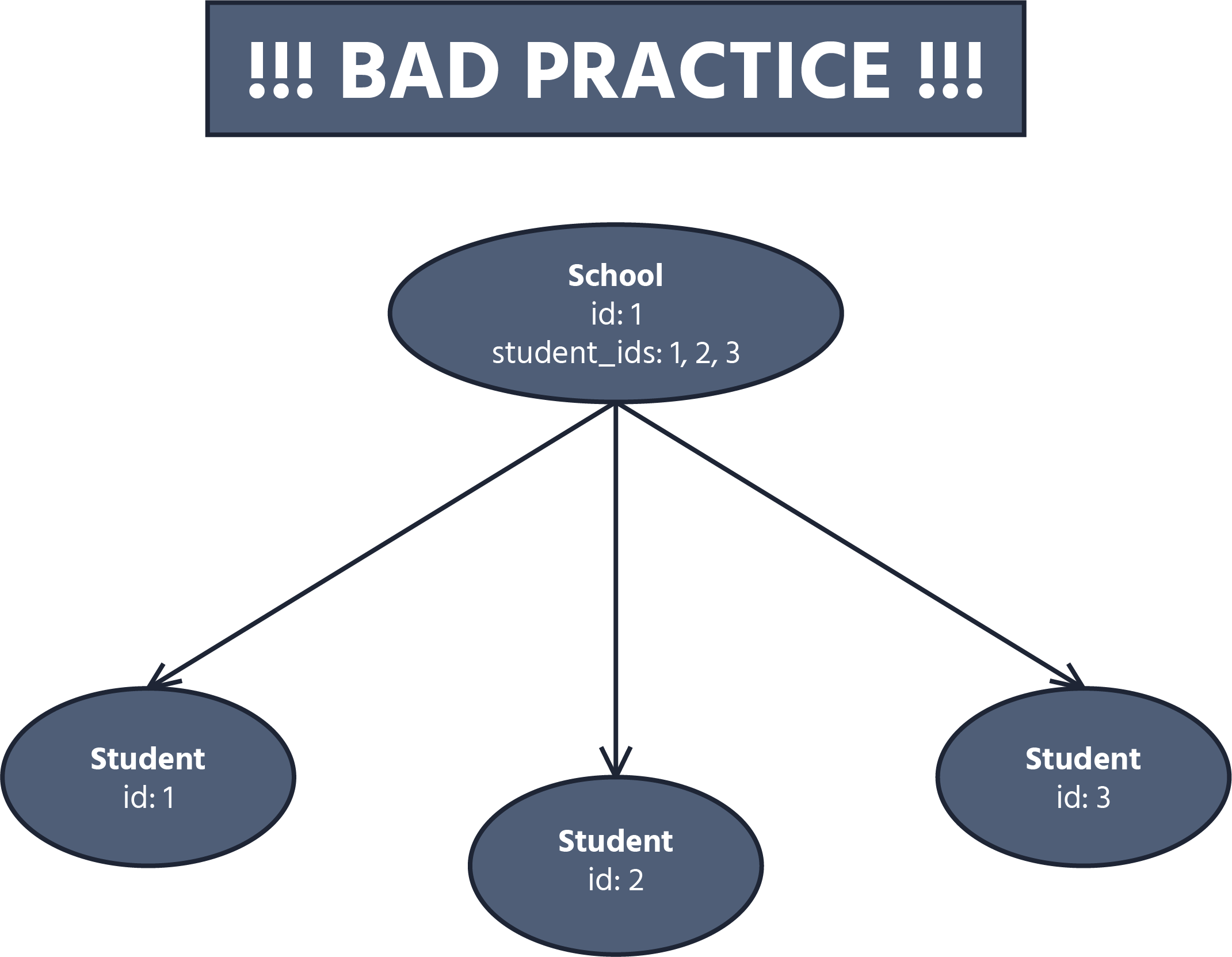
1. Choose a Many-to-One relationship.
2. Choose a One-to-Many relationship.
Danke für Ihr Feedback!
Fragen Sie AI

Fragen Sie AI

Fragen Sie alles oder probieren Sie eine der vorgeschlagenen Fragen, um unser Gespräch zu beginnen
