Creating a Second Screen
Swipe um das Menü anzuzeigen
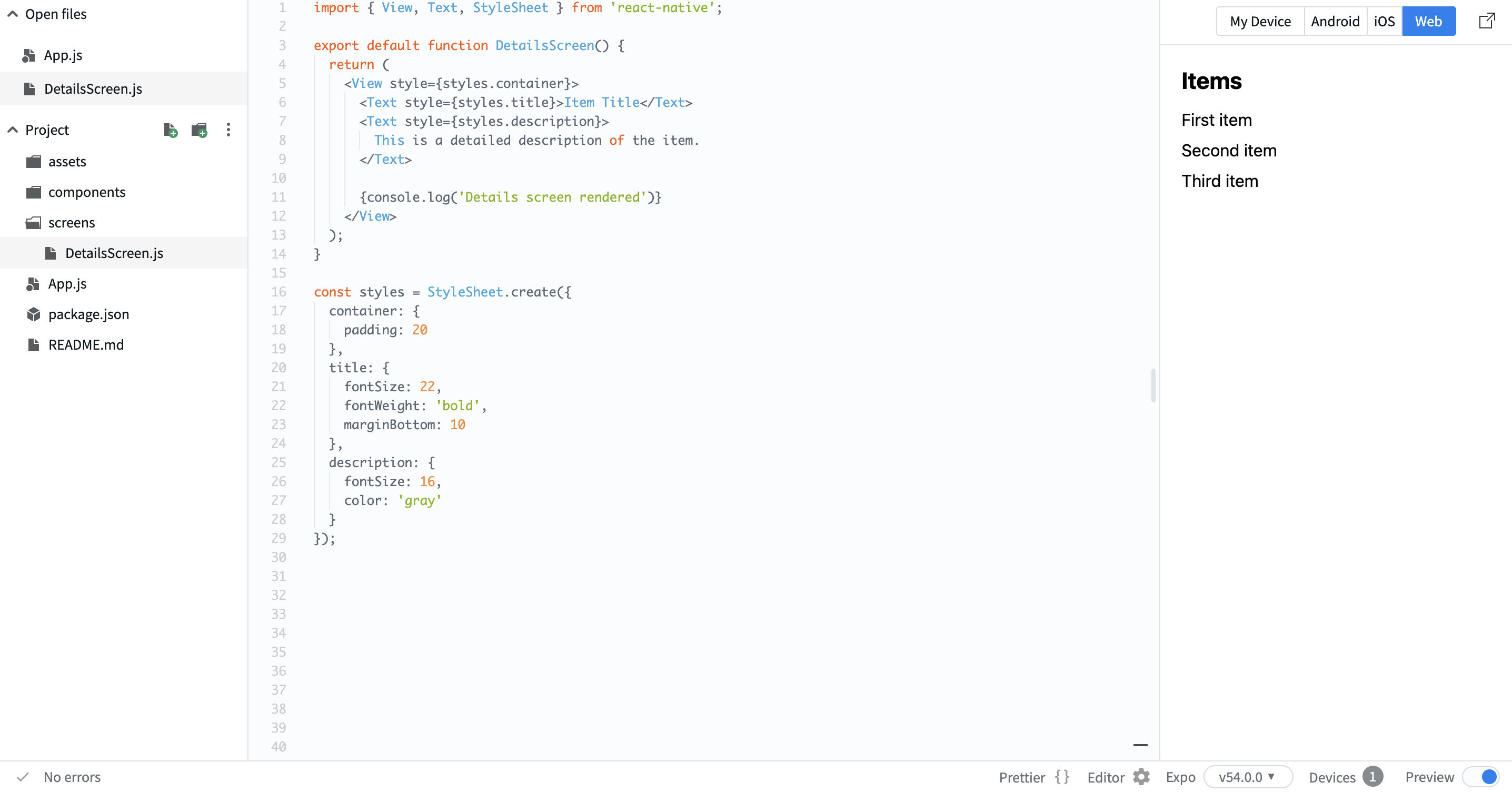
Now we want to add another screen. In real apps, users don't stay on one screen. They open details, profiles, or full content views. You will create a details screen. For now, it will be static. The goal is to prepare the layout.
Example:
// screens/DetailsScreen.js
import { View, Text, StyleSheet } from 'react-native';

export default function DetailsScreen() {
  return (
    <View style={styles.container}>
      <Text style={styles.title}>Item Title</Text>
      <Text style={styles.description}>
        This is a detailed description of the item.
      </Text>

      {console.log('Details screen rendered')}
    </View>
  );
}

const styles = StyleSheet.create({
  container: {
    padding: 20
  },
  title: {
    fontSize: 22,
    fontWeight: 'bold',
    marginBottom: 10
  },
  description: {
    fontSize: 16,
    color: 'gray'
  }
});
Here:
- You created a second screen;
- You added a title and description;
- You prepared the structure for real data.
At this stage, there is no connection between screens yet. You are just preparing the UI. In the next step, you will connect screens together.
Danke für Ihr Feedback!
Fragen Sie AI

Fragen Sie AI

Fragen Sie alles oder probieren Sie eine der vorgeschlagenen Fragen, um unser Gespräch zu beginnen
Creating a Second Screen
Now we want to add another screen. In real apps, users don't stay on one screen. They open details, profiles, or full content views. You will create a details screen. For now, it will be static. The goal is to prepare the layout.
Example:
// screens/DetailsScreen.js
import { View, Text, StyleSheet } from 'react-native';

export default function DetailsScreen() {
  return (
    <View style={styles.container}>
      <Text style={styles.title}>Item Title</Text>
      <Text style={styles.description}>
        This is a detailed description of the item.
      </Text>

      {console.log('Details screen rendered')}
    </View>
  );
}

const styles = StyleSheet.create({
  container: {
    padding: 20
  },
  title: {
    fontSize: 22,
    fontWeight: 'bold',
    marginBottom: 10
  },
  description: {
    fontSize: 16,
    color: 'gray'
  }
});
Here:
- You created a second screen;
- You added a title and description;
- You prepared the structure for real data.
At this stage, there is no connection between screens yet. You are just preparing the UI. In the next step, you will connect screens together.
Danke für Ihr Feedback!
