Identity-Based Financial Habits
Desliza para mostrar el menú
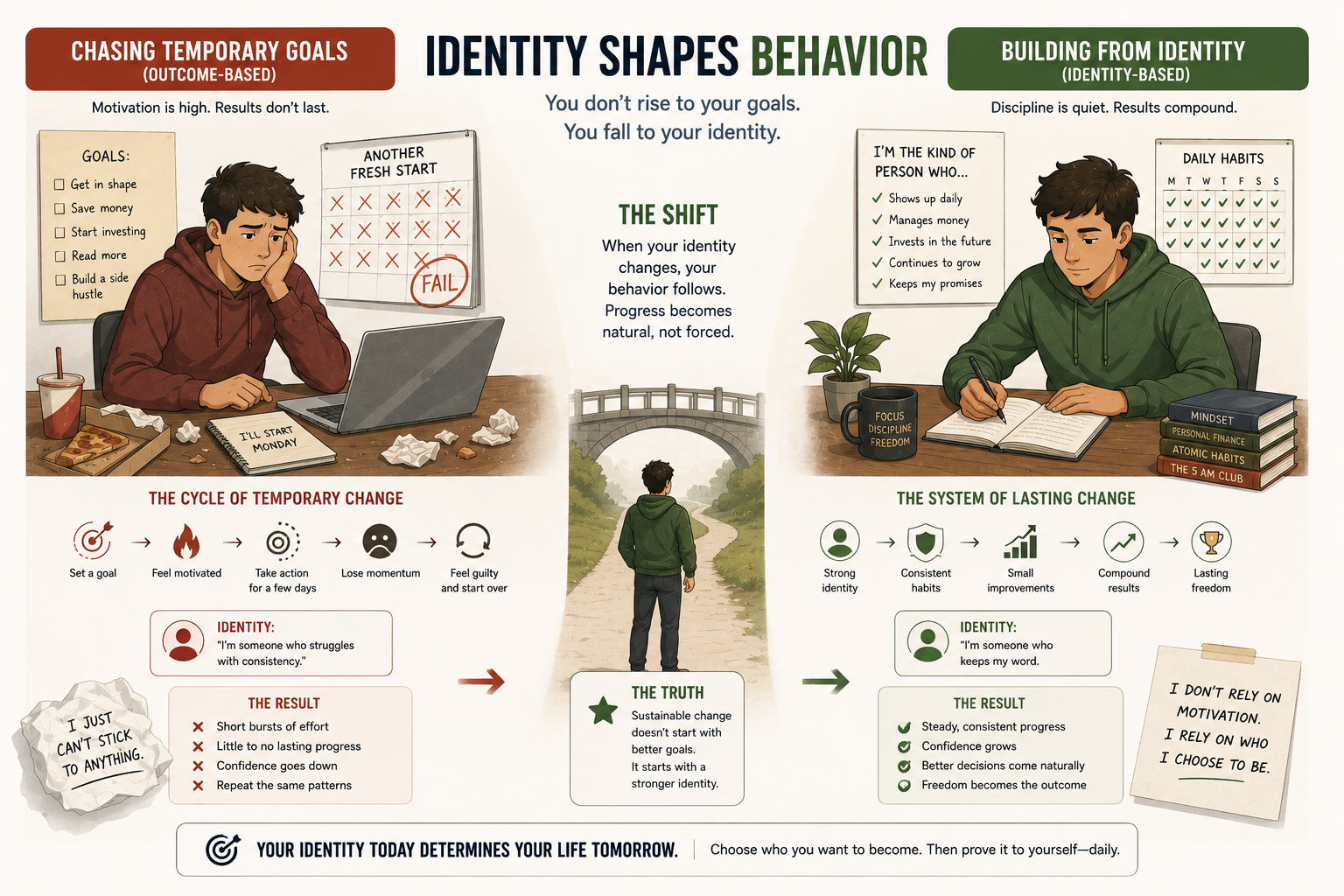
Most financial advice focuses on goals, budgets, numbers, discipline. But long-term behavior is often shaped more by identity than by goals. People naturally repeat behaviors that feel connected to who they believe they are.
A Very Common Example
Imagine two people trying to save money. The first person says:
"I am trying to save money."
The second person says:
"I am becoming someone who manages money responsibly."
That difference seems small. But emotionally, it changes everything. The first person focuses on a temporary action. The second person starts changing self-image.
And identity-based behavior usually lasts much longer.
Why Goals Often Fail
Goals create short-term motivation. But after emotional excitement disappears, people often return to old behavior patterns. That happens because goals focus on outcomes while identity focuses on becoming a different type of person.
Someone who sees themselves as financially responsible, disciplined, stable is more likely to protect behaviors connected to that identity.
Small Behaviors Reinforce Identity
Identity is built through repeated small actions.
For example:
- Tracking expenses consistently;
- Avoiding emotional purchases;
- Investing automatically;
- Saving before spending.
Each action quietly sends a message to the brain:
"This is the type of person I am becoming."
That emotional reinforcement matters more than most people realize.
The Important Shift
Instead of asking:
"How do I force myself to save money?"
A more powerful question is:
"What would a financially stable person consistently do in this situation?"
That question changes focus from temporary motivation to long-term identity.
Real Change Usually Starts Internally
Many people try changing financial behavior without changing how they see themselves. That creates constant internal conflict. Lasting financial habits become easier when behavior starts matching identity.
The goal is not pretending to be perfect. The goal is gradually becoming someone who:
- Thinks long-term;
- Handles money calmly;
- Protects financial stability consistently.

Think about your current financial identity.
Ask yourself:
- How do you usually describe yourself financially?
- Which habits reinforce that identity?
- Which behaviors contradict the person you want to become?
- What is one small action that would reinforce a stronger financial identity today?
¡Gracias por tus comentarios!
Pregunte a AI

Pregunte a AI

Pregunte lo que quiera o pruebe una de las preguntas sugeridas para comenzar nuestra charla
