Choosing Your Communication Methods and Tools
Desliza para mostrar el menú
What Is a Communication Method?
A communication method is how you share a message. It's the method you use to send information to others. In project management, there are three core communication methods: interactive, push, and pull.
So how do you choose between the interactive, push, and pull method? Move through this interaction to learn how we define these terms and when each technique works best.
Interactive Communication

- Collaborating with a team and getting immediate feedback;
- Conveying urgent information;
- Communicating sensitive details that are prone to misinterpretation.
Push Communication
- Giving your receiver extra time to think about their response;
- Documenting what's been said or agreed to during a prior conversation;
- Clarifying information in writing to avoid misunderstandings.
Pull Communication
- Sharing communication that’s for informational purposes only;
- Communicating with a large audience when no action is required;
- Giving others access to information when it’s most convenient for them.
Choosing the Most Appropriate Tool for Your Method
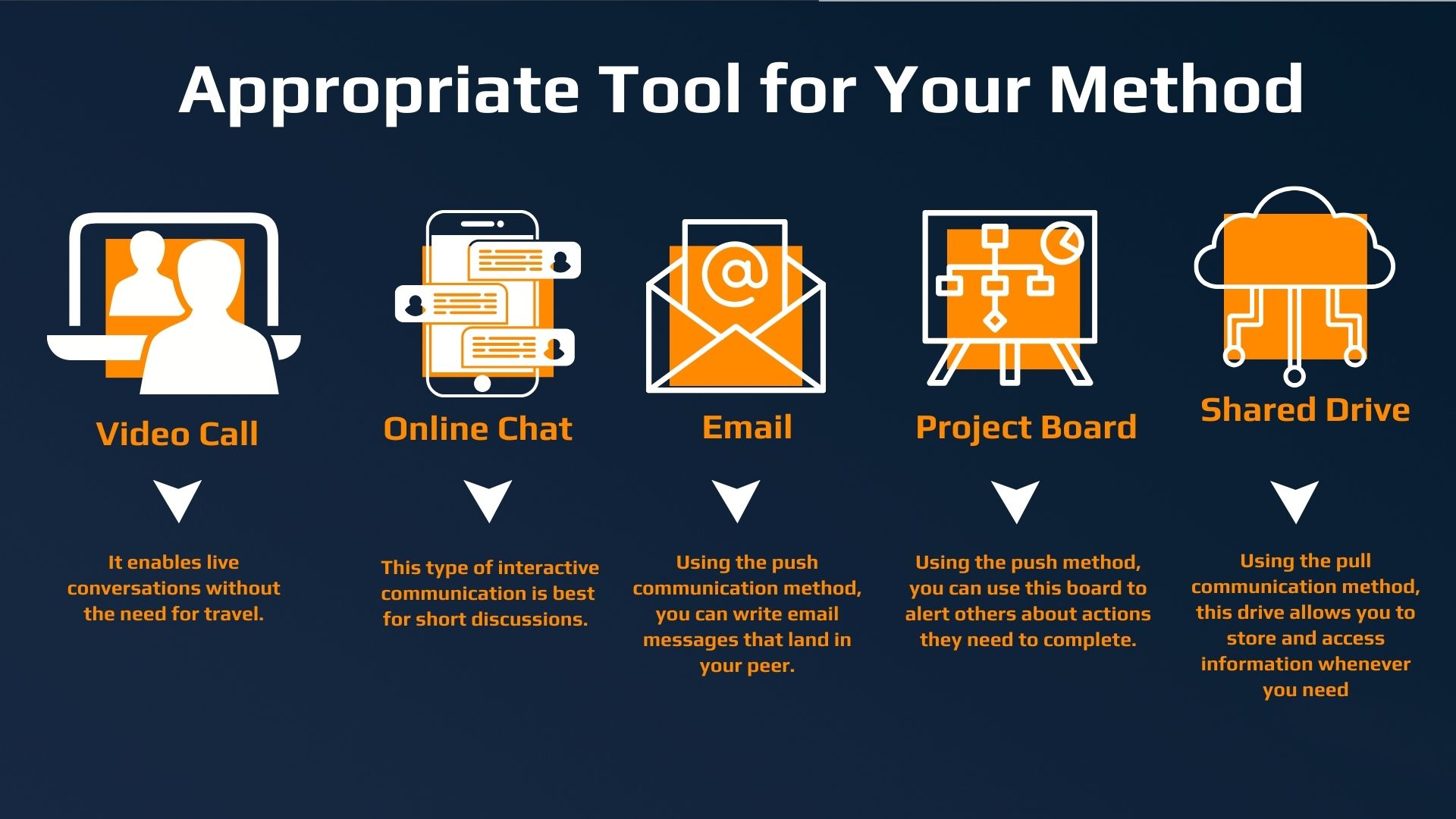
When choosing your communication tool, you'll want to pick one that's tailored to your method. Here are five of the most common communication tools used by project managers:
¿Todo estuvo claro?
¡Gracias por tus comentarios!
Sección 3. Capítulo 3
Pregunte a AI

Pregunte a AI

Pregunte lo que quiera o pruebe una de las preguntas sugeridas para comenzar nuestra charla
Sección 3. Capítulo 3
