Money Shame and Silent Financial Stress
Pyyhkäise näyttääksesi valikon
Many people openly discuss:
- Work stress;
- Relationship problems;
- Physical health.
But money stress is different. People often hide it completely. They continue acting normal while privately dealing with debt, anxiety, avoidance, financial pressure, fear about the future. That emotional silence creates even more stress over time.
A Very Common Situation
Imagine this situation.
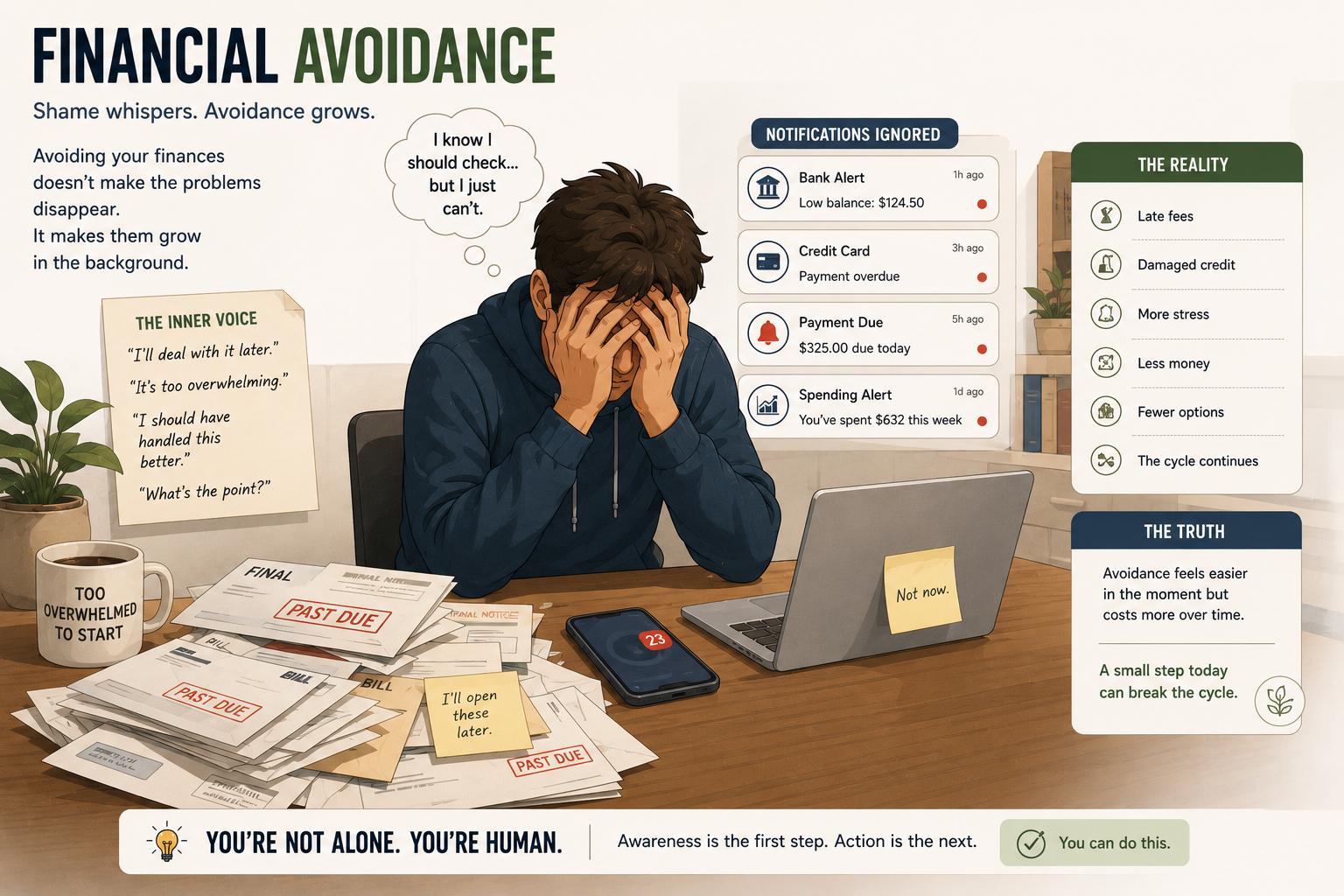
Someone knows their financial situation is becoming unhealthy. Credit card balances are growing. Savings are disappearing. Bills feel emotionally exhausting to look at. But instead of facing the situation directly, they begin avoiding it.
They:
- Stop checking banking apps;
- Ignore account balances;
- Delay opening financial emails;
- Postpone difficult decisions.
Not because they are irresponsible. Because the situation now creates shame. And shame often leads to avoidance.
Why Shame Makes Problems Worse
Shame creates emotional pressure that pushes people away from the very actions that could improve the situation.
Someone feeling ashamed about money may avoid:
- Budgeting;
- Financial conversations;
- Asking for help;
- Checking balances;
- Making plans.
That avoidance creates temporary emotional relief. But financially, the problems usually continue growing quietly in the background.
Financial Problems Often Become Identity Problems
One dangerous part of money shame is that people stop seeing financial problems as temporary situations. Instead, they start attaching the problem to their identity. They begin thinking:
- "I am bad with money."
- "I always fail financially."
- "Everyone else handles this better than me."
That mindset creates hopelessness instead of improvement.
One Important Shift
Financial mistakes do not define your value as a person. A bad financial period is a situation — not an identity. That distinction matters because people improve faster when they approach money problems with awareness instead of shame.

Think about a financial situation you avoided in the past.
Ask yourself:
- What emotion made you avoid it?
- Did avoidance improve the situation?
- What small action could you take earlier next time?
- How would the situation feel if you treated it as a problem to solve instead of a personal failure?
Kiitos palautteestasi!
Kysy tekoälyä

Kysy tekoälyä

Kysy mitä tahansa tai kokeile jotakin ehdotetuista kysymyksistä aloittaaksesi keskustelumme
