Section 1. Chapitre 7

single
February vs July Average Temperatures
Glissez pour afficher le menu
Well, as you remember, there are no 100% correct answers to clustering problems. For the last task you solved it seems like 5 clusters might be a good option.
Let's visualize the results of clustering into 5 groups by building the scatter plot for average February vs July temperatures, which are one of the coldest and hottest months respectively.
Tâche
Glissez pour commencer à coder
- Create a
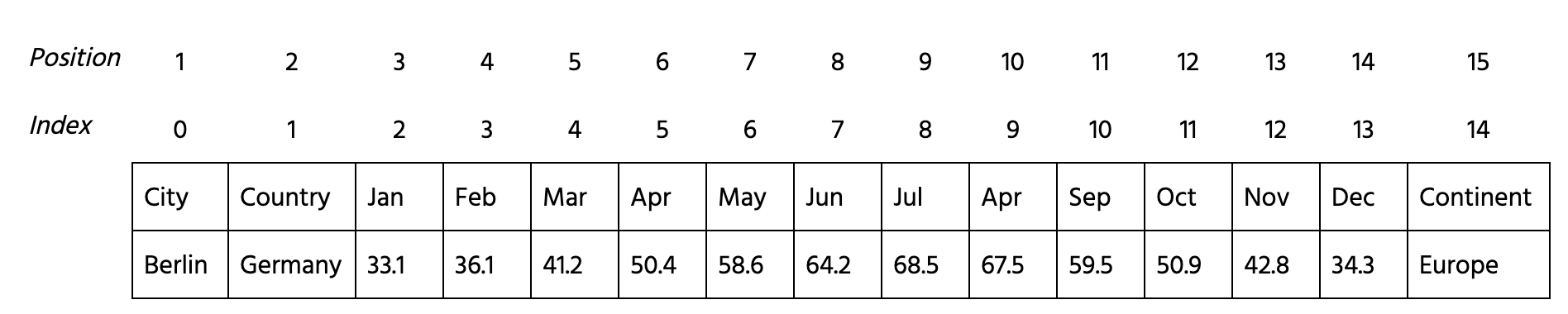
KMeansmodel namedmodelwith 5 clusters. - Fit the numerical columns of
data(2 - 13 indices) tomodel. - Add the
'prediction'column to thedataDataFrame with predicted bymodellabels. - Build a scatter plot of average
'Feb'vs'Jul'temperatures, having each point colored with respect to the'prediction'column of thedataDataFrame.
Solution
 Passez à un bureau pour une pratique réelleContinuez d'où vous êtes en utilisant l'une des options ci-dessous
Tout était clair ?
Merci pour vos commentaires !
Section 1. Chapitre 7
single
Demandez à l'IA

Demandez à l'IA

Posez n'importe quelle question ou essayez l'une des questions suggérées pour commencer notre discussion
