The "I'll Start When…" Trap
Glissez pour afficher le menu
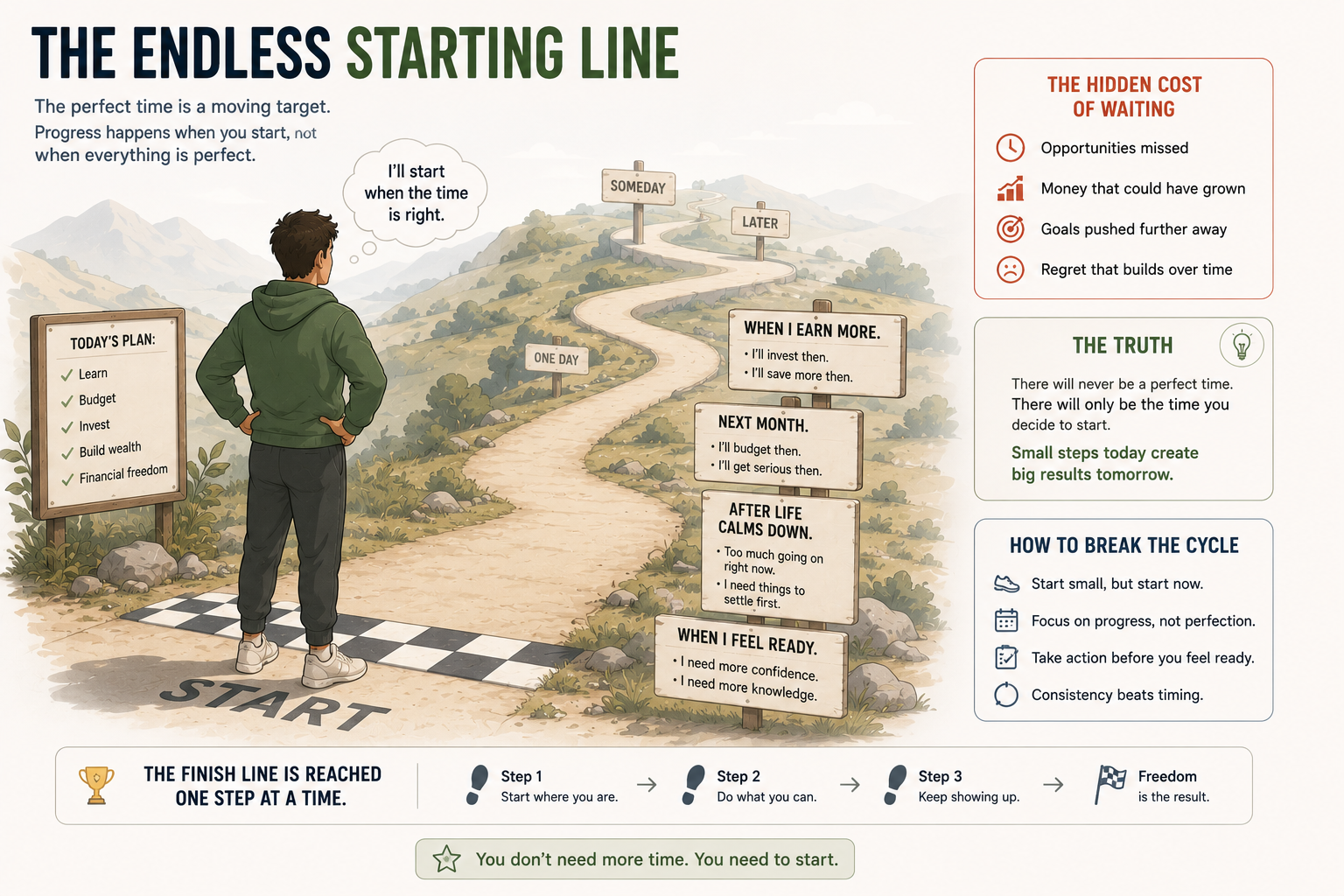
Many people delay financial improvement while believing they are simply "waiting for the right moment."
They tell themselves:
- "I'll start saving when I earn more."
- "I'll invest when life becomes less stressful."
- "I'll budget properly after this difficult month."
- "I'll focus on money later."
At first, those reasons sound logical. But often, the waiting never ends.
A Very Familiar Pattern
Imagine this situation.
Someone wants to start investing. They spend months:
- Watching videos;
- Reading articles;
- Comparing strategies;
- Planning the "perfect" approach.
But they never actually begin.
Why?
Because starting feels emotionally uncomfortable. There is uncertainty. Fear of mistakes. Fear of losing money. Fear of doing something wrong.
So the brain chooses a safer emotional option:
Delay.
That delay creates temporary comfort — but also keeps the person financially stuck.
Why Humans Delay Important Decisions
The brain naturally avoids situations that create uncertainty, discomfort, risk, emotional pressure.
That avoidance is not laziness. It is emotional self-protection. The problem is that financial improvement usually requires temporary discomfort:
- Learning new systems;
- Facing reality honestly;
- Making mistakes;
- Changing habits.
Perfection Often Becomes An Excuse
Many people secretly believe they need:
- Perfect timing;
- Perfect knowledge;
- Perfect discipline; before they begin.
That mindset becomes dangerous because perfection almost never arrives. Meanwhile, time continues moving. Small imperfect action usually creates far more progress than endless preparation.
Progress Usually Starts Messy
Most financially stable people did not begin perfectly. They started confused, inconsistent, uncertain, imperfect.
The important part was starting before they felt completely ready. Because confidence usually grows after action, not before it.

Think about one financial goal you have delayed for a long time.
Ask yourself:
- What emotion keeps delaying the action?
- Are you waiting for certainty or perfection?
- What is one very small step you could take this week?
- How would your future change if you started before feeling fully ready?
Merci pour vos commentaires !
Demandez à l'IA

Demandez à l'IA

Posez n'importe quelle question ou essayez l'une des questions suggérées pour commencer notre discussion
