The Real Impact of AI on Business
Scorri per mostrare il menu
A few years ago, most businesses were still in "wait and see" mode with AI. Today, the conversation has shifted entirely. The question is no longer whether AI will affect your industry – it is whether you are moving fast enough to stay ahead of competitors who are already using it.
This course is not about the technology itself. It is about how to use AI to make better business decisions, save your team time, and build processes that scale. Everything covered here is practical, tool-specific, and immediately applicable to your work.
What Has Actually Changed
The shift since 2023 is not just about AI getting smarter. It is about AI becoming accessible. You no longer need a data science team or a development budget to automate a complex workflow. A mid-size B2B company with no technical staff can now:
- Automate repetitive reporting tasks that previously took hours each week;
- Process and summarize large volumes of documents, emails and meeting notes in minutes;
- Draft, edit and translate business content at a fraction of the previous cost and time;
- Analyze operational data and surface insights without touching a line of code.

Operational AI – the use of AI tools to improve day-to-day business processes rather than to build AI-powered products. This is the most immediately accessible form of AI for most organizations and the focus of this course.
The Business Case Is Already There
The companies seeing the most value from AI right now are not the ones with the largest AI budgets. They are the ones that identified two or three high-volume, repetitive processes and systematically replaced manual work with AI-assisted workflows.
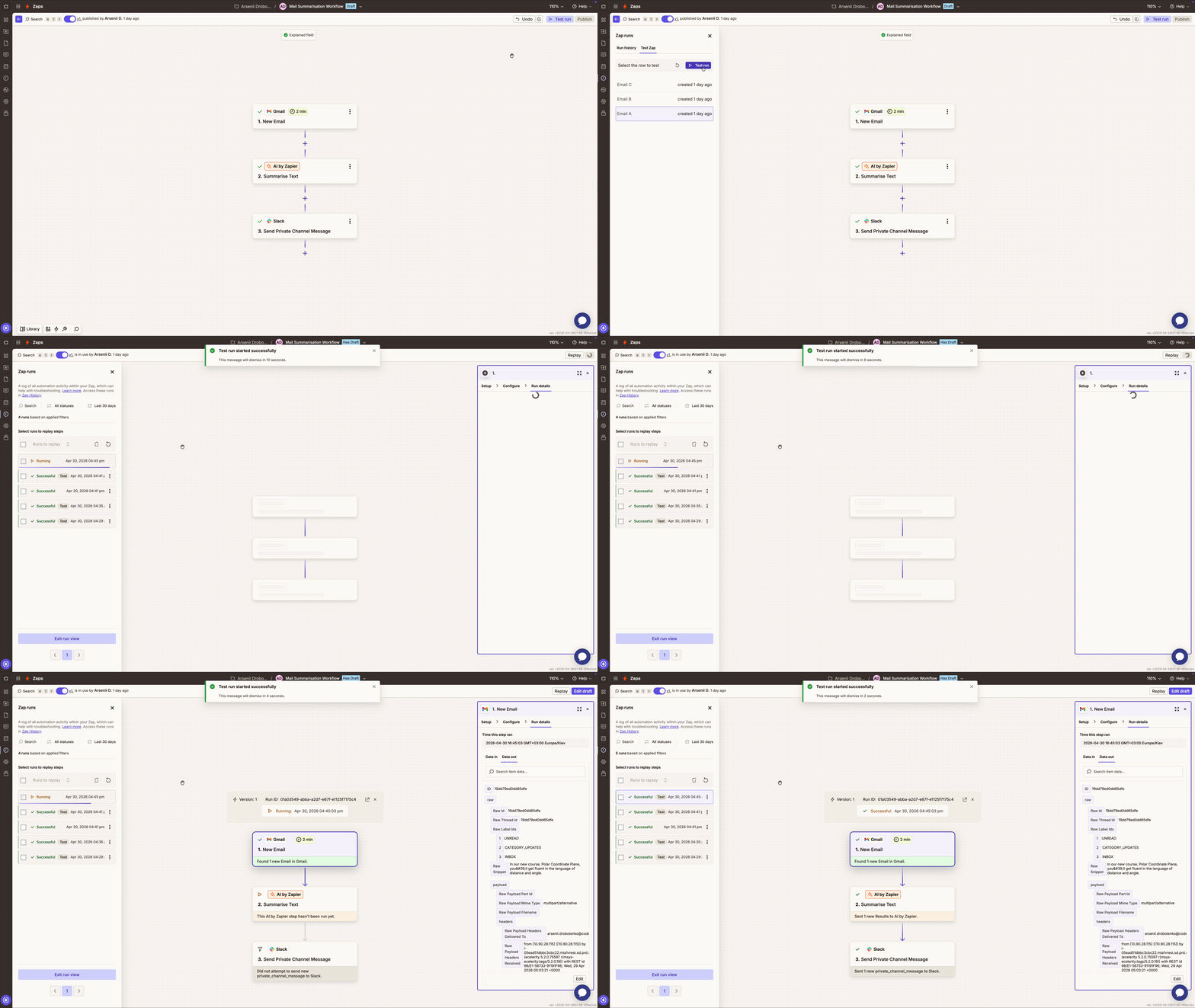
A realistic example: an operations team spending 4 hours per week manually compiling status reports from multiple sources can reduce that to 30 minutes using Claude (an AI assistant that reads, analyzes and drafts content) and a simple Zapier automation (a tool that connects your apps and moves data between them automatically). Over a year, that is over 180 hours recovered – the equivalent of more than four full working weeks per person.
Example of running Zapier workflow:

The goal of AI in business is not to replace people – it is to remove the low-value, repetitive work so your team can focus on the decisions and relationships that actually require human judgment. The most effective AI implementations start with this framing.
Where Most Companies Start
The highest-impact starting points for most operations and business teams are:
- Document and data processing – summarizing reports, extracting key data from files, preparing briefings;
- Communication workflows – drafting emails, summarizing meeting notes, preparing status updates;
- Repetitive task automation – connecting tools so information flows automatically between systems.
These are not exotic use cases. They are the tasks that currently consume a disproportionate amount of your team's time – and they are exactly what this course will help you address.

For regularly updated data on AI adoption and business impact, McKinsey's State of AI report (available at mckinsey.com) and Salesforce's AI Trends report provide reliable benchmarks across industries and company sizes.
Grazie per i tuoi commenti!
Chieda ad AI

Chieda ad AI

Chieda pure quello che desidera o provi una delle domande suggerite per iniziare la nostra conversazione
