Dopamine and Instant Buying
Scorri per mostrare il menu
Most people believe they buy things because they truly need them. Sometimes that is true. But many purchases are actually emotional reactions disguised as rational decisions.
People often shop because they feel:
- Stressed;
- Bored;
- Lonely;
- Anxious;
- Emotionally exhausted.
The purchase itself becomes a form of temporary emotional relief.
The Dopamine Trap
Imagine this situation. You are lying in bed late at night scrolling through your phone. At first, you are not planning to buy anything. Then something catches your attention. Maybe:
- A new gadget;
- Clothes;
- Skincare products;
- Home upgrades;
- "Limited-time" discounts.
You start imagining how good it would feel to own it. Suddenly your brain becomes emotionally invested. You compare colors. You read reviews. You picture your future self using it.
And before the purchase even happens, your brain already starts releasing dopamine. That emotional excitement often feels better than the actual product itself.
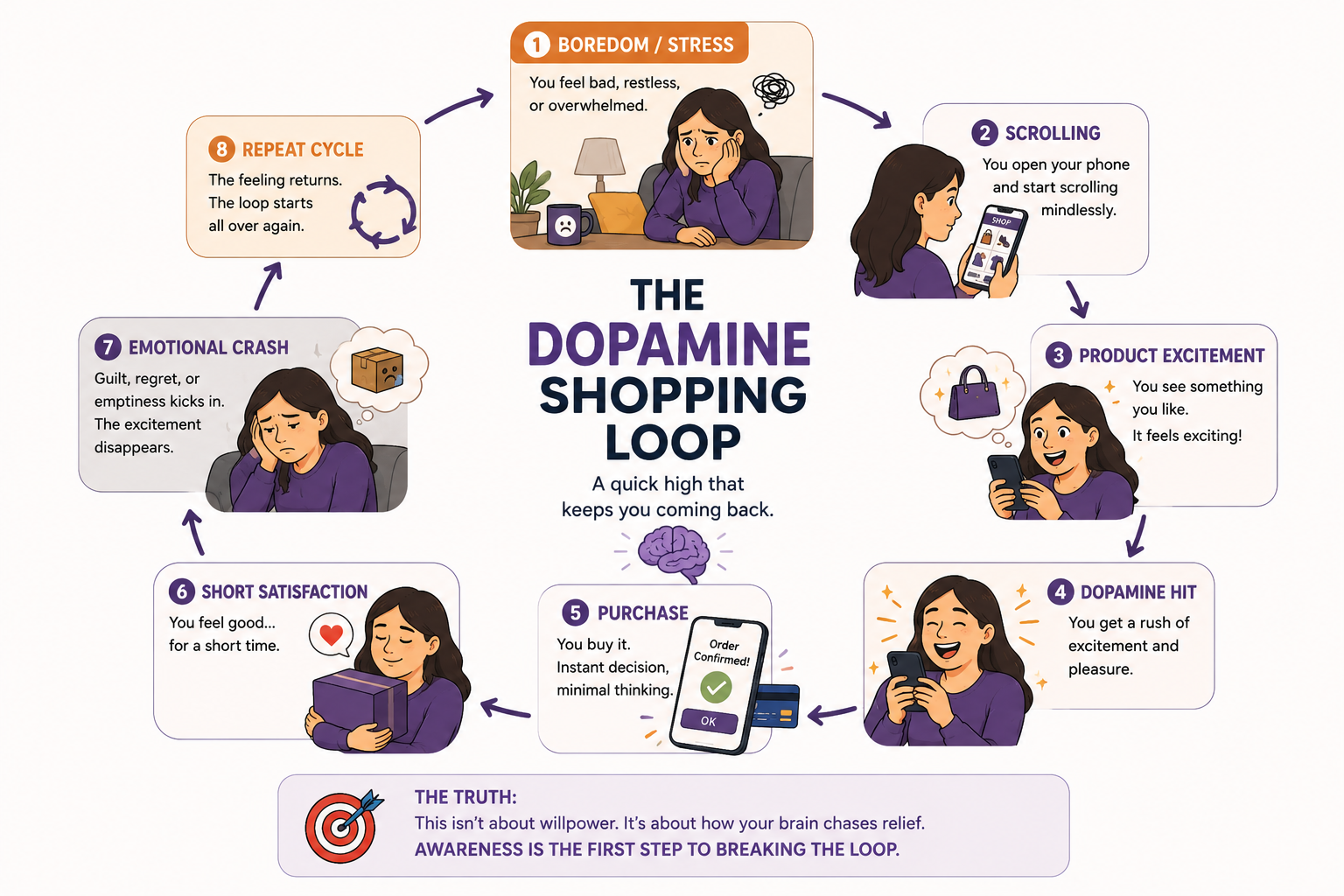

Dopamine is a brain chemical connected to motivation, anticipation, and reward.
Importantly, dopamine often spikes before the reward happens — during anticipation.
That is one reason shopping can feel exciting even before buying anything.
Why Online Shopping Feels So Addictive
Modern apps are designed to maximize emotional engagement.
They use:
- Personalized recommendations;
- Endless scrolling;
- Flash sales;
- Notifications;
- One-click checkout;
- Saved payment methods.
Every layer removes friction and increases emotional impulsiveness.
Your brain is constantly encouraged to chase small emotional rewards.
Buying Feels Productive
One dangerous part of emotional spending is that buying often creates the illusion of progress.
People sometimes purchase things because they want to feel:
- More successful;
- More attractive;
- More organized;
- More productive;
- More confident.
The emotional fantasy becomes more powerful than the actual usefulness of the product.

Think about a purchase you became emotionally excited about before buying.
Ask yourself:
- Did the anticipation feel stronger than the ownership?
- How long did the excitement actually last?
- Were you buying the product — or the emotional fantasy connected to it?
Grazie per i tuoi commenti!
Chieda ad AI

Chieda ad AI

Chieda pure quello che desidera o provi una delle domande suggerite per iniziare la nostra conversazione
