Pre-Commitment Systems That Actually Work
Scorri per mostrare il menu
Many people believe future-you will behave perfectly.
They think:
- "Later I'll become more disciplined."
- "Next month I'll stop overspending."
- "Eventually I'll gain self-control."
But future-you usually has the same emotions, stress, and weaknesses as present-you. That is why good financial systems are often built before temptation appears.
A Very Familiar Situation
Imagine this situation. Someone wants to reduce emotional online shopping. At first, they rely only on self-control. But every stressful evening becomes a battle against shopping apps, saved payment methods, endless recommendations, instant checkout.
Eventually, they make one small change. They remove stored card information from shopping apps.
Now every purchase requires finding the card, entering payment details, slowing down emotionally. Suddenly many impulse purchases disappear completely. Not because motivation improved.
Because the environment changed.
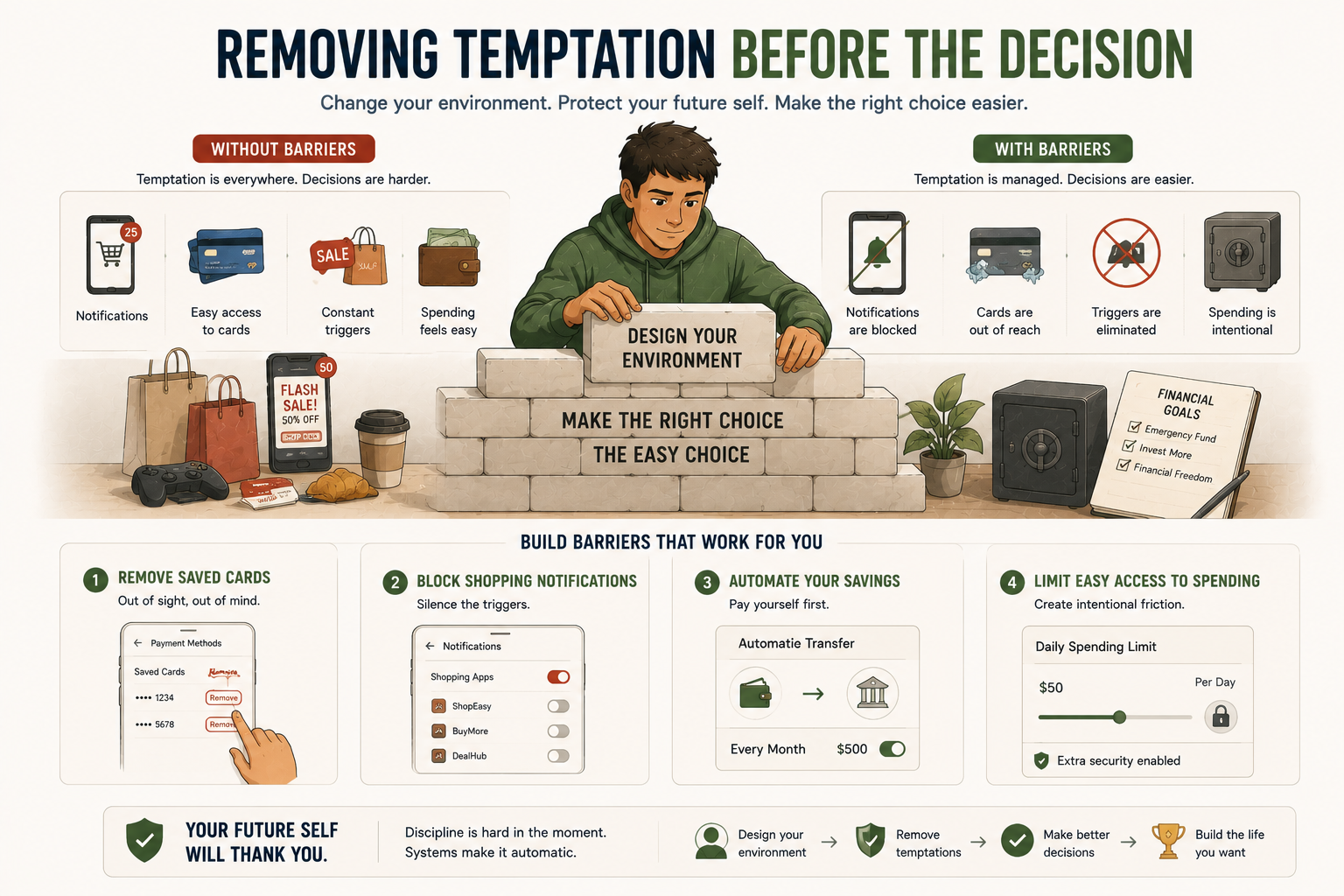

Pre-commitment means making helpful decisions in advance before emotional pressure appears later.
Instead of relying on future discipline, people create systems that protect them during emotionally difficult moments.
Why Environment Often Beats Willpower
Willpower becomes weaker when people are:
- Tired;
- Stressed;
- Lonely;
- Emotionally overwhelmed.
Environment matters because humans naturally follow the easiest available path. If emotional spending is extremely easy, people will usually spend more. If saving and good habits become easier, consistency improves automatically.
Small Barriers Can Change Behavior Dramatically
Even tiny amounts of friction can reduce emotional spending.
For example:
- Removing saved payment methods;
- Unsubscribing from marketing emails;
- Deleting shopping apps temporarily;
- Creating separate savings accounts;
- Setting transfer limits.
These changes seem small.
But emotionally, they interrupt automatic behavior patterns.
The Goal Is Not Perfection
Pre-commitment systems do not make people perfect. They simply make bad decisions slower, harder, less automatic. That difference alone can dramatically improve long-term financial behavior.

Think about one financial behavior that repeatedly creates problems.
Ask yourself:
- What environment triggers the behavior?
- What makes the bad decision emotionally easy?
- What small barrier could interrupt the pattern?
- How could you make good financial behavior easier instead?
Grazie per i tuoi commenti!
Chieda ad AI

Chieda ad AI

Chieda pure quello che desidera o provi una delle domande suggerite per iniziare la nostra conversazione
