Implementing on Dummy Dataset
メニューを表示するにはスワイプしてください
As usual, you'll use the following libraries:
-
sklearnfor generating dummy data and implementing hierarchical clustering (AgglomerativeClustering); -
scipyfor generating and working with the dendrogram; -
matplotlibfor visualizing the clusters and the dendrogram; -
numpyfor numerical operations.
Generating Dummy Data
You can use the make_blobs() function from scikit-learn to generate datasets with different numbers of clusters and varying degrees of separation. This will help you see how hierarchical clustering performs in different scenarios.
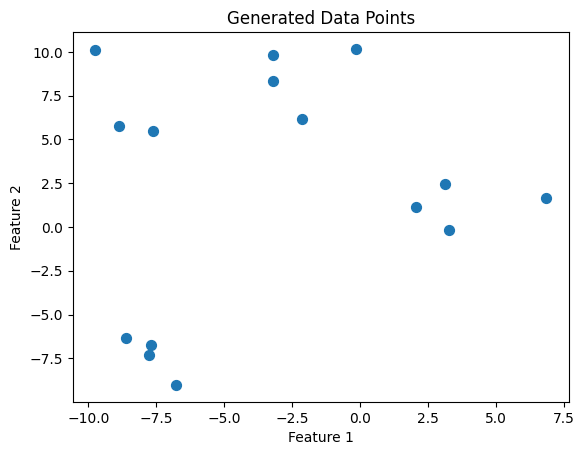
The general algorithm is as follows:
-
You instantiate the
AgglomerativeClusteringobject, specifying the linkage method and other parameters; -
You fit the model to your data;
-
You can extract cluster labels if you decide on a specific number of clusters;
-
You visualize the clusters (if the data is 2D or 3D) using scatter plots;
-
You use SciPy's
linkageto create the linkage matrix and then dendrogram to visualize the dendrogram.
You can also experiment with different linkage methods (e.g., single, complete, average, Ward's) and observe how they affect the clustering results and the dendrogram's structure.
フィードバックありがとうございます!
AIに質問する

AIに質問する

何でも質問するか、提案された質問の1つを試してチャットを始めてください
