チャレンジ:多項式回帰を用いた価格予測
このチャレンジでは、前回のチャレンジと同様に2次の多項式回帰モデルを構築します。ただし、今回はデータセットをトレーニングセットとテストセットに分割し、それぞれのセットに対してRMSEを計算する必要があります。これは、モデルが過学習または過少学習しているかどうかを判断するために必要です。
ここで、使用するべき train_test_split() 関数のリマインダーを示します。
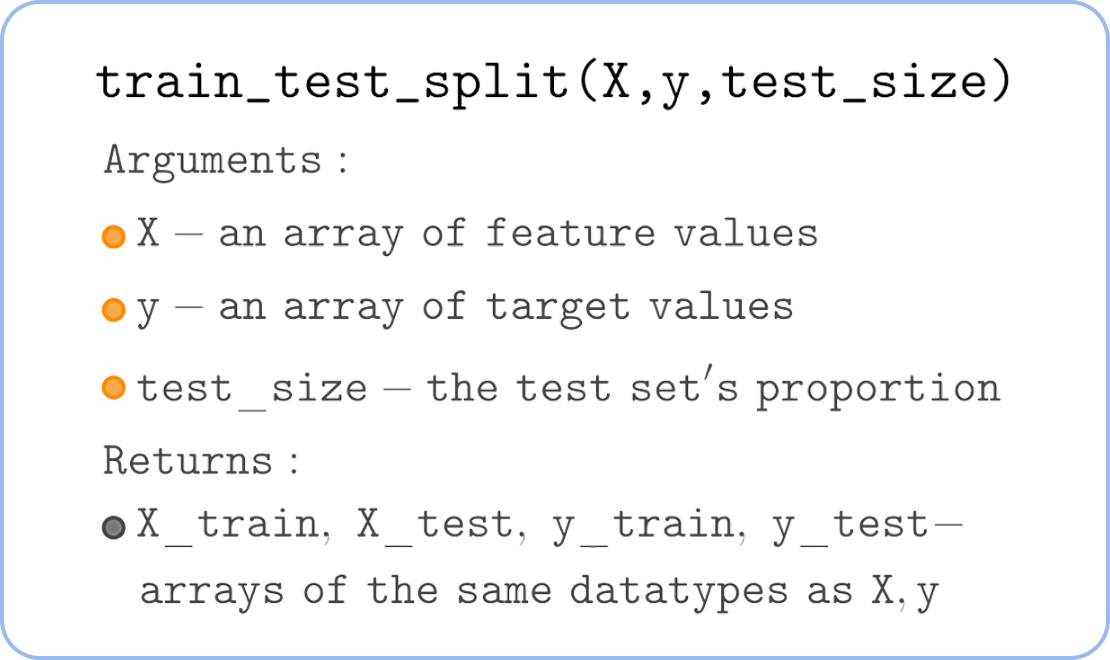
また、RMSEを計算するために必要な mean_squared_error() 関数と np.sqrt() のリマインダーも示します:
rmse = np.sqrt(mean_squared_error(y_true, y_predicted))
フィードバックありがとうございます!

single
チャレンジ:多項式回帰を用いた価格予測
メニューを表示するにはスワイプしてください
このチャレンジでは、前回のチャレンジと同様に2次の多項式回帰モデルを構築します。ただし、今回はデータセットをトレーニングセットとテストセットに分割し、それぞれのセットに対してRMSEを計算する必要があります。これは、モデルが過学習または過少学習しているかどうかを判断するために必要です。
ここで、使用するべき train_test_split() 関数のリマインダーを示します。
また、RMSEを計算するために必要な mean_squared_error() 関数と np.sqrt() のリマインダーも示します:
rmse = np.sqrt(mean_squared_error(y_true, y_predicted))
スワイプしてコーディングを開始
'age'の単一カラムdfをX変数に代入。Xクラスを用いてPolynomialFeaturesを前処理。sklearnの適切な関数でデータセットを分割。- 訓練セットでモデルを構築・学習。
- 訓練セットおよびテストセットのターゲットを予測。
- 訓練セットとテストセットの両方でRMSEを計算。
- サマリーテーブルを出力。
解答
タスクを完了すると、テストRMSEがトレーニングRMSEよりも低くなっていることに気付くでしょう。通常、モデルは未知のデータに対してより良い結果を示すことはありません。ここでは、その差はごくわずかで偶然によるものです。データセットが比較的小さく、分割時にテストセットにやや予測しやすいデータポイントが割り当てられたためです。
 実践的な練習のためにデスクトップに切り替える下記のオプションのいずれかを利用して、現在の場所から続行する
フィードバックありがとうございます!
single
AIに質問する

AIに質問する

何でも質問するか、提案された質問の1つを試してチャットを始めてください
