Challenge: Implementing a Random Forest
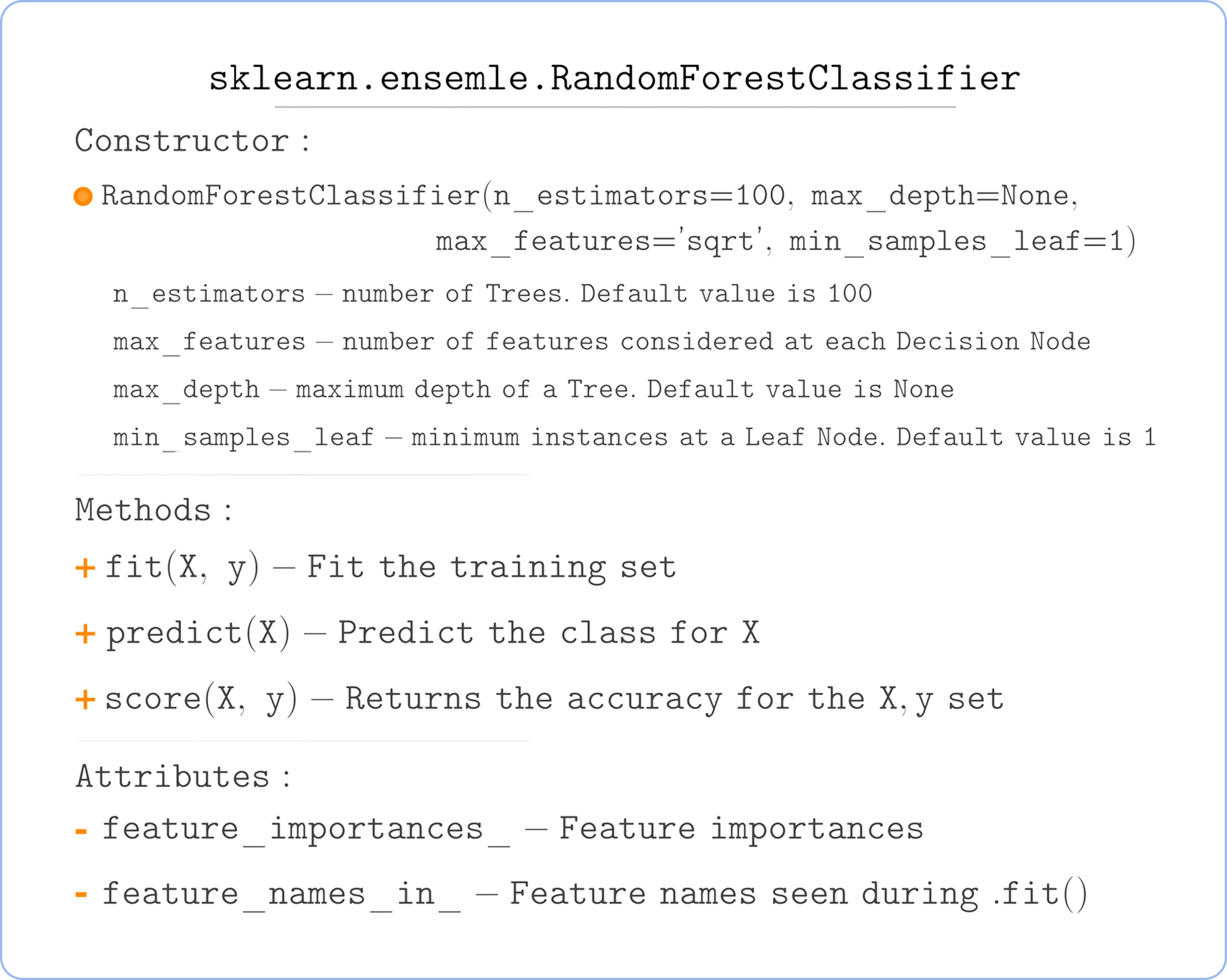
In sklearn, the classification version of Random Forest is implemented using the RandomForestClassifier:
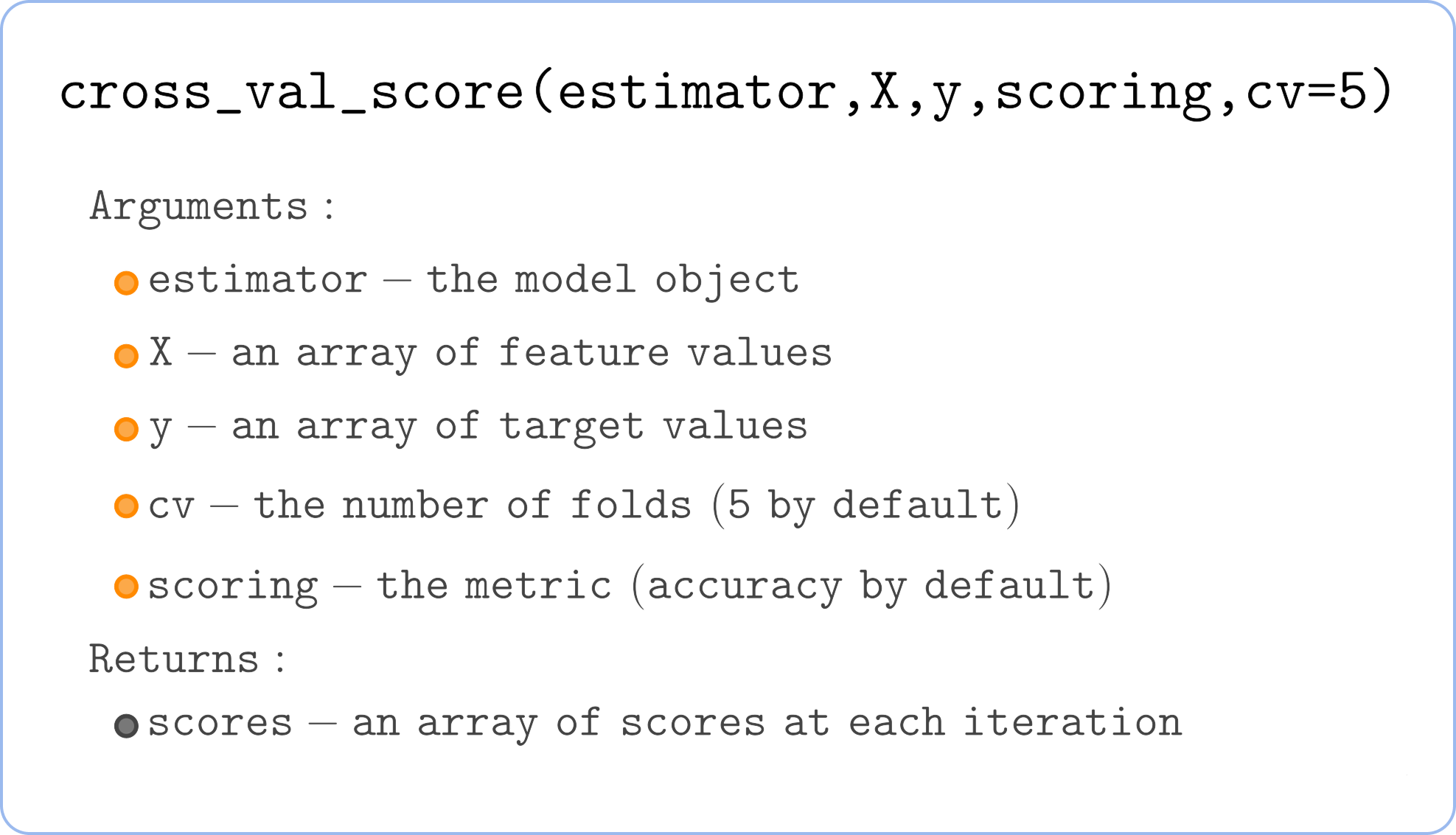
You will also calculate the cross-validation accuracy using the cross_val_score() function:
In the end, you'll print the importance of each feature. The feature_importances_ attribute returns an array of importance scores - these scores represent how much each feature contributed to reducing Gini impurity across all the decision nodes where that feature was used. In other words, the more a feature helps split the data in a useful way, the higher its importance.
However, the attribute only gives the scores without feature names. To display both, you can pair them using Python's zip() function:
for feature, importance in zip(X.columns, model.feature_importances_):
    print(feature, importance)
This prints each feature name along with its importance score, making it easier to understand which features the model relied on most.
フィードバックありがとうございます!

single
Challenge: Implementing a Random Forest
メニューを表示するにはスワイプしてください
In sklearn, the classification version of Random Forest is implemented using the RandomForestClassifier:
You will also calculate the cross-validation accuracy using the cross_val_score() function:
In the end, you'll print the importance of each feature. The feature_importances_ attribute returns an array of importance scores - these scores represent how much each feature contributed to reducing Gini impurity across all the decision nodes where that feature was used. In other words, the more a feature helps split the data in a useful way, the higher its importance.
However, the attribute only gives the scores without feature names. To display both, you can pair them using Python's zip() function:
for feature, importance in zip(X.columns, model.feature_importances_):
    print(feature, importance)
This prints each feature name along with its importance score, making it easier to understand which features the model relied on most.
スワイプしてコーディングを開始
You are given a Titanic dataset stored as a DataFrame in the df variable.
- Initialize the Random Forest model, set
random_state=42, train it, and store the fitted model in therandom_forestvariable. - Calculate the cross-validation scores for the trained model using
10folds, and store the resulting scores in thecv_scoresvariable.
解答
 実践的な練習のためにデスクトップに切り替える下記のオプションのいずれかを利用して、現在の場所から続行する
フィードバックありがとうございます!
single
AIに質問する

AIに質問する

何でも質問するか、提案された質問の1つを試してチャットを始めてください
