最初の構造体の作成
メニューを表示するにはスワイプしてください
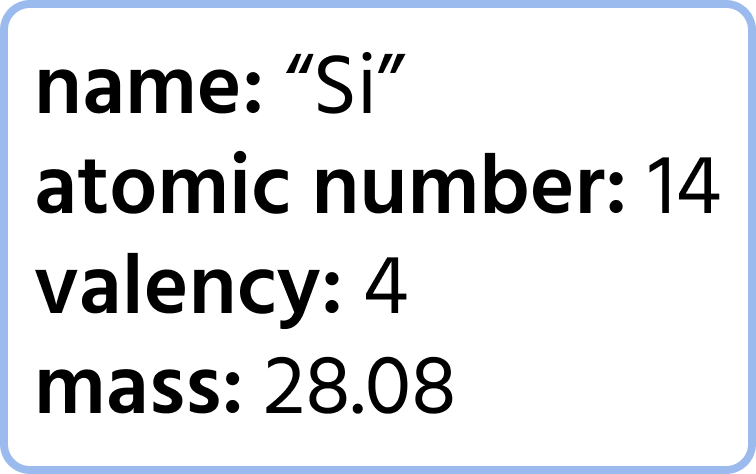
最初の章の最後にあるビジュアルキューを参考に、化学元素を表すデータ型の作成:

main.c
1234567struct chemicalElement { char name[3]; int atomicNum; int valency; double mass; };

注意
質量数と原子番号は負の値を取ることができないため、unsigned short int データ型を使用する方が効率的です。
これで、化学元素を作成できます。コードは次のようになります。
main.c
123456789101112131415#include "stdio.h" struct chemicalElement { char name[3]; int atomicNumber; int valency; double mass; }; int main() { struct chemicalElement silicon = {"Si", 14, 4, 28.08}; return 0; }
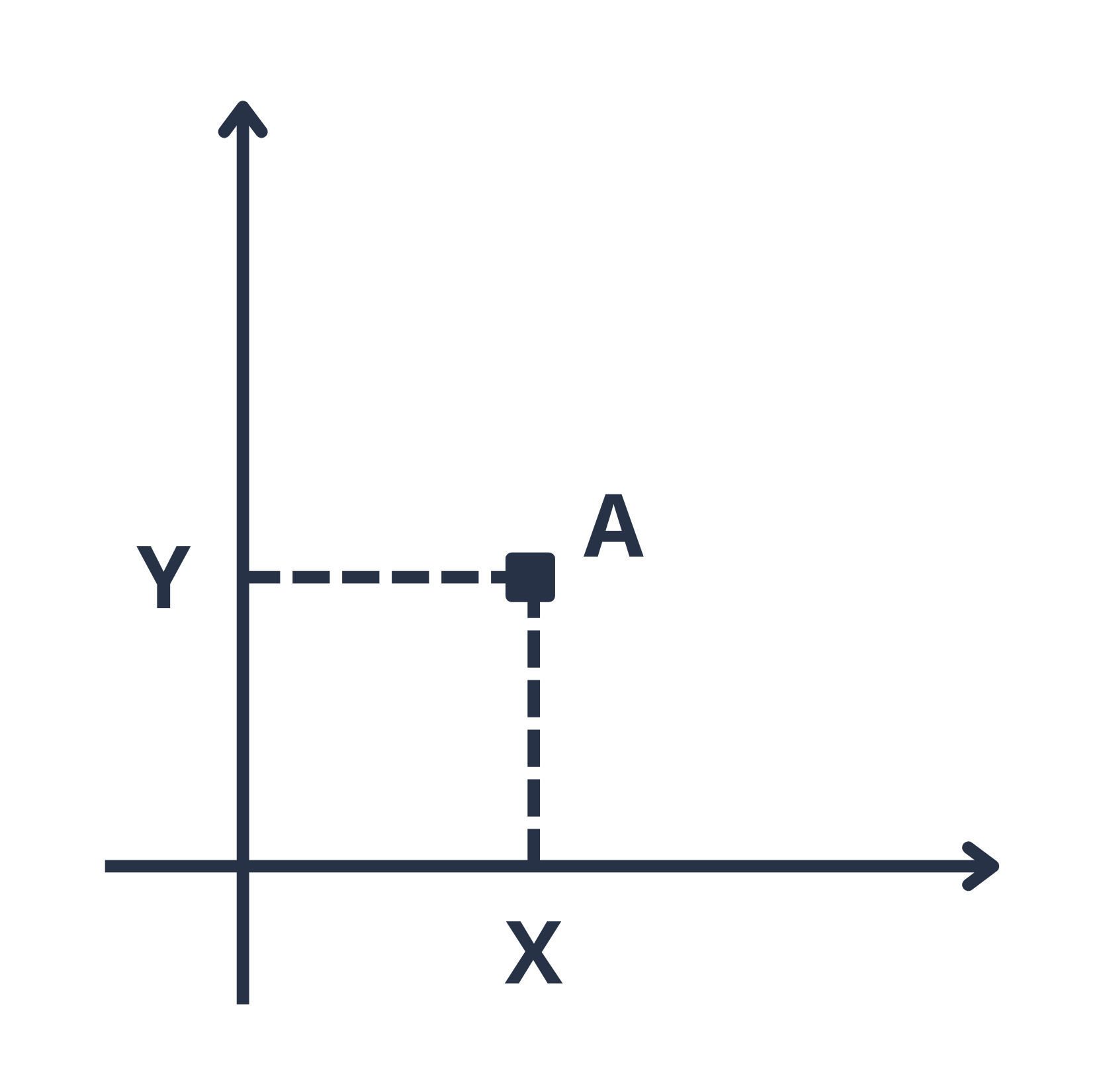
構造体のフィールドへのアクセスについては、次の章で説明します。構造体を使って幾何学的な点 A を表現してみましょう。
タスク
スワイプしてコーディングを開始
2次元空間上の点を表す構造体を作成します。 この課題の目的は、点の名前と座標を含む情報を保存し、表示できるようにすることです。
構造体 Point には以下の要素を含めてください:
- 点の名前を格納する文字配列 — 1文字のみ(例: "A" や "B")を格納します。
この1文字とヌル終端子
\0を保存するため、配列はname[2]と宣言してください。 xおよびy座標を表す2つの整数フィールド。
main 関数内では:
- Point型の変数を作成します。
- 中かっこ {} を使って、名前と座標の値で初期化します。
解答
 実践的な練習のためにデスクトップに切り替える下記のオプションのいずれかを利用して、現在の場所から続行する
すべて明確でしたか?
フィードバックありがとうございます!
セクション 1. 章 4

single
AIに質問する

AIに質問する

何でも質問するか、提案された質問の1つを試してチャットを始めてください
