Why Future-You Always Loses
Sveip for å vise menyen
Most people genuinely want a better financial future.
They want:
- Savings;
- Investments;
- Stability;
- Less stress;
- More freedom.
So why is it often so difficult to make decisions that support those goals?
Because your brain treats present rewards as more emotionally important than future rewards.
Future-you feels distant. Present-you feels real.
A Very Familiar Promise
Imagine this situation.
You tell yourself:
"Starting next month, I'll finally take saving seriously."
The plan sounds realistic.
You imagine:
- Budgeting better;
- Spending less;
- Building an emergency fund;
- Investing consistently.
Then next month arrives.
A stressful week happens. Friends invite you out. A sale appears online. You feel mentally tired. Suddenly future plans feel less important than immediate comfort.
So the cycle repeats again.
Not because you are lazy. Because the human brain naturally prioritizes what feels rewarding right now.
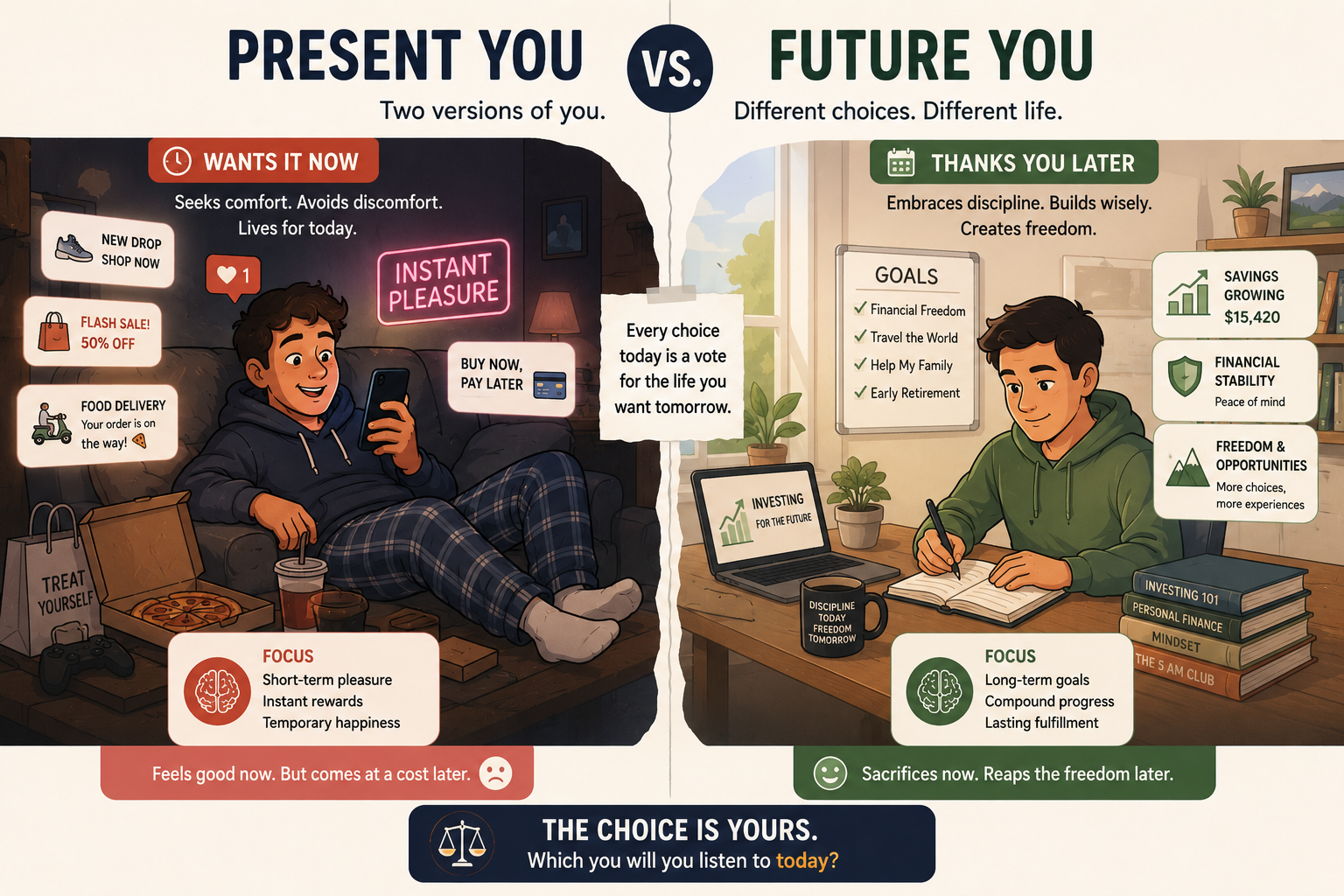

Instant gratification is the desire to receive pleasure, comfort, or relief immediately instead of waiting for a better long-term outcome.
Humans naturally prefer rewards they can feel now — even when delaying gratification would create better results later.
Why Long-Term Goals Feel Emotionally Weak
Long-term financial goals are often emotionally difficult because:
- The rewards feel far away;
- Progress feels slow;
- There is no immediate excitement;
- Daily temptations feel stronger.
Buying something today creates an instant emotional reaction. Saving for ten years does not. That emotional imbalance affects financial behavior constantly.
Small Decisions Quietly Shape the Future
The Problem Is Not Motivation
Many people think:
"I just need more discipline."
But discipline alone rarely solves the problem permanently.
The real challenge is building systems that protect future-you from emotional decisions made by present-you.
That is why:
- Automation matters;
- Habits matter;
- Financial systems matter.
Good financial systems reduce the number of emotional decisions you need to make.

Think about one financial goal you keep postponing.
Ask yourself:
- What immediate comfort keeps distracting you?
- What emotion usually influences the delay?
- How would your life improve if future-you benefited from better decisions today?
Takk for tilbakemeldingene dine!
Spør AI

Spør AI

Spør om hva du vil, eller prøv ett av de foreslåtte spørsmålene for å starte chatten vår
