Tiny Financial Habits That Compound for Years
Sveip for å vise menyen
Many people wait for a huge breakthrough to improve financially. They imagine:
- A much higher salary;
- One perfect investment;
- Extreme motivation;
- A complete life reset.
But financial stability is usually built differently. It often comes from small repeated behaviors that quietly compound over time.
A Very Common Mistake
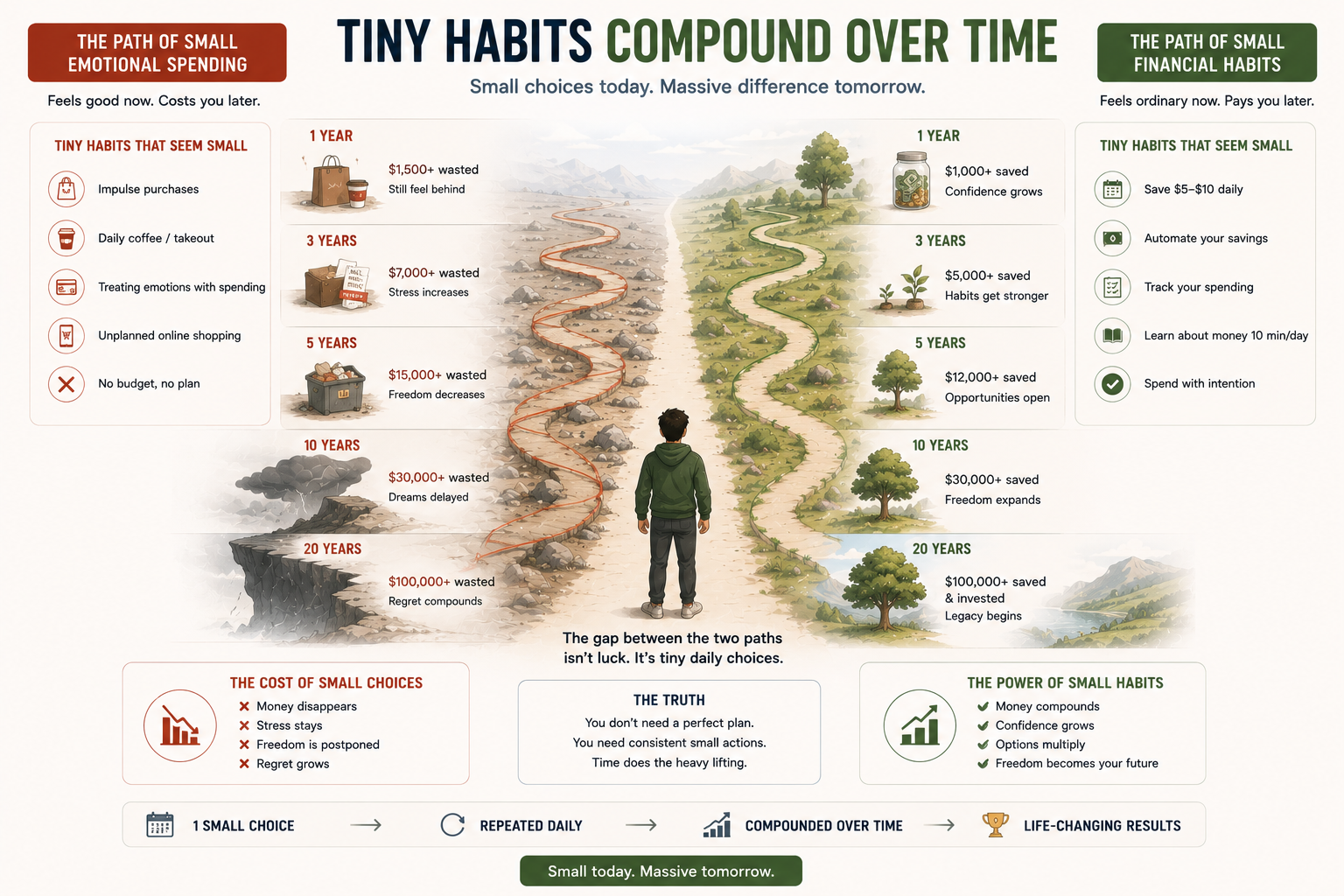
Imagine two people with similar incomes. The first person constantly makes emotional small decisions: impulse purchases, ignored subscriptions, unnecessary upgrades, spending for temporary comfort.
The second person builds small consistent habits: tracking spending weekly, saving automatically, waiting before emotional purchases, investing consistently.
At first, the difference feels tiny. But after several years, the results become dramatically different. That is the power of compounding behavior.
Why Tiny Habits Matter So Much
Small habits work because they:
- Feel manageable;
- Create consistency;
- Reduce emotional resistance;
- Survive stressful periods more easily.
Extreme systems often collapse quickly. Small sustainable behaviors usually last longer. And long-term consistency matters more than short-term intensity.
Compounding Is Not Only Financial
Most people understand financial compounding.
But emotional and behavioral compounding matter too.
For example:
- Repeated emotional spending increases financial stress;
- Repeated avoidance increases anxiety;
- Repeated consistency builds confidence and stability.
Small patterns quietly become long-term lifestyles.
The Real Goal
The goal is not becoming financially perfect overnight. The goal is building small habits that:
- Survive real life;
- Continue during stressful periods;
- Slowly improve financial stability over time.
Because tiny actions repeated consistently are often stronger than short periods of extreme discipline.

Think about one tiny financial habit that could realistically improve your life.
Ask yourself:
- Could you maintain it even during stressful periods?
- Would it reduce emotional decision-making?
- What long-term effect could it create after several years?
- How would your financial life change if the habit became automatic?
Takk for tilbakemeldingene dine!
Spør AI

Spør AI

Spør om hva du vil, eller prøv ett av de foreslåtte spørsmålene for å starte chatten vår
