Color Theory
Sveip for å vise menyen

Color theory is the study of how colors interact, how they can be combined, and how they affect emotions and perceptions.
Color theory serves as a guide for artists and designers to create visually appealing and meaningful color combinations in their work. Using tools like the color wheel, designers can create harmonious or contrasting palettes.
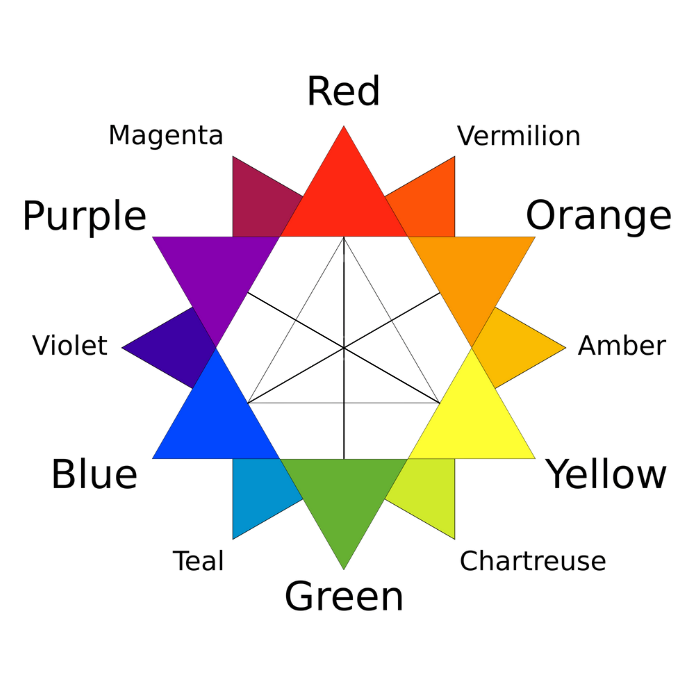
The RYB (Red, Yellow, Blue) color wheel helps guide these choices. The RYB color wheel is the wheel used by artists because the combinations on that wheel apply better to paints and other, printed combinations of color. The primary colors in this model are red, yellow, and blue. As color printing came into existence, red was replaced with magenta; blue was replaced with cyan; yellow remained yellow; and black was added to create the color mode CMYK.
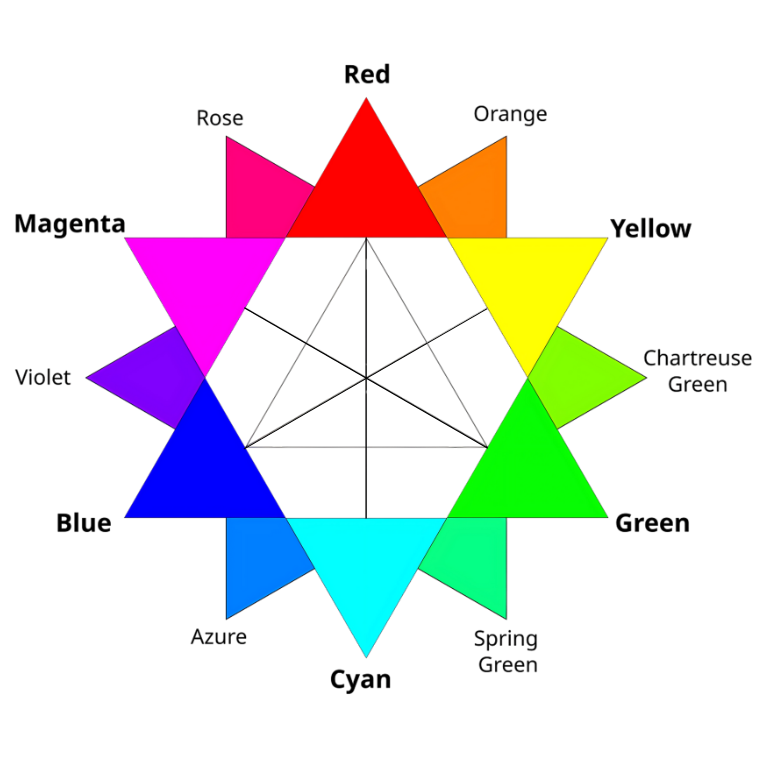
The second is the RGB (Red, Green, Blue) color wheel which is designed for online use because it mixes colors that are backlit by a screen such as a computer monitor or television.
Color doesn't just look a certain way, it also feels a certain way, and its emotional impact can change depending on the context and color combinations used.
Takk for tilbakemeldingene dine!
Spør AI

Spør AI

Spør om hva du vil, eller prøv ett av de foreslåtte spørsmålene for å starte chatten vår
