Implementing Generic Classes
Sveip for å vise menyen
The basic syntax for implementing a Generic class is as follows:
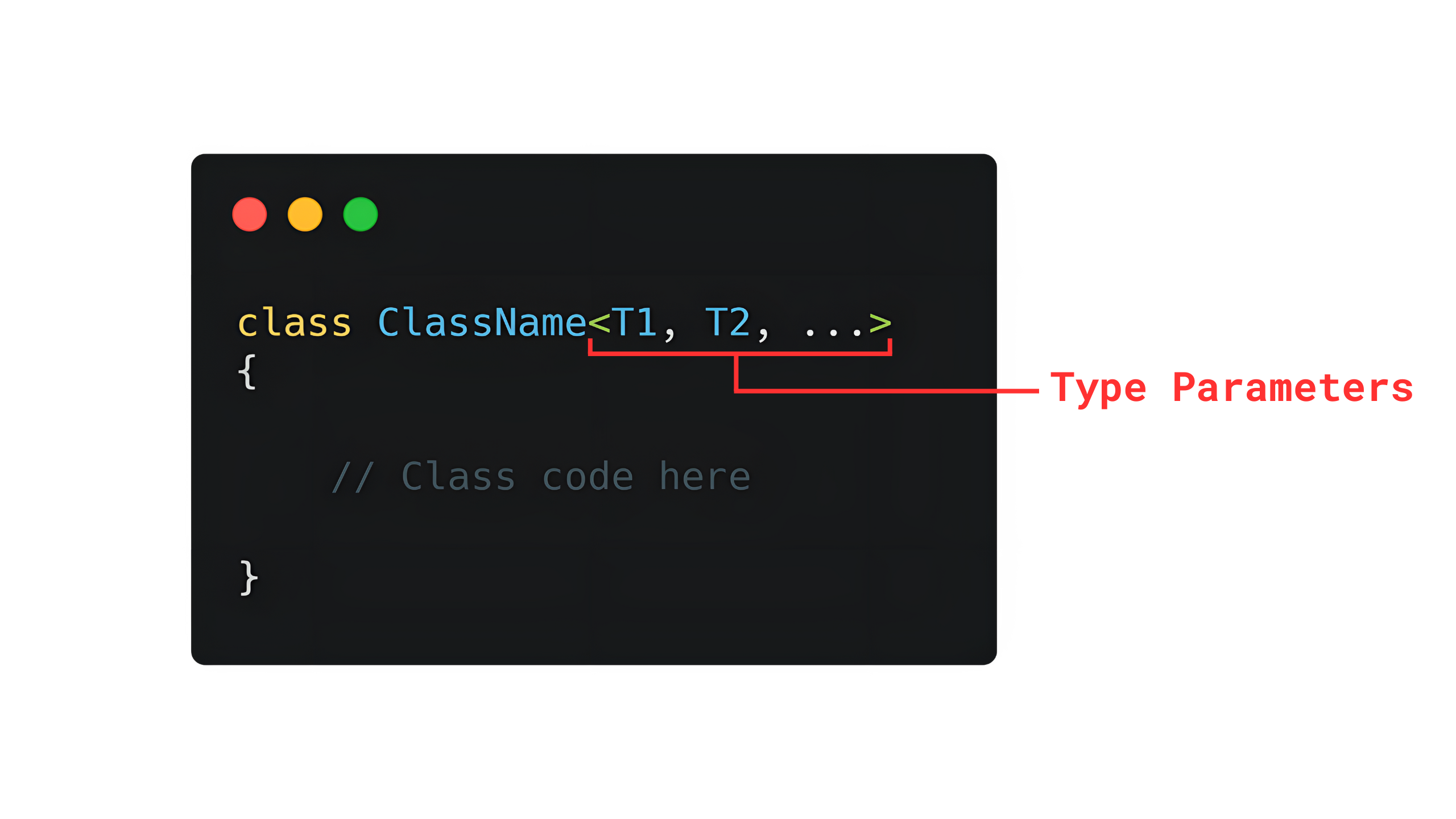
Here T1, T2, .. represent the type parameters.
We can create a new instance of a generic class using any of the following syntax:

index.cs
1234ClassName<T1, T2, ..> varName = new ClassName<T1, T2, ..>(args, ..); ClassName<T1, T2, ..> varName = new ClassName<>(args, ..); ClassName<T1, T2, ..> varName = new ClassName(args, ..); var varName = new ClassName<T1, T2, ..>(args, ..);
We can use the type parameters anywhere inside the class body where a data type is applicable. For-example, we can use the type parameter(s) to:
- Create class attributes or properties
- Specify method argument types
- Specify method return types
1. What is the primary benefit of using generic classes in C#?
2. How do you define a generic class in C#?
3. Can a generic class have multiple type parameters? If yes, how would you define it?
Takk for tilbakemeldingene dine!
Spør AI

Spør AI

Spør om hva du vil, eller prøv ett av de foreslåtte spørsmålene for å starte chatten vår
Implementing Generic Classes
The basic syntax for implementing a Generic class is as follows:
Here T1, T2, .. represent the type parameters.
We can create a new instance of a generic class using any of the following syntax:
index.cs
1234ClassName<T1, T2, ..> varName = new ClassName<T1, T2, ..>(args, ..); ClassName<T1, T2, ..> varName = new ClassName<>(args, ..); ClassName<T1, T2, ..> varName = new ClassName(args, ..); var varName = new ClassName<T1, T2, ..>(args, ..);
We can use the type parameters anywhere inside the class body where a data type is applicable. For-example, we can use the type parameter(s) to:
- Create class attributes or properties
- Specify method argument types
- Specify method return types
Takk for tilbakemeldingene dine!
