The Silent Wealth Killer
Veeg om het menu te tonen
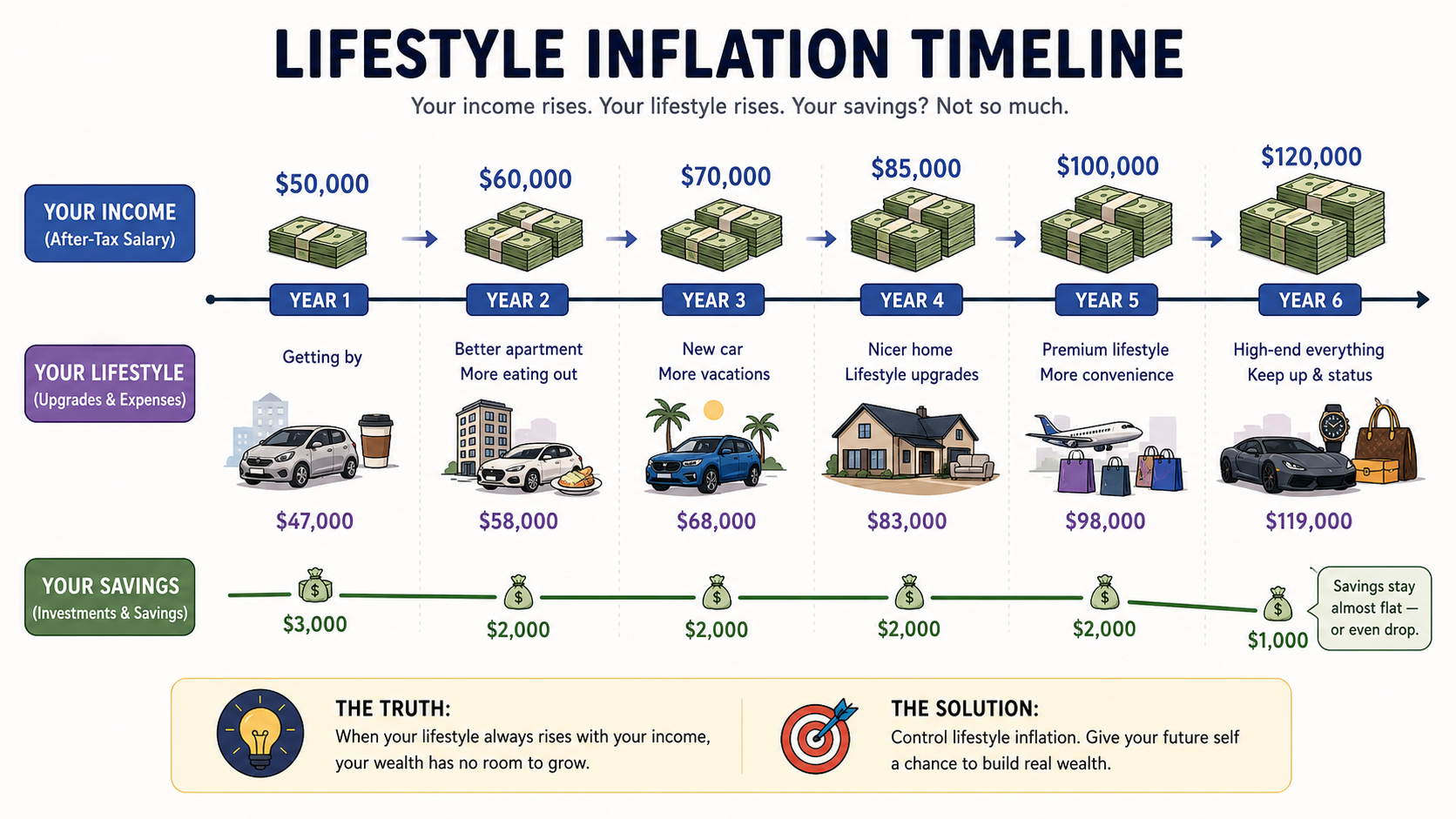
Most people imagine that earning more money will finally solve their financial stress. Sometimes it does. But often, something else happens instead. As income increases, spending quietly increases too.
A slightly better apartment becomes reasonable. Food delivery becomes more common. Vacations become more expensive. Subscriptions multiply. Small luxuries slowly become "normal."
And after a while, the extra income disappears.
This is called lifestyle inflation.
The Upgrade Trap
Imagine this situation. Someone gets a salary increase after working extremely hard for several years. At first, they promise themselves:
- "I'll finally start saving seriously."
- "I'll invest more."
- "I'll become financially stable."
But slowly, life begins upgrading itself.
A more expensive phone suddenly feels justified. Better restaurants become routine. Taxi rides replace public transport. A nicer apartment feels deserved after years of hard work.
None of these decisions seem dangerous individually. But together, they quietly consume the entire salary increase. A few months later, the person earns more money than ever before — yet still feels financially stuck.
Why Lifestyle Inflation Feels Invisible
Lifestyle inflation is dangerous because it rarely feels irresponsible.
Most upgrades feel:
- Earned;
- Reasonable;
- Temporary;
- Emotionally justified.
Humans quickly adapt to higher comfort levels. What once felt luxurious slowly starts feeling normal. That adaptation happens emotionally, often without conscious awareness.

Lifestyle inflation happens when spending rises together with income, preventing long-term financial improvement.
Instead of building wealth, extra income gets absorbed into a more expensive lifestyle.
The Real Danger
Lifestyle inflation becomes dangerous when income grows but financial stability does not. Some people double their income over time but still:
- Live paycheck to paycheck;
- Avoid checking accounts;
- Carry debt;
- Feel constant financial pressure.
More income helps. But without behavioral awareness, spending often rises just as fast.

Think about one lifestyle upgrade you made during the last few years.
Ask yourself:
- Did it improve your long-term happiness?
- Or did it simply become your new normal?
- Did your savings increase together with your income?
- Or did your spending quietly absorb the difference?
Bedankt voor je feedback!
Vraag AI

Vraag AI

Vraag wat u wilt of probeer een van de voorgestelde vragen om onze chat te starten.
