The 24-Hour Rule for Emotional Spending
Veeg om het menu te tonen
Emotional spending often creates a strong feeling of urgency.
People suddenly feel:
- "I need this now."
- "The discount will disappear."
- "I deserve this after a hard week."
- "I'll regret not buying it."
In that moment, the emotional brain wants immediate relief and excitement. The logical brain usually needs more time.
A Very Familiar Situation
Imagine this situation. Someone sees an expensive item online late at night. At first, it feels like a perfect purchase. They:
- Imagine owning it;
- Picture how it will improve life;
- Start emotionally justifying the cost.
The excitement keeps growing.
Without much thinking, they almost press "Buy Now."
But instead, they wait until tomorrow. The next day, the emotional intensity is lower. Suddenly the purchase feels less urgent, necessary, emotionally powerful. That pause alone often prevents unnecessary spending.
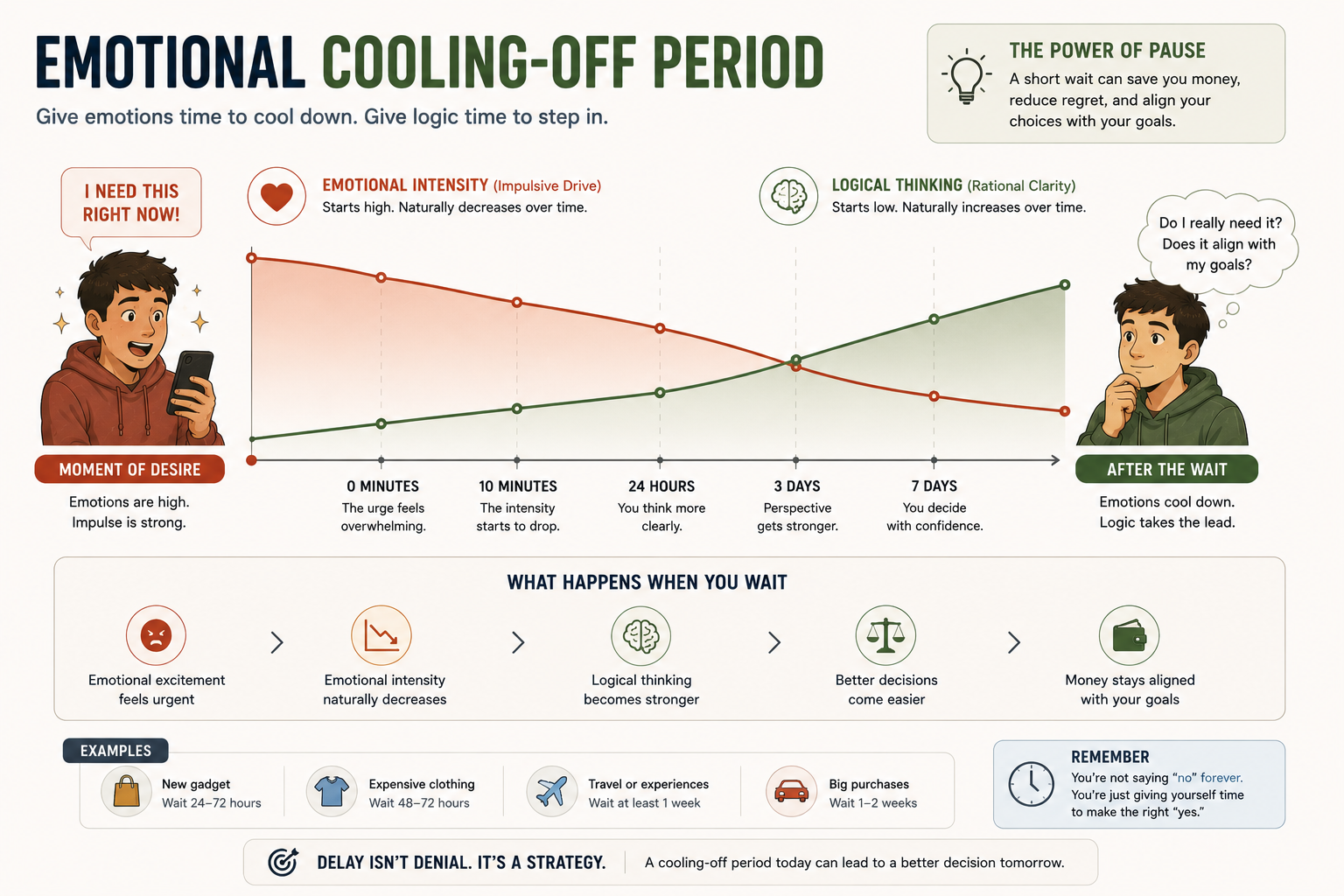

The 24-hour rule is a simple habit where people wait at least one full day before making non-essential purchases.
The goal is not to eliminate spending.
The goal is reducing emotion-driven decisions.
Why Waiting Changes Decisions
Emotional spending is strongest in the moment. When people wait:
- Dopamine decreases;
- Urgency weakens;
- Emotional pressure becomes smaller;
- Logical thinking returns.
Many purchases that felt emotionally necessary yesterday feel unimportant the next day.
Small Delays Create Big Financial Protection
The 24-hour rule works because it creates friction. Modern apps are designed to remove friction completely:
- One-click checkout;
- Saved payment methods;
- Instant delivery;
- Endless recommendations.
The easier spending becomes, the more emotional decisions happen automatically.
Even small delays interrupt that emotional cycle.
The Goal Is Awareness
The purpose of the rule is not becoming extremely restrictive. It is becoming more intentional. Some purchases will still feel valuable after waiting. Others will quietly lose emotional power. That difference matters financially over time.

Think about a recent impulse purchase.
Ask yourself:
- Would the purchase still feel exciting after 24 hours?
- Did urgency influence the decision?
- Was the purchase solving a real need or an emotional moment?
- How much money could small delays save over time?
Bedankt voor je feedback!
Vraag AI

Vraag AI

Vraag wat u wilt of probeer een van de voorgestelde vragen om onze chat te starten.
