The Diderot Effect
Deslize para mostrar o menu
Many expensive financial decisions do not happen all at once. They happen gradually. One purchase quietly creates pressure for another purchase. Then another. Then another.
This pattern is called the Diderot Effect.
A Very Familiar Situation
Imagine this situation. Someone buys a new premium laptop. At first, it feels like a single purchase. But after a few days, the old accessories suddenly feel "wrong."
Now they want:
- A better desk;
- A cleaner workspace;
- Premium headphones;
- A matching monitor;
- Expensive productivity tools.
Nothing feels irrational individually. Each new purchase feels emotionally justified because it now needs to "match" the original upgrade. One decision quietly transforms into an entire spending chain.
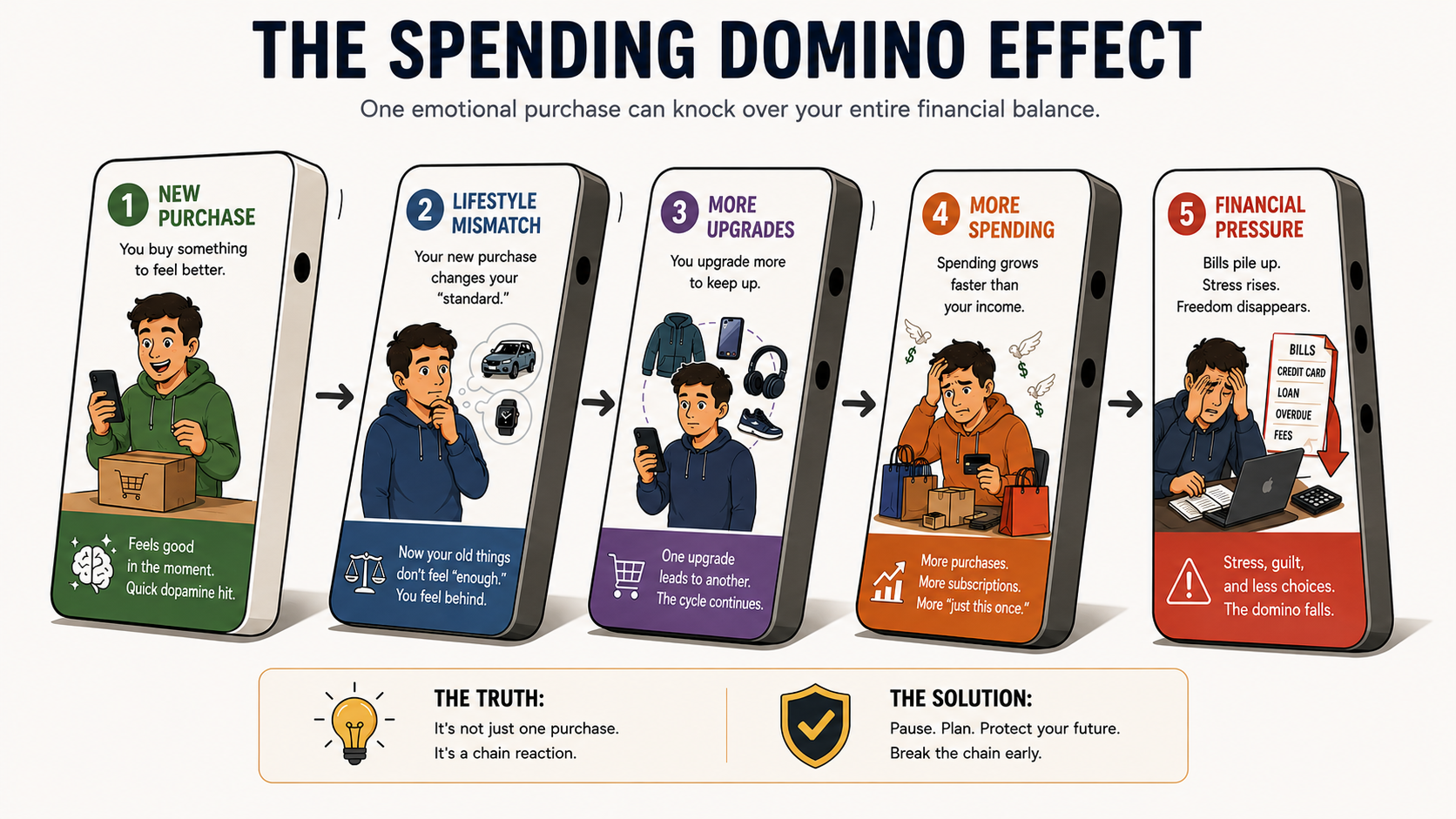

The Diderot Effect happens when one new purchase creates emotional pressure for additional purchases.
Humans naturally want consistency between their possessions, lifestyle, and identity.
That desire often creates spending chains people never originally planned.
The Dangerous Part
The Diderot Effect becomes financially dangerous because each additional purchase feels small compared to the original one.
For example:
- A new apartment creates furniture upgrades;
- A luxury car creates higher maintenance costs;
- A fitness goal creates expensive gear and subscriptions;
- A new hobby creates endless "necessary" accessories.
People often budget for the first purchase — but not for the chain reaction afterward.
A Powerful Financial Habit
Before making a major purchase, ask yourself:
"What additional spending might this create later?"
That single question can prevent many emotional spending chains before they begin.

Think about a purchase that unexpectedly led to more spending.
Ask yourself:
- What additional purchases followed?
- Did those upgrades feel emotionally necessary at the time?
- How much did the total spending eventually become?
- Would you make the same original purchase again today?
Obrigado pelo seu feedback!
Pergunte à IA

Pergunte à IA

Pergunte o que quiser ou experimente uma das perguntas sugeridas para iniciar nosso bate-papo
