The Money Scripts You Inherited as a Kid
Deslize para mostrar o menu
Most people believe their money habits were created by logic and personal decisions. But many financial behaviors begin much earlier — during childhood. Without realizing it, people absorb emotional beliefs about money from:
- Parents;
- Family stress;
- Financial arguments;
- Cultural expectations;
- Childhood experiences.
These beliefs often become invisible "money scripts" that continue influencing adult decisions for years.
A Very Common Example
Imagine two children growing up in completely different financial environments. One constantly hears:
- "Money is always stressful."
- "We can never afford that."
- "Rich people are greedy."
Another grows up hearing:
- "Money is a tool."
- "Saving creates freedom."
- "Financial problems can be solved calmly."
Years later, both adults may earn similar incomes. But emotionally, they often react to money very differently. One may constantly feel anxiety, guilt, or scarcity. The other may feel calmer and more financially secure — even during stressful periods.
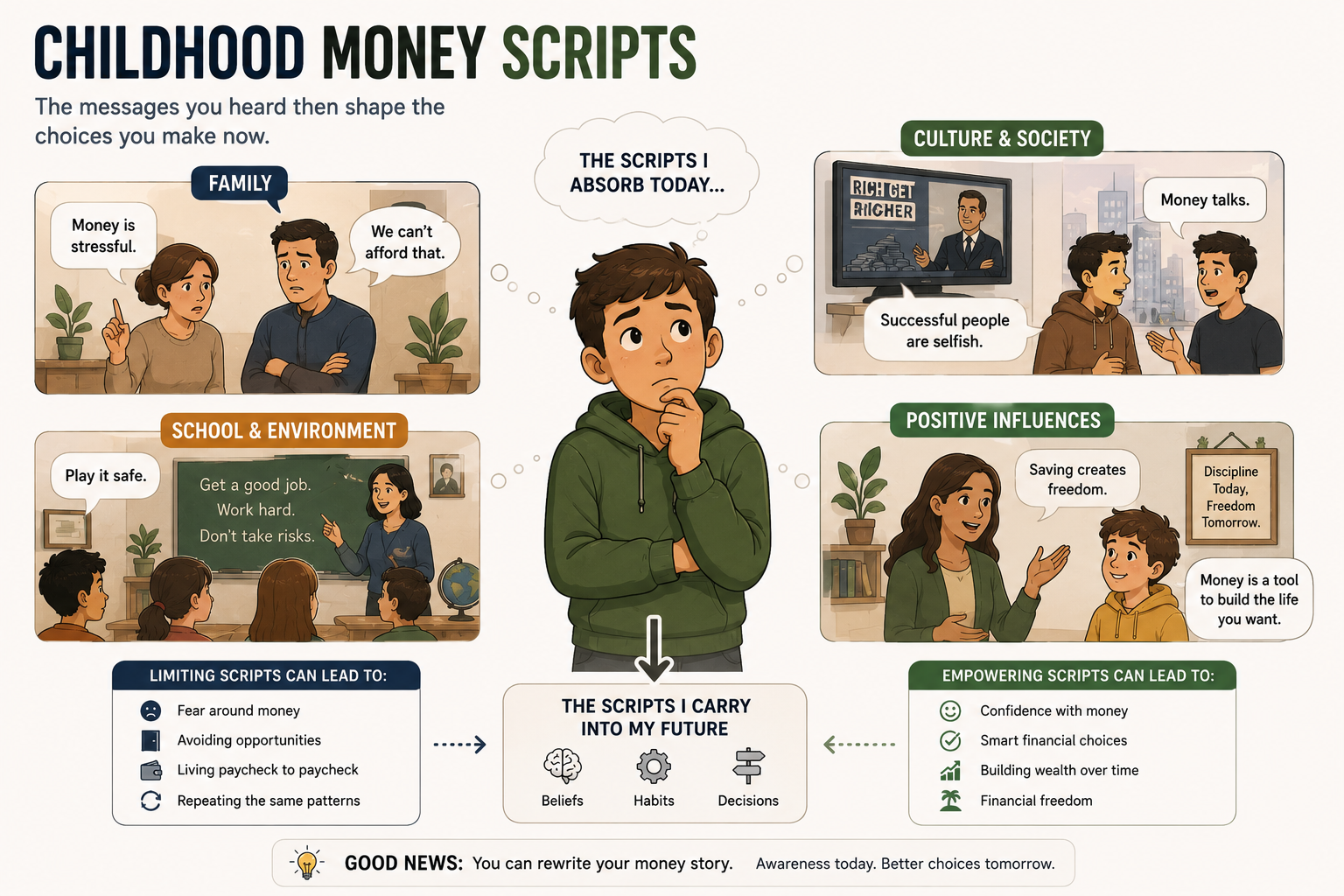

Money scripts are deeply learned emotional beliefs about money that develop during childhood and continue influencing adult behavior.
Most people never consciously examine these beliefs — they simply react to money automatically.
Why These Scripts Matter
Money scripts influence:
- Spending habits;
- Saving behavior;
- Risk tolerance;
- Financial anxiety;
- Relationship conflicts around money.
For example, someone raised in financial instability may:
- Overspend after receiving money;
- Constantly fear losing income;
- Avoid checking accounts during stress;
- Struggle to feel financially safe even when stable.
The emotional pattern often feels normal because it has existed for so long.
Awareness Changes Behavior
Many people try changing financial behavior without understanding the emotional beliefs underneath it. That usually creates temporary improvement, not lasting change. Real financial growth often begins when people start asking:
"Where did my beliefs about money actually come from?"
That question can reveal emotional patterns that were invisible for years.

Think about the financial messages you heard most often growing up.
Ask yourself:
- What emotions were connected to money in your childhood?
- Did your family treat money calmly or stressfully?
- Which beliefs still influence your decisions today?
- Are those beliefs actually helping your financial life now?
Obrigado pelo seu feedback!
Pergunte à IA

Pergunte à IA

Pergunte o que quiser ou experimente uma das perguntas sugeridas para iniciar nosso bate-papo
