State Taxes and Moving States For Tax Purposes
Deslize para mostrar o menu
The Other Tax Bill Nobody Talks About
When people say "tax bracket," they usually mean federal. But most Americans pay a second income tax — to their state. And the variation between states is huge.
- California top rate → 13.3%;
- New York City top rate (state + city) → over 14%;
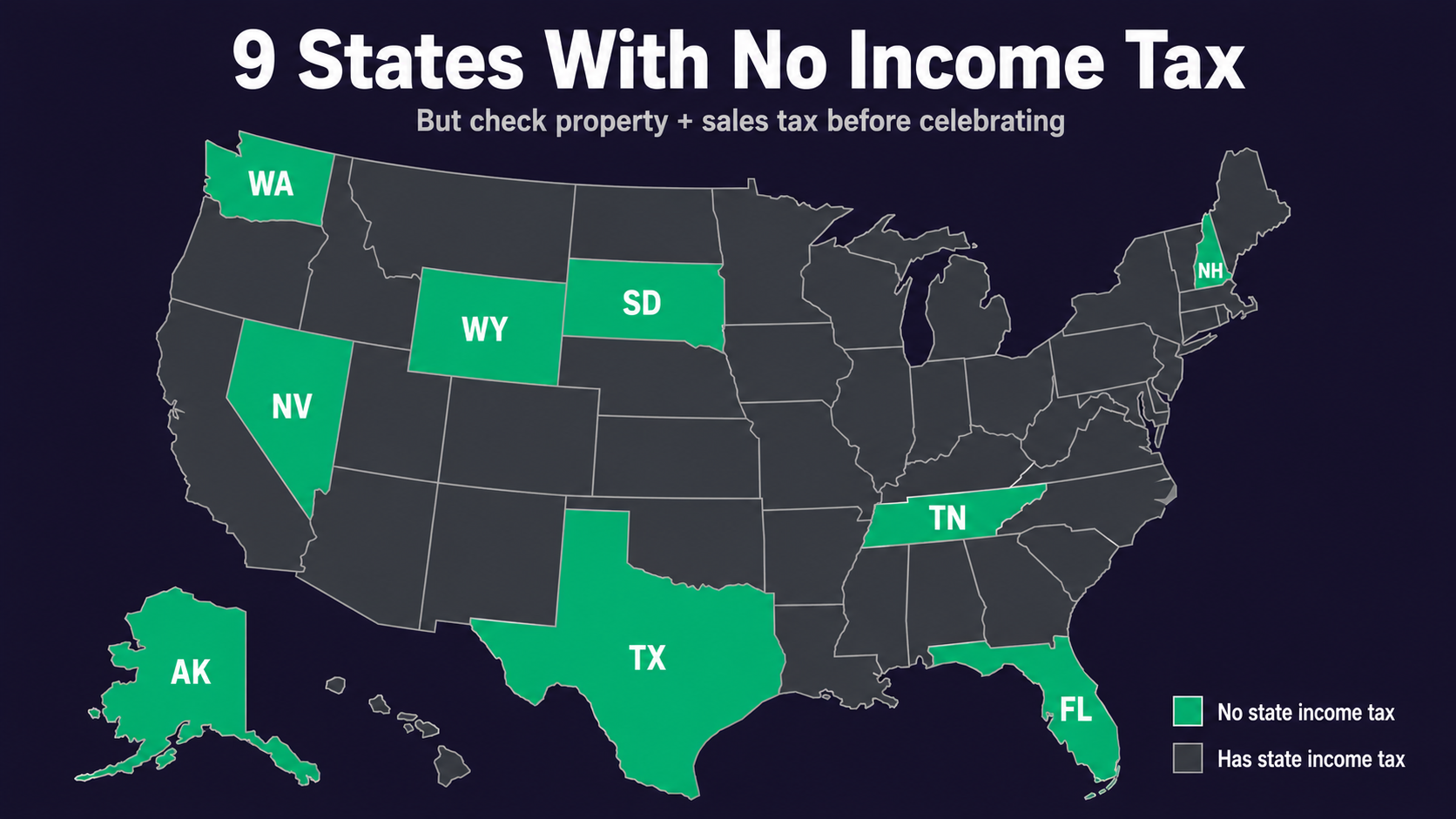
- Florida, Texas, Washington, Nevada, Tennessee, South Dakota, Wyoming, Alaska, New Hampshire → 0% state income tax.
That's not a 1% difference. For a high earner, that's tens of thousands per year.
The Nine No-Income-Tax States
These states do not tax wages or salary at all:
- Alaska;
- Florida;
- Nevada;
- New Hampshire (taxes interest/dividends — phasing out);
- South Dakota;
- Tennessee;
- Texas;
- Washington (does tax some capital gains);
- Wyoming.
But "no income tax" doesn't mean "no taxes." These states usually make up for it through:
- Higher property taxes (Texas, New Hampshire);
- Higher sales taxes (Tennessee, Washington);
- Specific resource or business taxes (Alaska oil, Nevada gambling, Wyoming mineral).
Before you U-Haul to Austin, run the total number, not just the income tax line.
When Moving Actually Makes Sense
Moving to save on taxes can pay off — but only when the numbers genuinely back it up. Real cases:
- High earners working remote — saving $15k+/year for the same job;
- Pre-retirees — about to sell a business or large stock position;
- Crypto or stock-heavy investors — large unrealized gains they'll soon realize;
- Retirees on Social Security — most states don't tax it, but a few still do.
When Moving Is A Trap
- Cost of living is higher in the new state — common in Florida and Texas hot metros, where the property tax can eat the income tax savings;
- You can't actually establish residency — states like California are aggressive about claiming you as a resident even after you "move";
- You'd lose access to community, family, or career networks worth more than the tax savings.
Becoming A Real Resident — Not Just Pretending
States with high income taxes audit "movers" hard. To actually count as a resident of your new state, expect to:
- Spend over 183 days/year physically there;
- Update your driver's license, voter registration, and vehicle registration;
- Move banking, doctor, dentist, gym, mailing address;
- Sell or substantially reduce ties to the old state (especially your old home).
If you keep your Manhattan apartment "for visits," New York may still consider you a New York resident. They will check.
Obrigado pelo seu feedback!
Pergunte à IA

Pergunte à IA

Pergunte o que quiser ou experimente uma das perguntas sugeridas para iniciar nosso bate-papo
State Taxes and Moving States For Tax Purposes
The Other Tax Bill Nobody Talks About
When people say "tax bracket," they usually mean federal. But most Americans pay a second income tax — to their state. And the variation between states is huge.
- California top rate → 13.3%;
- New York City top rate (state + city) → over 14%;
- Florida, Texas, Washington, Nevada, Tennessee, South Dakota, Wyoming, Alaska, New Hampshire → 0% state income tax.
That's not a 1% difference. For a high earner, that's tens of thousands per year.
The Nine No-Income-Tax States
These states do not tax wages or salary at all:
- Alaska;
- Florida;
- Nevada;
- New Hampshire (taxes interest/dividends — phasing out);
- South Dakota;
- Tennessee;
- Texas;
- Washington (does tax some capital gains);
- Wyoming.
But "no income tax" doesn't mean "no taxes." These states usually make up for it through:
- Higher property taxes (Texas, New Hampshire);
- Higher sales taxes (Tennessee, Washington);
- Specific resource or business taxes (Alaska oil, Nevada gambling, Wyoming mineral).
Before you U-Haul to Austin, run the total number, not just the income tax line.
When Moving Actually Makes Sense
Moving to save on taxes can pay off — but only when the numbers genuinely back it up. Real cases:
- High earners working remote — saving $15k+/year for the same job;
- Pre-retirees — about to sell a business or large stock position;
- Crypto or stock-heavy investors — large unrealized gains they'll soon realize;
- Retirees on Social Security — most states don't tax it, but a few still do.
When Moving Is A Trap
- Cost of living is higher in the new state — common in Florida and Texas hot metros, where the property tax can eat the income tax savings;
- You can't actually establish residency — states like California are aggressive about claiming you as a resident even after you "move";
- You'd lose access to community, family, or career networks worth more than the tax savings.
Becoming A Real Resident — Not Just Pretending
States with high income taxes audit "movers" hard. To actually count as a resident of your new state, expect to:
- Spend over 183 days/year physically there;
- Update your driver's license, voter registration, and vehicle registration;
- Move banking, doctor, dentist, gym, mailing address;
- Sell or substantially reduce ties to the old state (especially your old home).
If you keep your Manhattan apartment "for visits," New York may still consider you a New York resident. They will check.
Obrigado pelo seu feedback!
