The Iterative Design Process
Свайпніть щоб показати меню

The Iterative Design Process is a fundamental framework used in the industry for developing games and digital experiences. It follows a structured approach where a design is created, tested, and improved through continuous cycles. This method ensures refinement and progress by incorporating feedback and data at each stage.
The iterative design process saves both time and money by identifying issues early and reducing costly errors. It ensures a user-centered approach, improves flexibility, and adapts to changing requirements or market trends. This results in a higher-quality and more efficient development process.
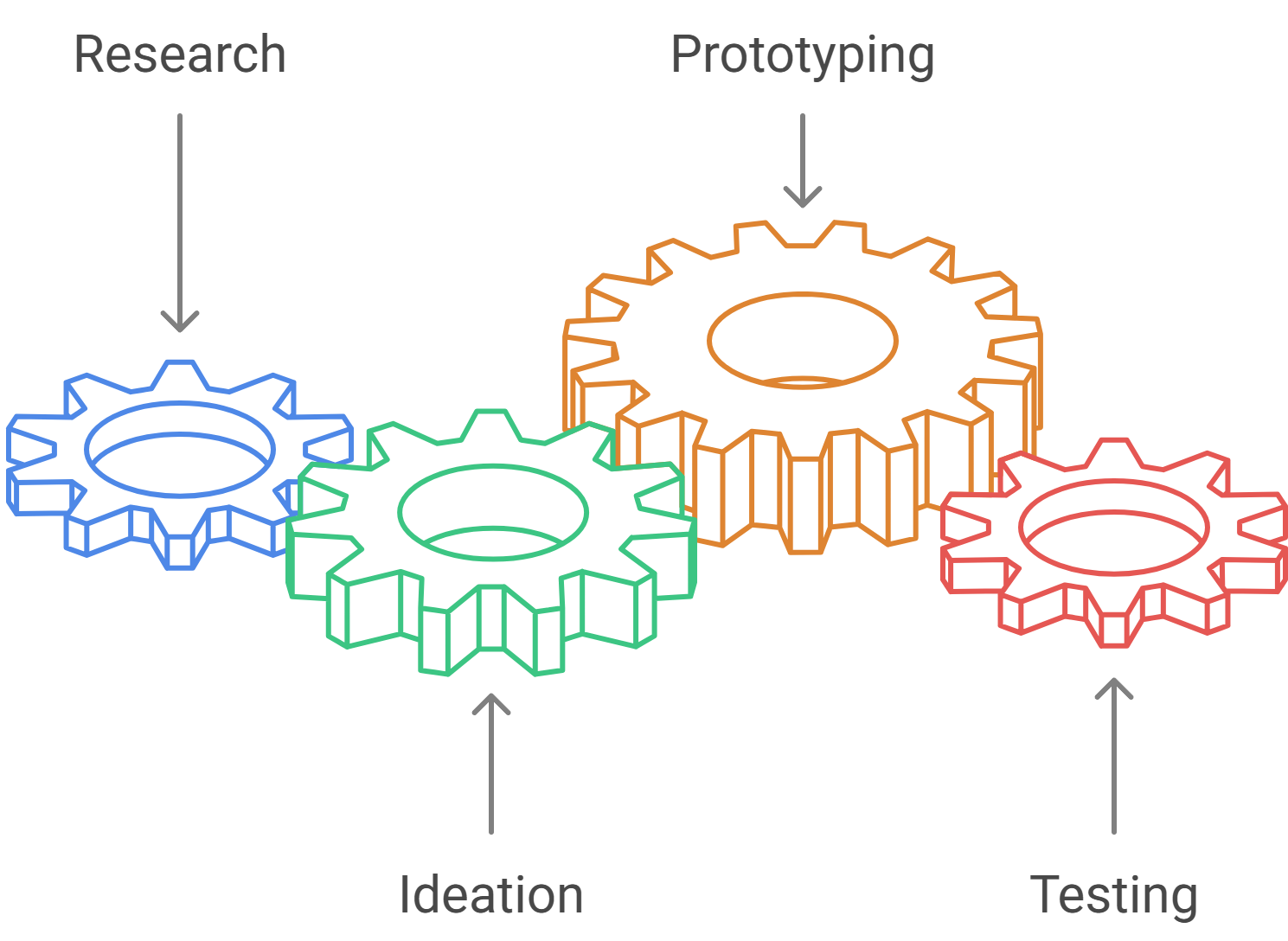
The first phase in the design cycle, where we gather information to understand the problem space, user needs, and market trends. This can involve traditional research methods or insights from previous iterations.

- Playing games: observing game mechanics, user interactions, and engagement levels to draw inspiration.
- Reading articles: exploring industry trends, expert opinions, and case studies to stay informed.
- Educating oneself on a specific topic: learning new concepts, tools, or techniques relevant to the design challenge.
- Reviewing results from the previous iteration: analyzing feedback, performance data, and previous design decisions to refine the process.
Ideation is a creative phase where ideas and solutions are generated to address user needs and design challenges. This phase is divided into two key.
- Divergence Generating as many ideas as possible without judgment.
- Encouraging free thinking, brainstorming, and creative exploration. Convergence
- Reviewing all ideas and filtering them based on feasibility, effectiveness, and alignment with user needs.
- Selecting the best ideas for further development.
Prototyping is process of creating models or simulations to bring ideas to life, ranging from simple sketches to detailed interactive prototypes.
- Low-fidelity prototypes: Quick and simple representations (e.g., post-its, wireframes, paper sketches).
- Highly flexible and easy to modify.
- Best used in early design stages to explore multiple concepts rapidly. High-fidelity prototypes:
- Detailed and visually polished, resembling a finished product.
- More time-consuming but useful for testing interactions and presenting to stakeholders.
- Best suited for later stages in the development cycle when details need refinement.
Testing is a crucial phase where prototypes are evaluated by users to gather insights and validate design choices.
- Evaluating prototypes with users: observing how users interact with the design to identify usability issues.
- Gathering feedback and identifying issues: collecting qualitative and quantitative data to improve the design.
- Assessing the effectiveness of design solutions: measuring whether the prototype meets user needs and business goals.
- Documenting shortcomings and strengths: keeping records of what works well and what needs improvement.
- Using data as research material for the next iteration: feeding insights back into the design cycle to refine and enhance the final product.
Дякуємо за ваш відгук!
Запитати АІ

Запитати АІ

Запитайте про що завгодно або спробуйте одне із запропонованих запитань, щоб почати наш чат
