AI Hype vs. Reality
Swipe to show menu
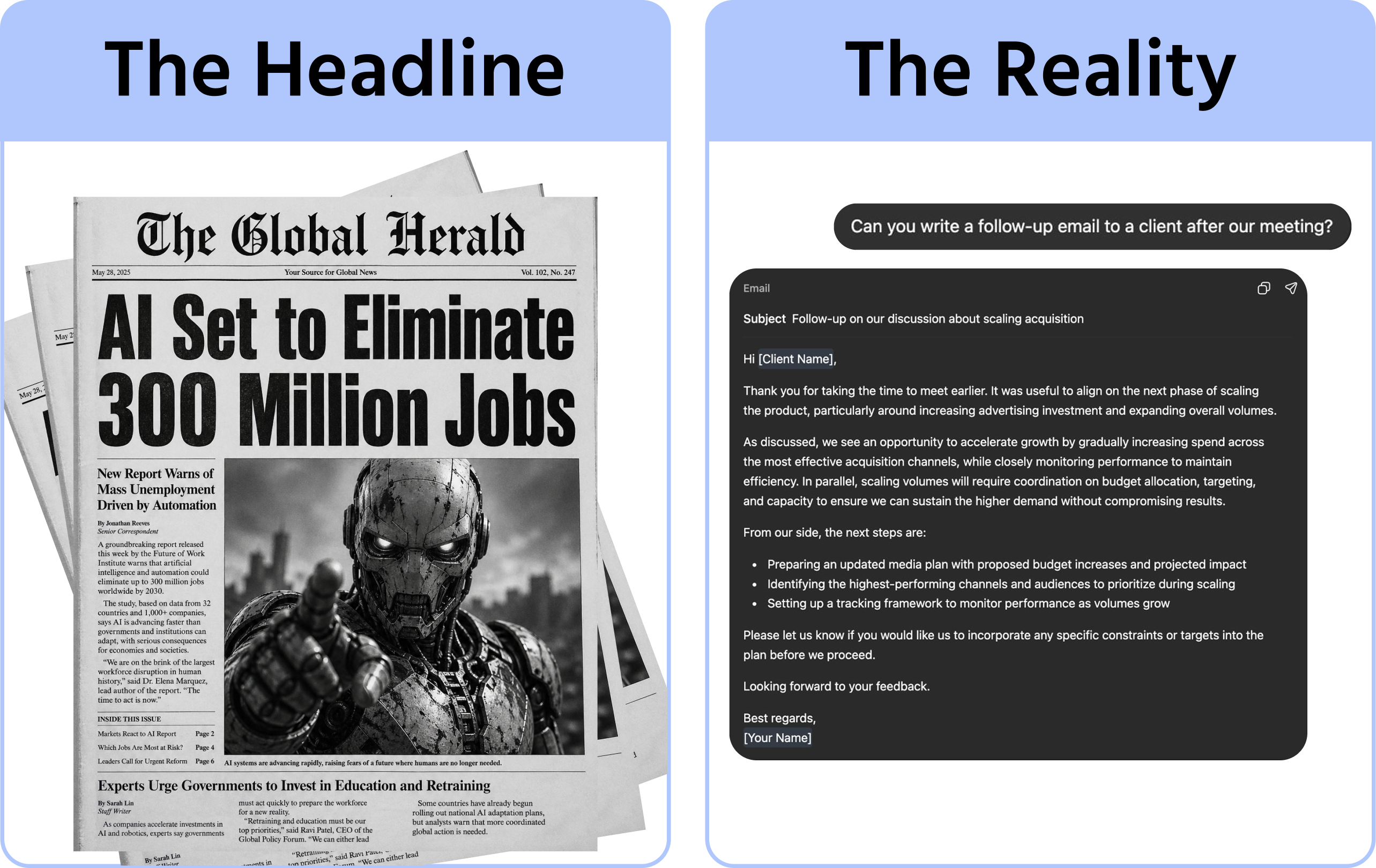
AI is everywhere in 2026 — in your inbox, your browser, your work apps. But headlines about it range from "AI will save humanity" to "AI will end all jobs." Before we dive in, let's establish what AI actually is today — and what it isn't.
Common Misconceptions About AI
Let's address the most widespread myths head-on:
- "AI will replace my job" — AI is replacing tasks, not roles. Professionals who use AI effectively become more productive, not obsolete;
- "AI always gets it right" — AI makes mistakes, sometimes confidently. You'll learn how to spot and handle this in Section 3;
- "You need to know how to code" — not at all. Modern AI tools are designed for everyday language. No technical background required;
- "AI understands me like a human does" — AI processes patterns in language. It doesn't have feelings, opinions, or true comprehension.
What AI Is Actually Good At
Think of AI as a capable assistant that's available 24/7 and never gets tired. It excels at:
- Drafting and rewriting text — emails, reports, summaries, posts;
- Brainstorming — generating ideas, options, and alternatives quickly;
- Explaining things — breaking down complex topics in plain language;
- Processing information — summarizing long documents, extracting key points;
- Repetitive writing tasks — templates, standard replies, structured content.
What AI Is Not Good At
Knowing the limits is just as important as knowing the strengths:
- Real-time information — AI's knowledge has a cutoff date and doesn't browse the internet by default;
- Verified facts — it can generate plausible-sounding but incorrect information (covered in detail in Section 3);
- Deep contextual judgment — nuanced decisions that require lived experience or organizational context;
- Remembering you — by default, each conversation starts fresh.
AI is a powerful tool, and like any tool, knowing what it's for makes all the difference. By the end of this course, you'll know exactly how to use it to your advantage.
1. Which statement best addresses the common misconceptions about AI discussed in this section?
2. Which of the following are things modern AI is actually good at, and which are limitations, according to the chapter content?
Everything was clear?
Thanks for your feedback!
Section 1. Chapter 1
Ask AI

Ask AI

Ask anything or try one of the suggested questions to begin our chat
