Notice: This page requires JavaScript to function properly.
Please enable JavaScript in your browser settings or update your browser.
Learn How LLMs Actually Work | What is AI
Practical AI for Work

How LLMs Actually Work

Swipe to show menu

You've talked to Claude. Now let's open the hood.

From Words to Numbers

Your message becomes tokens. Computers can't read words, only numbers, so your text gets split into small pieces called tokens (roughly 4 characters each: a full word, part of a word, or punctuation), and each token becomes a number.
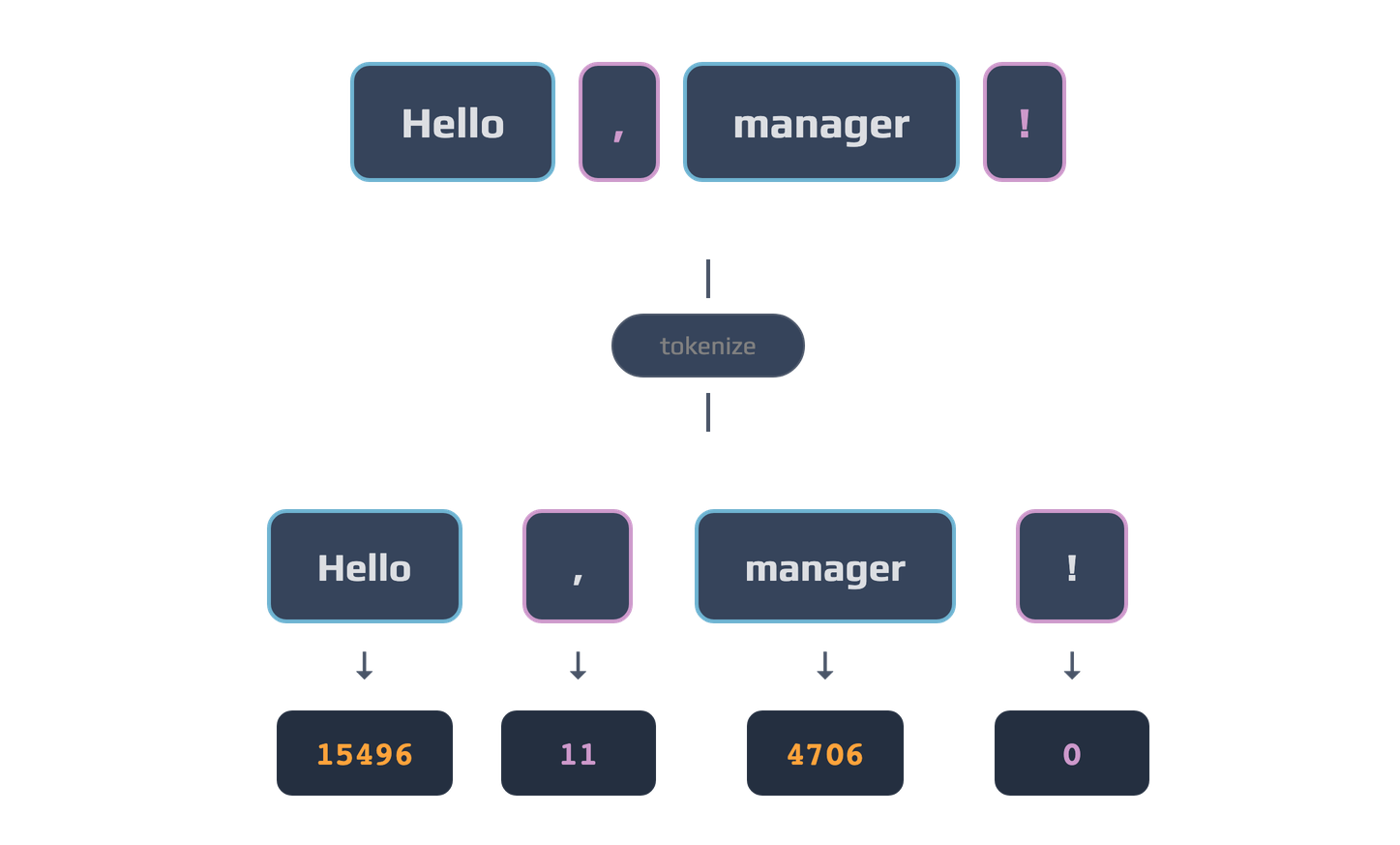
From words to numbers

750 words ≈ 1,000 tokens. More tokens = higher cost, slower reply.

Predicting, Not Knowing

AI doesn't understand your sentence — it guesses the next token, one at a time.
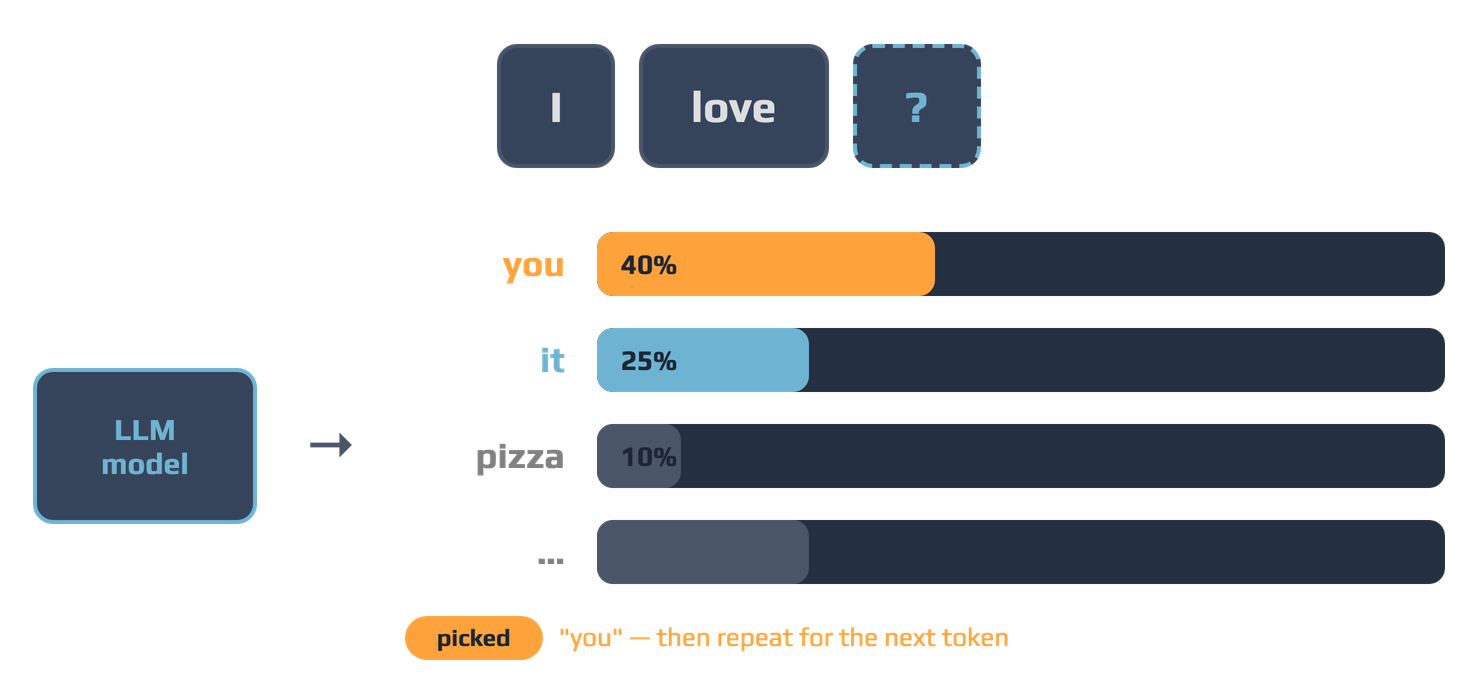
Prediction

It picks the top guess, then repeats for the next token, and the next — until it stops.

Where the Guesses Come From

AI learned these patterns from huge amounts of text, books, articles, code, forums in one big training round, not live and ongoing.

  • Continuous, unchecked updates can make a model worse, not better, so training happens in batches, then gets released as a snapshot;
  • That's why AI has a training cutoff: no idea of anything after that date, and no visibility into your company's data;
  • It also learned the internet's mistakes along with everything else.

When It Gets It Wrong

A hallucination is AI sounding confident about something that's just false. It's not lying — it's still just predicting, and the most likely-sounding answer isn't always the true one.

Not a dealbreaker — grounding Claude in real documents, search, or data (what you're practicing in this lab) cuts this way down. Your move: stay a little skeptical on specifics dates, numbers, links, and double-check when something feels off.

question mark

A colleague says: "I asked Claude about a regulation that changed last month, and it gave me the old, outdated rule — this tool is unreliable."

Select the correct answer

Everything was clear?

How can we improve it?

Thanks for your feedback!

Section 1. Chapter 2

Ask AI

expand

Ask AI

ChatGPT

Ask anything or try one of the suggested questions to begin our chat

How LLMs Actually Work

You've talked to Claude. Now let's open the hood.

From Words to Numbers

Your message becomes tokens. Computers can't read words, only numbers, so your text gets split into small pieces called tokens (roughly 4 characters each: a full word, part of a word, or punctuation), and each token becomes a number.

From words to numbers

750 words ≈ 1,000 tokens. More tokens = higher cost, slower reply.

Predicting, Not Knowing

AI doesn't understand your sentence — it guesses the next token, one at a time.

Prediction

It picks the top guess, then repeats for the next token, and the next — until it stops.

Where the Guesses Come From

AI learned these patterns from huge amounts of text, books, articles, code, forums in one big training round, not live and ongoing.

  • Continuous, unchecked updates can make a model worse, not better, so training happens in batches, then gets released as a snapshot;
  • That's why AI has a training cutoff: no idea of anything after that date, and no visibility into your company's data;
  • It also learned the internet's mistakes along with everything else.

When It Gets It Wrong

A hallucination is AI sounding confident about something that's just false. It's not lying — it's still just predicting, and the most likely-sounding answer isn't always the true one.

Not a dealbreaker — grounding Claude in real documents, search, or data (what you're practicing in this lab) cuts this way down. Your move: stay a little skeptical on specifics dates, numbers, links, and double-check when something feels off.

Everything was clear?

How can we improve it?

Thanks for your feedback!

Section 1. Chapter 2
some-alt