Why Timing the Market Fails
Swipe to show menu
The logic sounds reasonable: sell before the market drops, buy back before it recovers. Avoid the pain, capture the gain. If you could do it consistently, you'd outperform every passive investor on the planet.
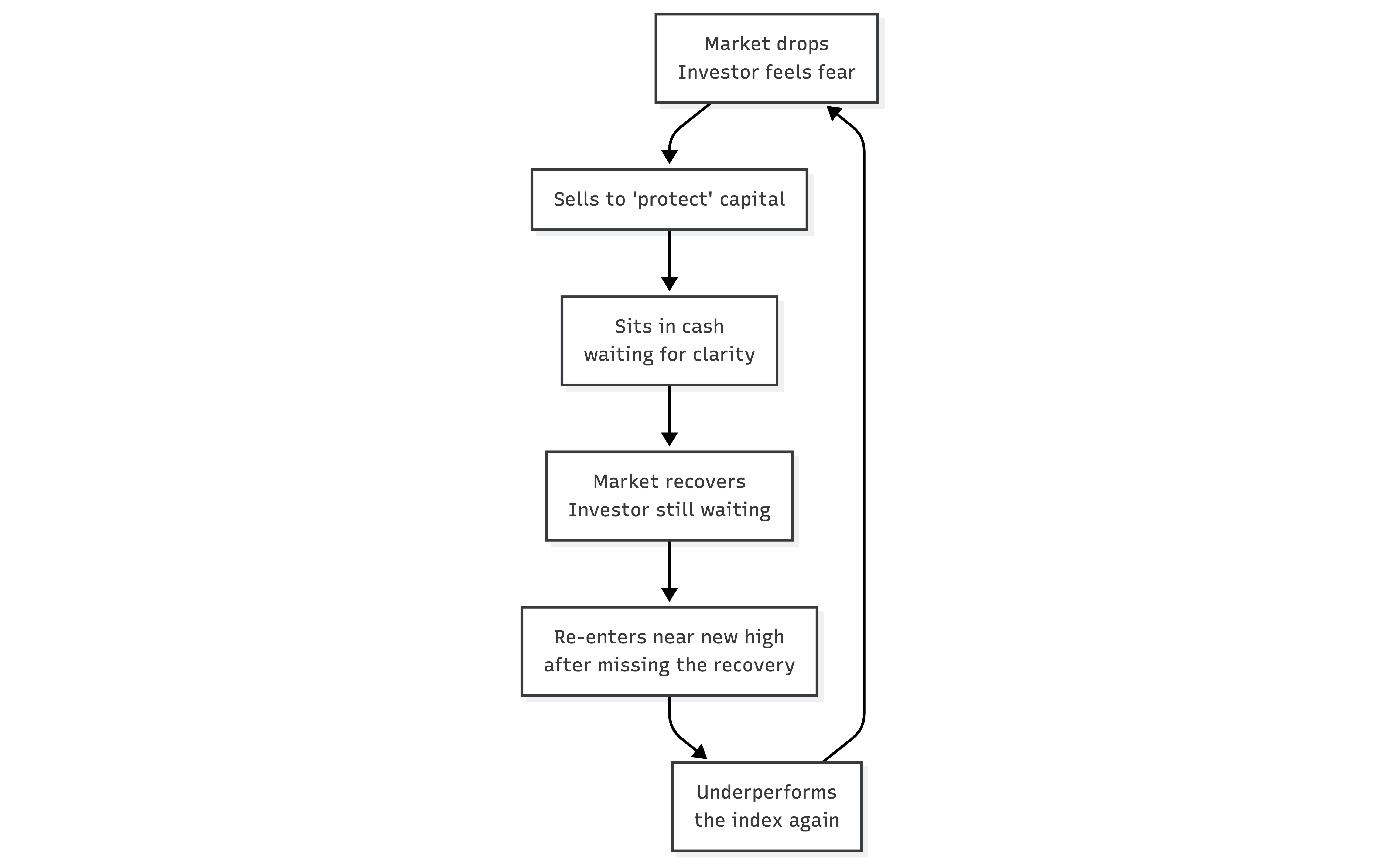
The problem is the word "consistently." Market timing doesn't require one good call – it requires two correct decisions every single time: when to exit and when to re-enter. Miss either one and the math turns against you fast.
Research from DALBAR's annual Quantitative Analysis of Investor Behavior consistently shows the same result: the average equity fund investor significantly underperforms the S&P 500 over every measured long-term period – not because they picked bad funds, but because they bought and sold at the wrong times.
That gap is almost entirely explained by mistimed entries and exits.
Why It Fails Structurally
Market timing fails for three compounding reasons that no amount of research or discipline fully overcomes:
1. Information doesn't help as much as you think. By the time bad news is public, markets have already priced it in. Prices move on expectations, not on events. Acting on news you've just read means acting on information the market processed before you did.
2. You need to be right twice. Exiting at the right time is hard. Re-entering at the right time is harder. Most timers exit correctly but re-enter too late – sitting in cash while the recovery runs without them.
3. Emotions distort the signal. Markets feel most dangerous at exactly the wrong moment – right before a recovery. The impulse to sell is strongest at the trough, and the impulse to buy is strongest near the peak. Emotional timing is systematically backwards.

There is a version of tactical allocation that isn't the same as market timing – gradually shifting asset allocation based on valuation ranges or interest rate environments over months or years. This is distinct from trying to call market tops and bottoms. The evidence against timing is specifically against short-term in-and-out decisions, not against long-run strategic rebalancing.

DALBAR's "Quantitative Analysis of Investor Behavior" has been published annually since 1994 and remains the most cited study on the gap between fund returns and actual investor returns. The consistent finding across 30 years: behavior costs investors more than fees do.
1. An investor reads a major news outlet reporting that the economy is heading into a recession and immediately sells their index fund holdings. What is the most likely outcome of this decision?
2. According to DALBAR's long-term research, why do average equity investors underperform the S&P 500 over long periods?
Thanks for your feedback!
Ask AI

Ask AI

Ask anything or try one of the suggested questions to begin our chat
