How to Structure a Professional Google Ads Account
Swipe to show menu
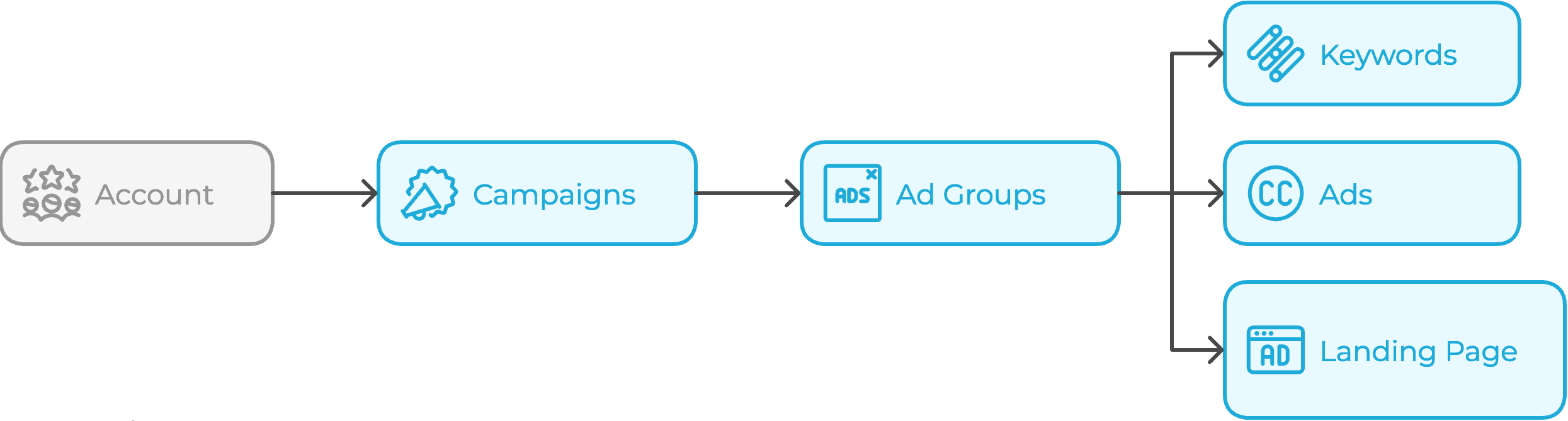
Before launching campaigns, it's critical to build your account on a solid foundation. This chapter walks you through how Google Ads is structured and how to organize campaigns, ad groups, and keywords to match your business goals and simplify optimization down the road.
Golden Rules
Do
- Keep ad groups tight (5–20 closely related keywords);
- Align keyword → ad copy → landing page (message match);
- Separate brand vs non-brand campaigns;
- Start with phrase/exact. Add broad only with smart bidding + strong negatives;
- Build negatives continuously (search terms mining).
Don't
- Mix unrelated keywords in one ad group;
- Use "Campaign 1/Test" as names;
- Launch 15 campaigns day one (you won't learn fast);
- Point everything to the homepage;
- Skip conversion tracking (you'll fly blind).
Example Blueprint (Search, Non-Brand, US)
Campaign: Search_US_NonBrand_RunningShoes
- Geo: US | Budget: $150/day | Bidding: tCPA (after data) / Manual CPC (start)
Ad Groups
NB_Running_Shoes_Men→ LP:/running-shoes/men;NB_Running_Shoes_Women→ LP:/running-shoes/women.- Keywords (per AG):
- Exact: [men's running shoes];
- Phrase: "best running shoes for men";
- Exact: [lightweight running shoes].
Ads
- RSA_v1, RSA_v2 (test USP and headline order);
- Assets: sitelinks (New Arrivals, Size Guide, Returns), callouts (Free Shipping), snippets (Brands).
Everything was clear?
Thanks for your feedback!
Section 2. Chapter 1
Ask AI

Ask AI

Ask anything or try one of the suggested questions to begin our chat
