What Retirement Planning Actually Means
Swipe to show menu

Retirement planning is the process of preparing for financial security after leaving the workforce. It involves setting goals for your desired retirement lifestyle, estimating the income you will need, and creating a strategy to build and manage your savings and investments so you can support yourself without relying on a regular paycheck.
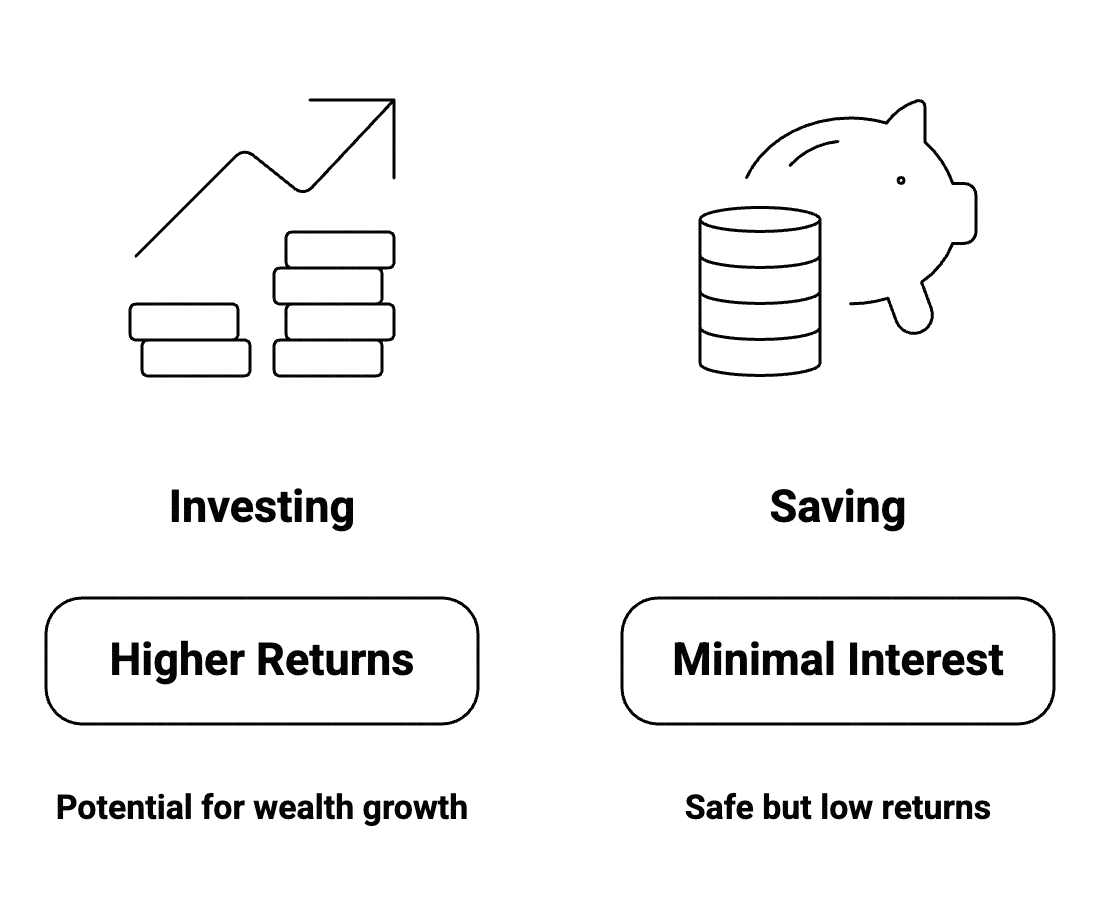
Retirement planning is more than just putting money aside. To truly prepare for the future, you need to understand the difference between saving and investing. Saving means setting aside money, usually in a safe place like a bank account, for short-term needs or emergencies. Savings are typically easy to access and carry very little risk, but they usually earn minimal interest over time.
Investing, on the other hand, involves putting money into assets such as stocks, bonds or mutual funds with the goal of growing your wealth over the long term. Although investing carries risk and the possibility of losing money, it also provides the potential for higher returns. This growth is important for retirement planning because relying only on savings may not keep up with rising costs and inflation, while investing gives your money a better chance to grow and maintain your future purchasing power.
Retirement accounts were created to help people prepare financially for life after work. As traditional pensions became less common and life expectancy increased, governments introduced accounts like 401(k)s and IRAs to encourage long-term saving and investing. These accounts offer tax advantages such as tax deductions, tax-deferred growth, or tax-free withdrawals, making it easier to build wealth for retirement.
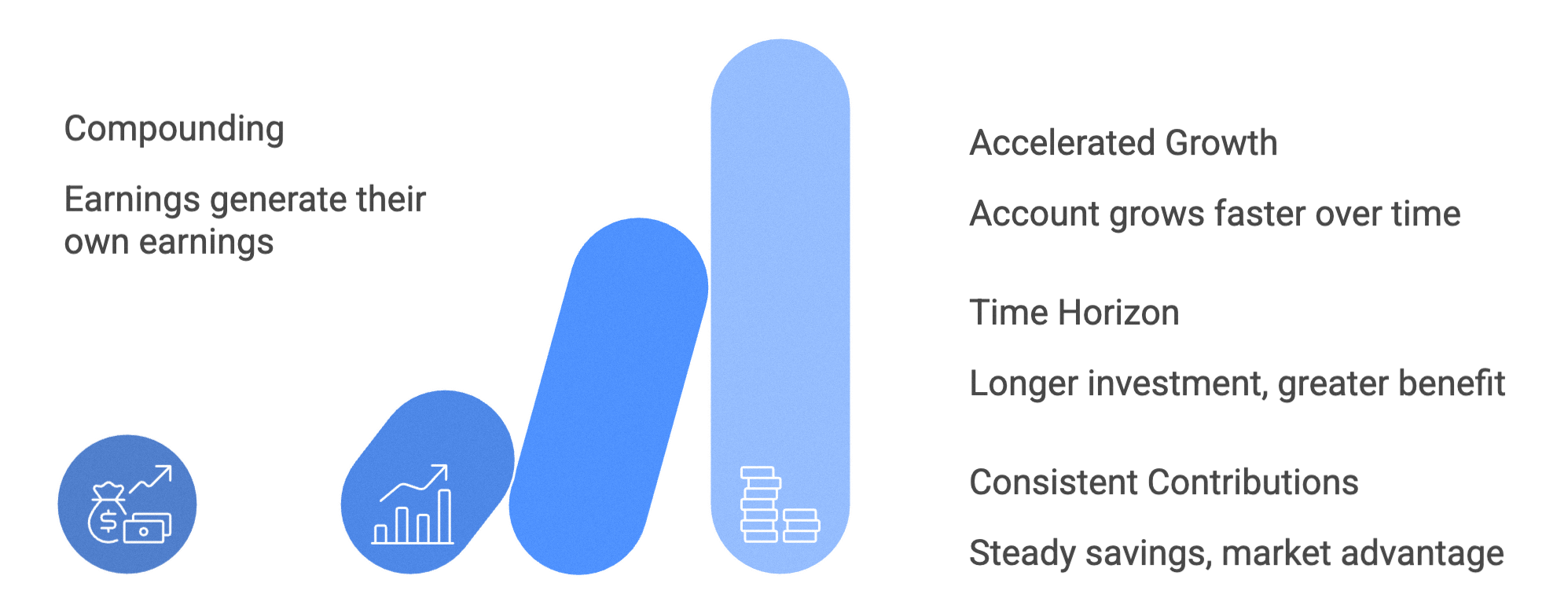

When you invest, your earnings can generate their own earnings over time. This process, known as compounding, accelerates your account growth the longer your money stays invested;
The more years you give your investments to grow, the greater the potential benefit from compounding. Starting early, even with small amounts, can make a big difference in your final retirement balance;
Regularly adding to your retirement account—even during market downturns—helps you take advantage of market fluctuations and steadily build your savings.
One of the biggest threats to your retirement savings is inflation, which is the gradual rise in prices over time. Inflation reduces your money’s purchasing power, meaning the same amount of money will buy less in the future. For example, if inflation averages 3% per year, something that costs $100 today could cost around $180 in 20 years.
If your savings do not grow faster than inflation, maintaining the same lifestyle in retirement may become difficult. This is why investing is important, it gives your money the potential to grow over time and keep pace with, or even outgrow, inflation.
Thanks for your feedback!
Ask AI

Ask AI

Ask anything or try one of the suggested questions to begin our chat
What Retirement Planning Actually Means
Retirement planning is the process of preparing for financial security after leaving the workforce. It involves setting goals for your desired retirement lifestyle, estimating the income you will need, and creating a strategy to build and manage your savings and investments so you can support yourself without relying on a regular paycheck.
Retirement planning is more than just putting money aside. To truly prepare for the future, you need to understand the difference between saving and investing. Saving means setting aside money, usually in a safe place like a bank account, for short-term needs or emergencies. Savings are typically easy to access and carry very little risk, but they usually earn minimal interest over time.
Investing, on the other hand, involves putting money into assets such as stocks, bonds or mutual funds with the goal of growing your wealth over the long term. Although investing carries risk and the possibility of losing money, it also provides the potential for higher returns. This growth is important for retirement planning because relying only on savings may not keep up with rising costs and inflation, while investing gives your money a better chance to grow and maintain your future purchasing power.
Retirement accounts were created to help people prepare financially for life after work. As traditional pensions became less common and life expectancy increased, governments introduced accounts like 401(k)s and IRAs to encourage long-term saving and investing. These accounts offer tax advantages such as tax deductions, tax-deferred growth, or tax-free withdrawals, making it easier to build wealth for retirement.
When you invest, your earnings can generate their own earnings over time. This process, known as compounding, accelerates your account growth the longer your money stays invested;
The more years you give your investments to grow, the greater the potential benefit from compounding. Starting early, even with small amounts, can make a big difference in your final retirement balance;
Regularly adding to your retirement account—even during market downturns—helps you take advantage of market fluctuations and steadily build your savings.
One of the biggest threats to your retirement savings is inflation, which is the gradual rise in prices over time. Inflation reduces your money’s purchasing power, meaning the same amount of money will buy less in the future. For example, if inflation averages 3% per year, something that costs $100 today could cost around $180 in 20 years.
If your savings do not grow faster than inflation, maintaining the same lifestyle in retirement may become difficult. This is why investing is important, it gives your money the potential to grow over time and keep pace with, or even outgrow, inflation.
Thanks for your feedback!
