The Core Types of Retirement Accounts
Swipe to show menu

A retirement account is a special type of financial account created specifically to help you save money for retirement. These accounts often come with tax advantages or incentives that encourage long-term savings, making it easier to build financial security for your future.
Many people first encounter retirement accounts through their employer. Employer-sponsored retirement accounts are offered as part of a workplace benefits package. The most common example in the United States is the 401(k) plan, where you can contribute a portion of your paycheck before taxes are taken out. Some employers also offer traditional pension plans, which promise a set monthly payment in retirement based on your salary and years of service. Other examples include 403(b) plans for nonprofit employees and 457 plans for government workers. These accounts often come with employer contributions or matches, which can significantly boost your retirement savings.
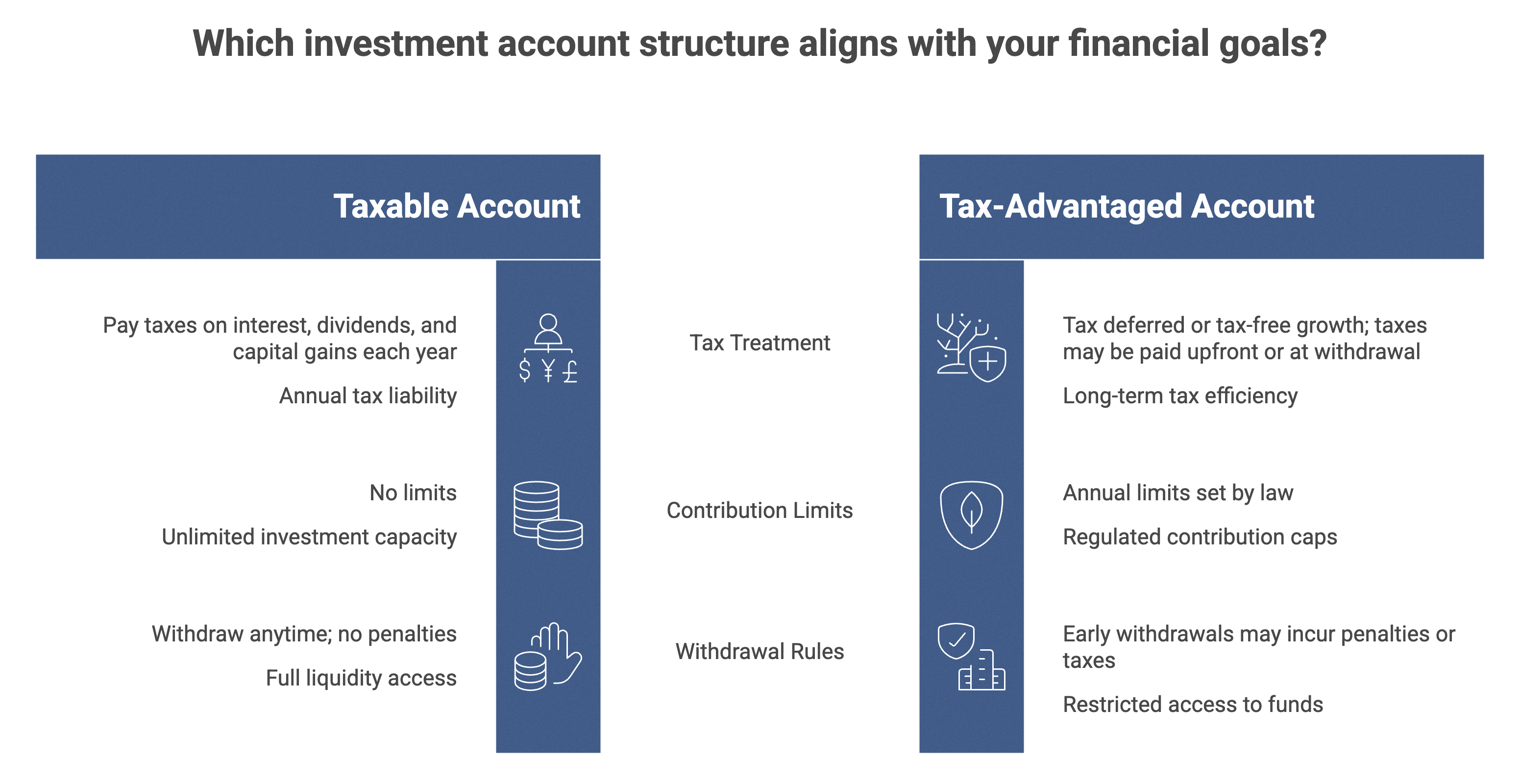
In addition to employer-sponsored accounts, you can also open individual retirement accounts (IRAs) on your own, outside of work. IRAs are available to most people who earn income, and they allow you to save for retirement with certain tax advantages. The two main types are the Traditional IRA, which may allow you to deduct contributions from your taxable income, and the Roth IRA, where you contribute after-tax dollars but can make tax-free withdrawals in retirement. IRAs are designed to encourage individuals to save for the future, regardless of their employment situation.
Beyond personal savings and employer-sponsored accounts, many countries also operate pension systems and government retirement programs. In the United States, Social Security provides a basic income to retired workers through payroll taxes. Other countries have similar systems, such as the state pension in the United Kingdom and Australia’s Superannuation Guarantee system.

Government retirement programs are designed to provide a financial safety net, but they are rarely enough to fully fund retirement on their own. Most people rely on a combination of personal savings, employer retirement accounts, and government benefits to achieve long-term financial security.
Thanks for your feedback!
Ask AI

Ask AI

Ask anything or try one of the suggested questions to begin our chat
