The Three Tax Treatments
Swipe to show menu
Tax treatment refers to how money in a retirement account is taxed at three stages: when you contribute, while your investments grow, and when you withdraw funds in retirement. Different retirement accounts use different tax treatments, which can affect both your savings strategy and future retirement income.
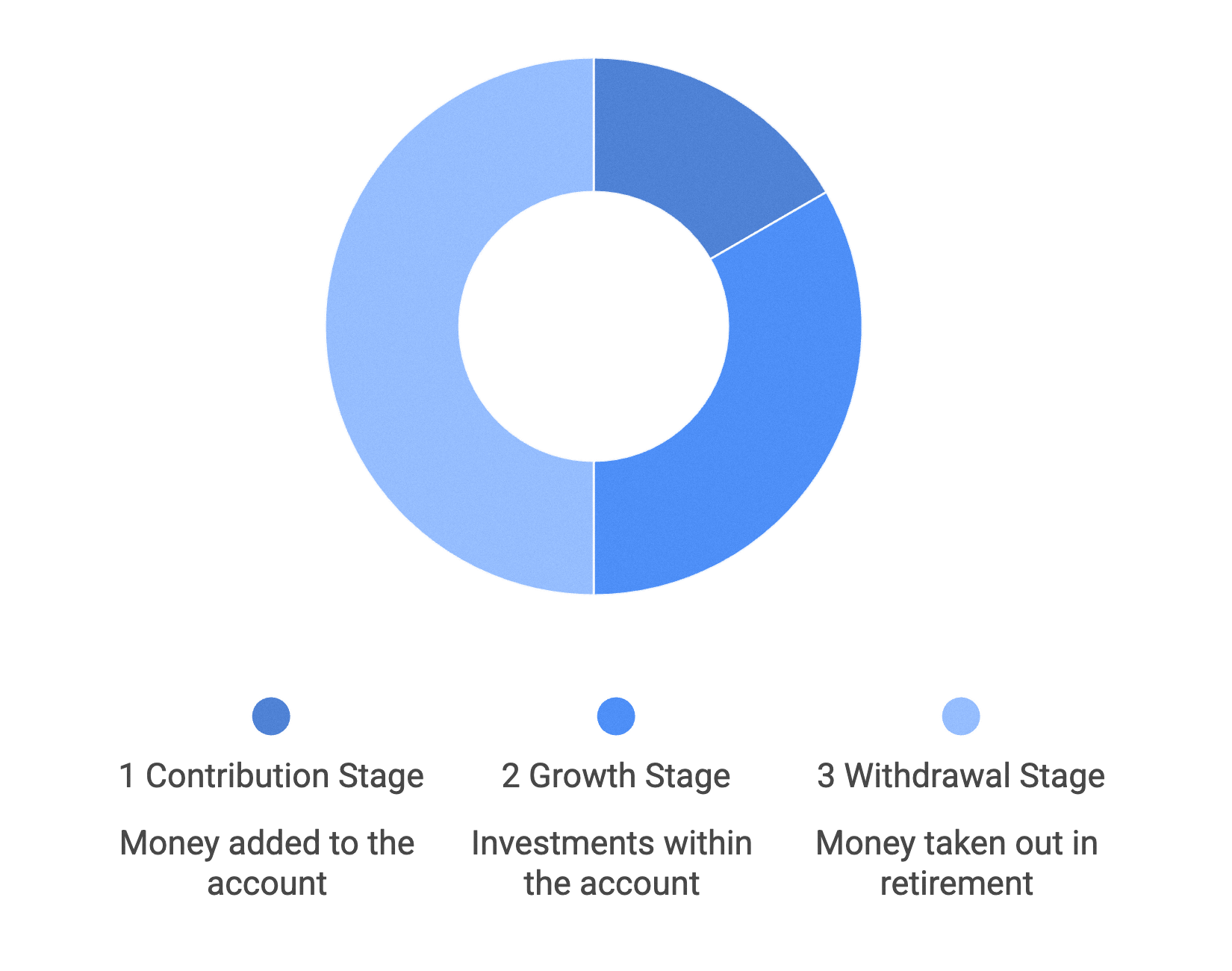
One common type is a tax-deferred account, such as a traditional 401(k) or traditional IRA. With these accounts, you contribute pre-tax dollars, meaning your contributions are not taxed in the year you make them. Your investments can also grow without being taxed each year. However, when you withdraw money in retirement, those withdrawals are taxed as ordinary income. For example, contributing $5,000 to a traditional 401(k) reduces your taxable income for that year by the same amount.

Roth accounts use money you've already paid taxes on. Your investments grow tax-free, and qualified withdrawals in retirement are not taxed.
Brokerage accounts are funded with after-tax dollars. You pay taxes each year on dividends, interest, and capital gains. There are no tax breaks, but you can withdraw money anytime.
Taxes reduce how much your investments can grow. Tax-deferred and tax-free accounts let your money compound faster because you avoid yearly taxes on gains.
To see how taxes can affect long-term growth, imagine two people each invest $10,000 for 30 years with an average annual return of 7%. One invests in a tax-deferred account, while the other uses a taxable account where investment gains are taxed at 20% each year.
In the tax-deferred account, the investment grows to about $76,123 before taxes because all earnings remain invested and continue compounding over time. In the taxable account, paying taxes on gains each year reduces the amount available to grow, leaving the investment worth about $57,435 after 30 years. This example shows how tax deferral can significantly increase long-term investment growth.
Thanks for your feedback!
Ask AI

Ask AI

Ask anything or try one of the suggested questions to begin our chat
