Notice: This page requires JavaScript to function properly.
Please enable JavaScript in your browser settings or update your browser.
Learn Introduction to C++ Programming | Getting Started
C++ Introduction

Introduction to C++ Programming

Swipe to show menu

C++ is a general purpose programming language that supports both low-level and high-level programming paradigms that makes it really adaptable and powerful tool:

  • low level: direct control over hardware, requires deep understanding of computer architecture, more complex but precise;

  • high level: more user-friendly programming, faster development, more maintainable and human-readable code.

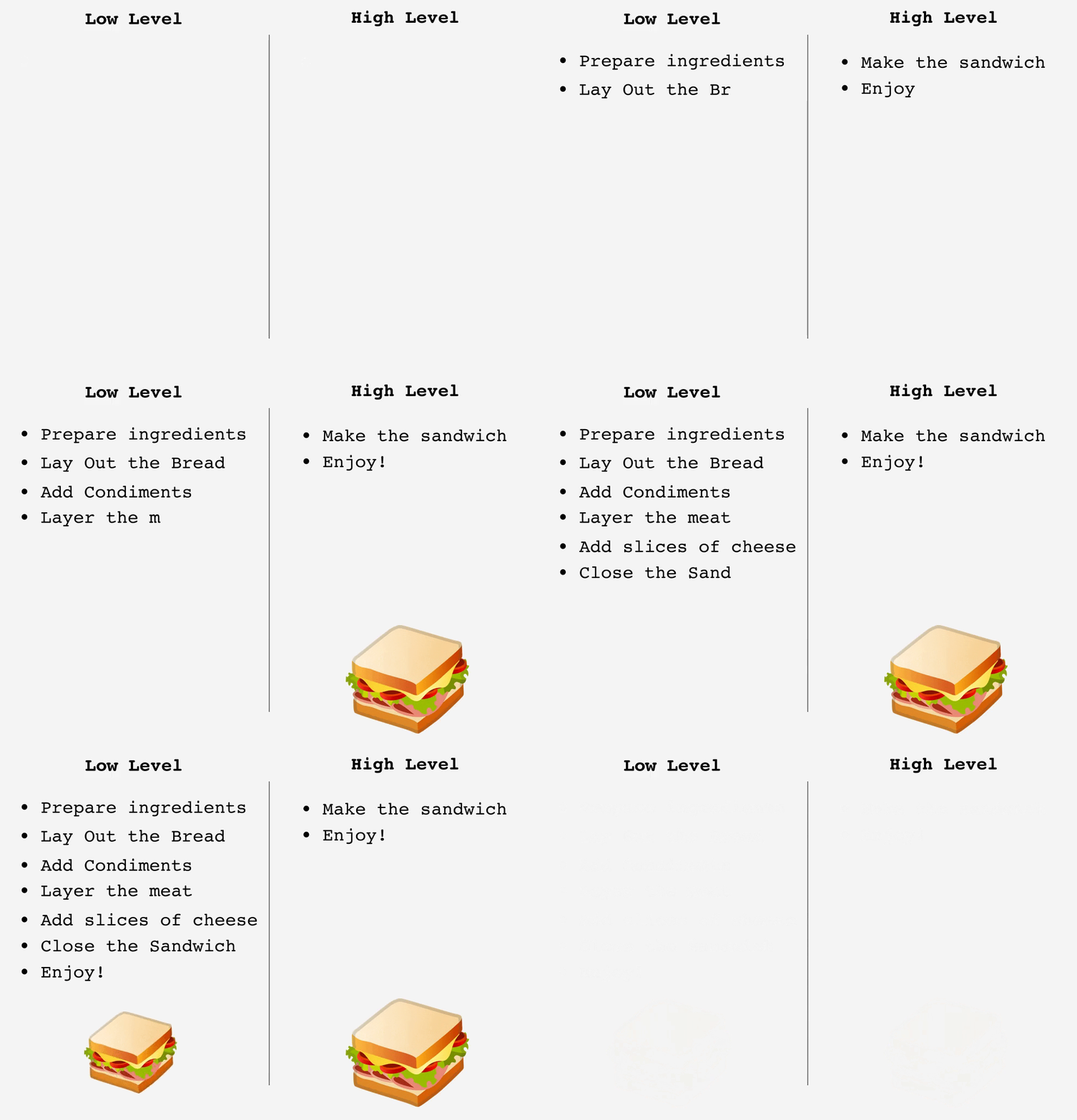
If you imagine coding as cooking, high-level programming would be like simple instructions that give you a general idea of what to do, while low-level programming would be like a step-by-step recipe with all the nuances and exact measurements of the ingredients. Of course, in the end, both recipes require a lot of work, but with the first variant, you don't have to explicitly manage all of those details yourself.
question mark

Is C++ considered a high-level programming language or low-level programming language?

Select the correct answer

Everything was clear?

How can we improve it?

Thanks for your feedback!

Section 1. Chapter 1

Ask AI

expand

Ask AI

ChatGPT

Ask anything or try one of the suggested questions to begin our chat

Introduction to C++ Programming

C++ is a general purpose programming language that supports both low-level and high-level programming paradigms that makes it really adaptable and powerful tool:

  • low level: direct control over hardware, requires deep understanding of computer architecture, more complex but precise;

  • high level: more user-friendly programming, faster development, more maintainable and human-readable code.

If you imagine coding as cooking, high-level programming would be like simple instructions that give you a general idea of what to do, while low-level programming would be like a step-by-step recipe with all the nuances and exact measurements of the ingredients. Of course, in the end, both recipes require a lot of work, but with the first variant, you don't have to explicitly manage all of those details yourself.

Everything was clear?

How can we improve it?

Thanks for your feedback!

Section 1. Chapter 1
some-alt