Status Spending vs Real Happiness
Swipe to show menu
Many people believe they buy expensive things because they truly want them. Sometimes that is true. But sometimes the real motivation is status. People want to:
- Look successful;
- Feel respected;
- Keep up with others;
- Prove something to themselves or other people.
That is where status spending begins.
A Very Common Situation
Imagine this situation. Someone originally plans to buy a practical car. Then comparisons begin.
They see coworkers driving newer models. Influencers show luxury lifestyles online. Friends start upgrading their apartments, phones, and vacations.
Slowly, the emotional goal changes.
The purchase is no longer only about transportation. Now it is about image, identity, validation, and social comparison. The more emotional the comparison becomes, the easier it is to ignore:
- Higher monthly payments;
- Financial pressure;
- Long-term stress.
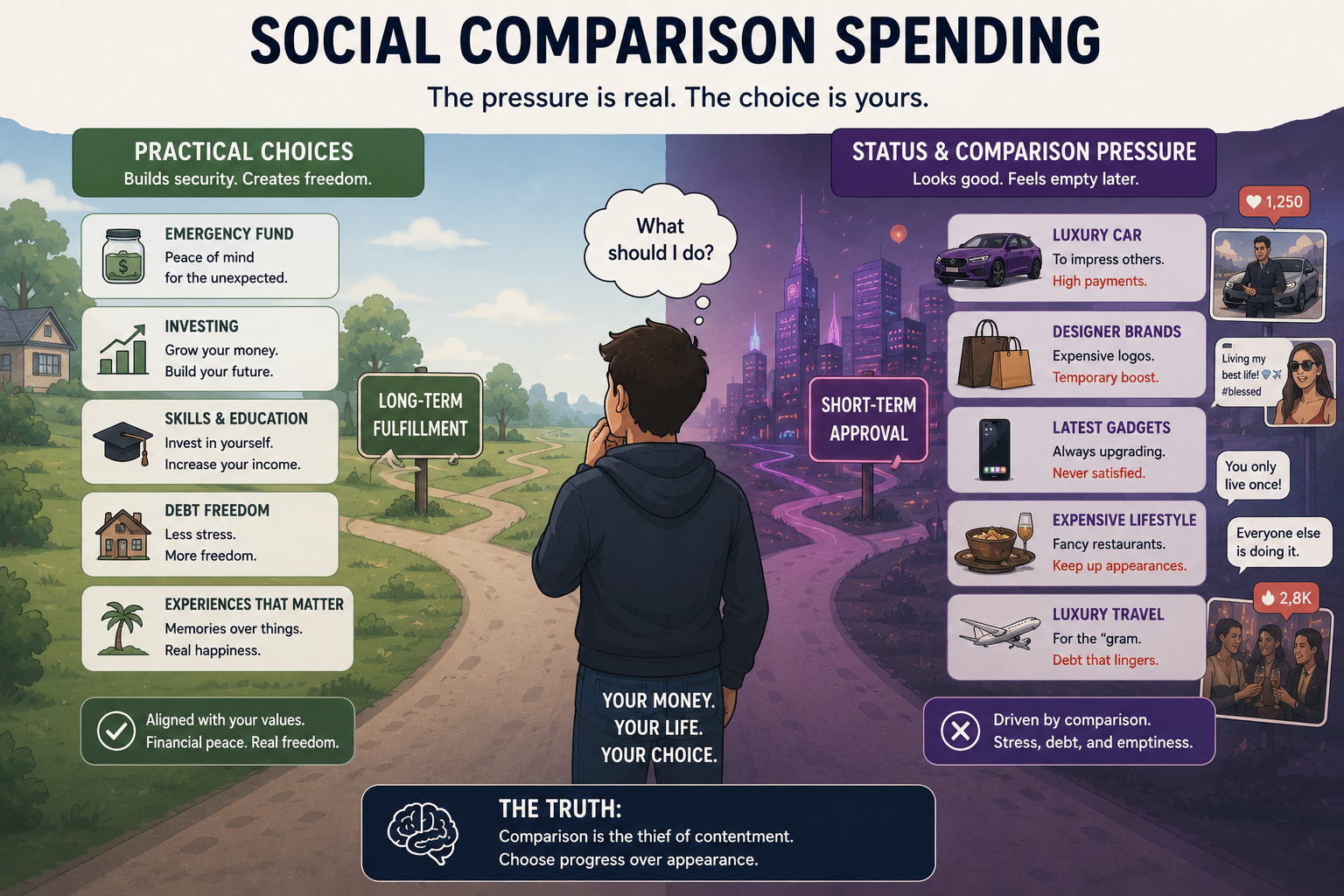

Status spending happens when purchases are strongly influenced by social image, comparison, or external validation.
The emotional reward often comes less from the product itself and more from what the purchase represents socially.
Why Social Media Makes This Worse
Humans naturally compare themselves to others. Social media amplifies this constantly. People mostly post:
- Achievements;
- Luxury moments;
- Upgrades;
- Exciting experiences.
Very few people post:
- Debt;
- Financial stress;
- Regret;
- Anxiety about money.
Over time, unrealistic lifestyles start feeling emotionally normal. That pressure quietly changes spending behavior.
One Important Question
Before making an expensive purchase, ask yourself:
"Would I still want this if nobody else could see it?"
That question often reveals whether the purchase is driven by genuine personal value or by external validation.

Think about one expensive purchase you strongly wanted in the past.
Ask yourself:
- Did you want the product itself?
- Or the feeling connected to owning it?
- Did social comparison influence the decision?
- Would you still want it if nobody else could see it?
Thanks for your feedback!
Ask AI

Ask AI

Ask anything or try one of the suggested questions to begin our chat
