Why Responses Can Be Incorrect
Swipe to show menu
ChatGPT is a powerful language model that can generate human-like responses, but it has important limitations. One of the most notable is hallucination, where the model produces information that sounds believable but is actually incorrect, made up, or not supported by real data. This happens because ChatGPT generates responses based on patterns in data, not true understanding or verified facts.

ChatGPT cannot access events or developments that occurred after its last training cutoff, so some responses may be outdated or no longer accurate.
ChatGPT may generate details, names, or statistics that seem real but are actually fabricated, especially when dealing with obscure or ambiguous topics.
If a prompt is unclear or has multiple meanings, ChatGPT may misinterpret the user’s intent and provide a response that does not fully address the question.
Sometimes, ChatGPT may provide answers that are too broad or generic, missing important context or nuance needed for accuracy.

Common errors in ChatGPT's responses include providing outdated facts.
To reduce errors and improve response quality, use clear and specific prompts to minimize ambiguity. For important information, always cross-check ChatGPT responses with trusted sources.
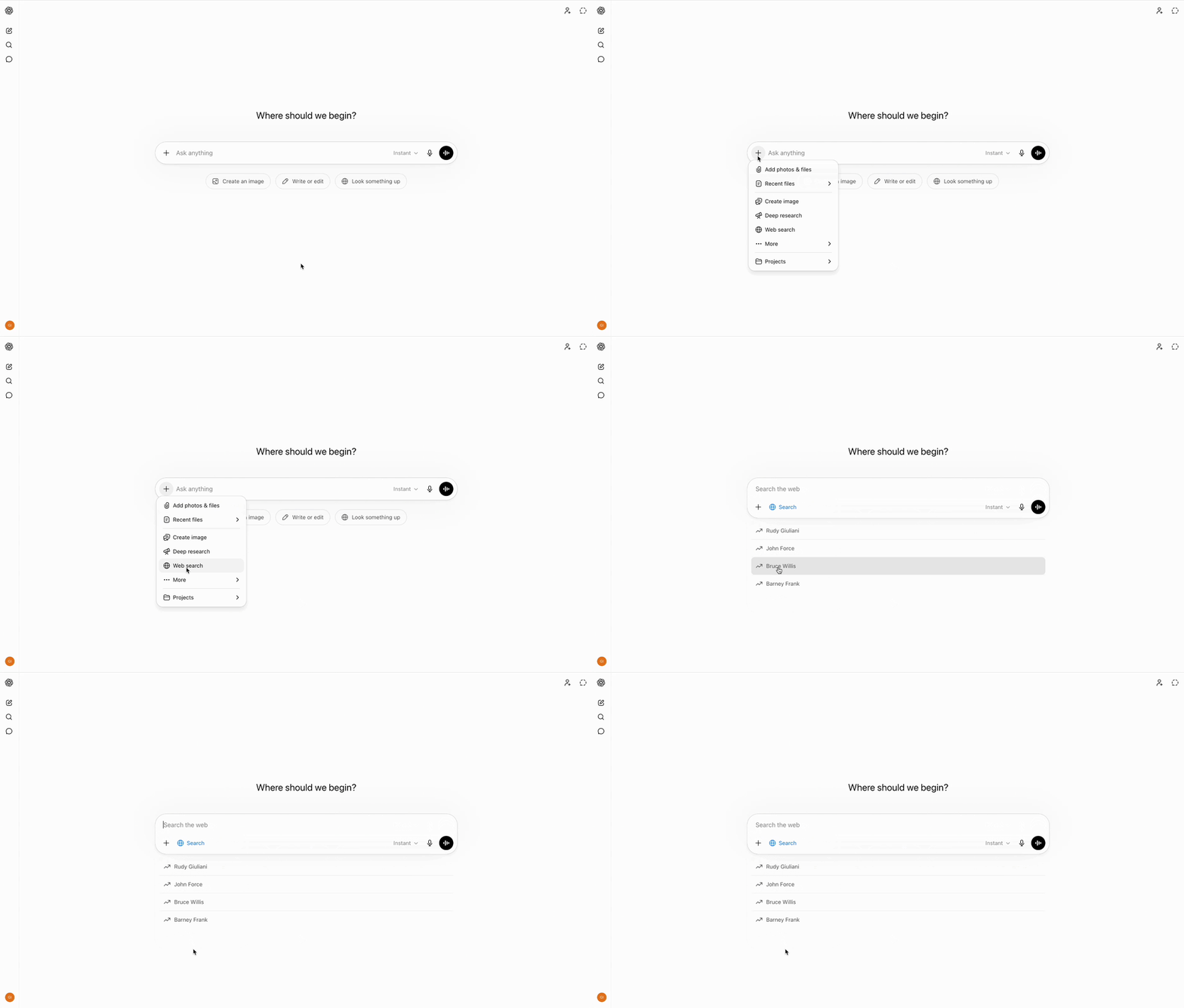
You can also turn on web search when you need more current or verifiable information.
Thanks for your feedback!
Ask AI

Ask AI

Ask anything or try one of the suggested questions to begin our chat
