Marginal vs Effective Tax Rate
Swipe to show menu
Two Numbers, Two Very Different Stories
"I'm in the 24% bracket."
You've heard people say this. Maybe you've said it. It sounds precise. It's also kind of misleading.
There are two tax rates that matter — and most people only know about one.
Marginal Rate: the Rate on Your Next Dollar
Your marginal rate is the bracket your highest dollar of income falls into. It's the rate that would apply if you earned one more dollar right now.
If you're "in the 24% bracket," your marginal rate is 24%.
Effective Rate: What You Actually Paid
Your effective rate is the real percentage of your total income that went to taxes:
Effective rate = Total tax ÷ Total income
This number is always lower than your marginal rate, because most of your income was taxed at the lower brackets below your top one.
A Real Example
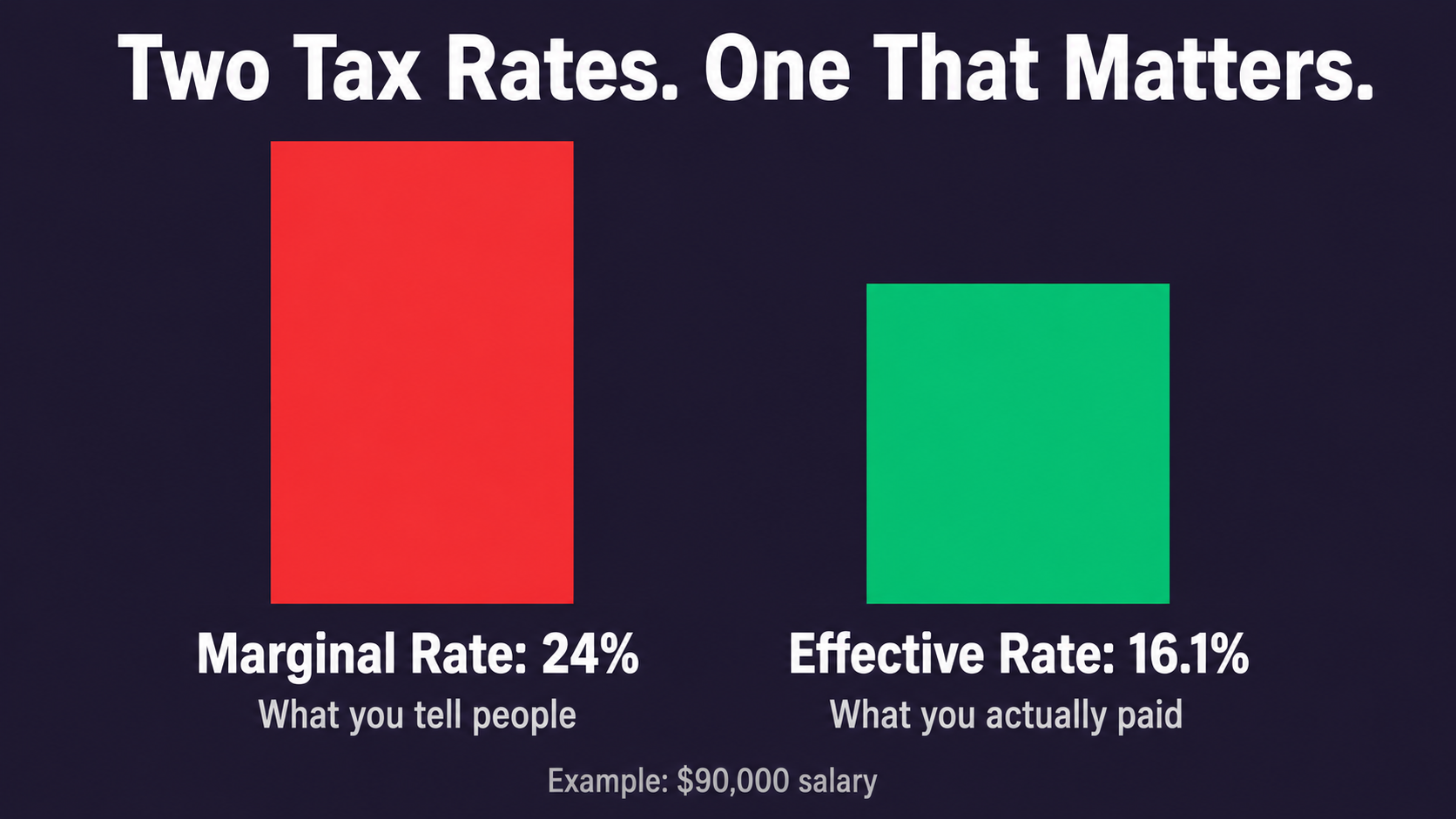
Daniel earns $90,000. His marginal rate is 24%. Sounds painful.
But after the brackets do their thing, his actual tax bill is about $14,500.
$14,500 ÷ $90,000 ≈ 16.1%
His effective rate is 16.1% — almost 8 percentage points lower than the scary "24%" he tells people at parties.
When to Use Which
- Use your marginal rate when deciding about new money: a raise, a side hustle, an extra shift, a Roth-vs-traditional 401(k) call;
- Use your effective rate when you're talking about your overall tax burden: comparing years, countries, or filing statuses.
Mixing them up is how people end up turning down freelance work because "it'll all go to taxes." It won't.
Thanks for your feedback!
Ask AI

Ask AI

Ask anything or try one of the suggested questions to begin our chat
