Tax Credits Vs Deductions
Swipe to show menu
Same Word Energy, Very Different Powers
People mix up "deduction" and "credit" constantly. They sound similar. They behave nothing alike. And the difference is often hundreds of dollars.
Deduction: Reduces Taxable Income
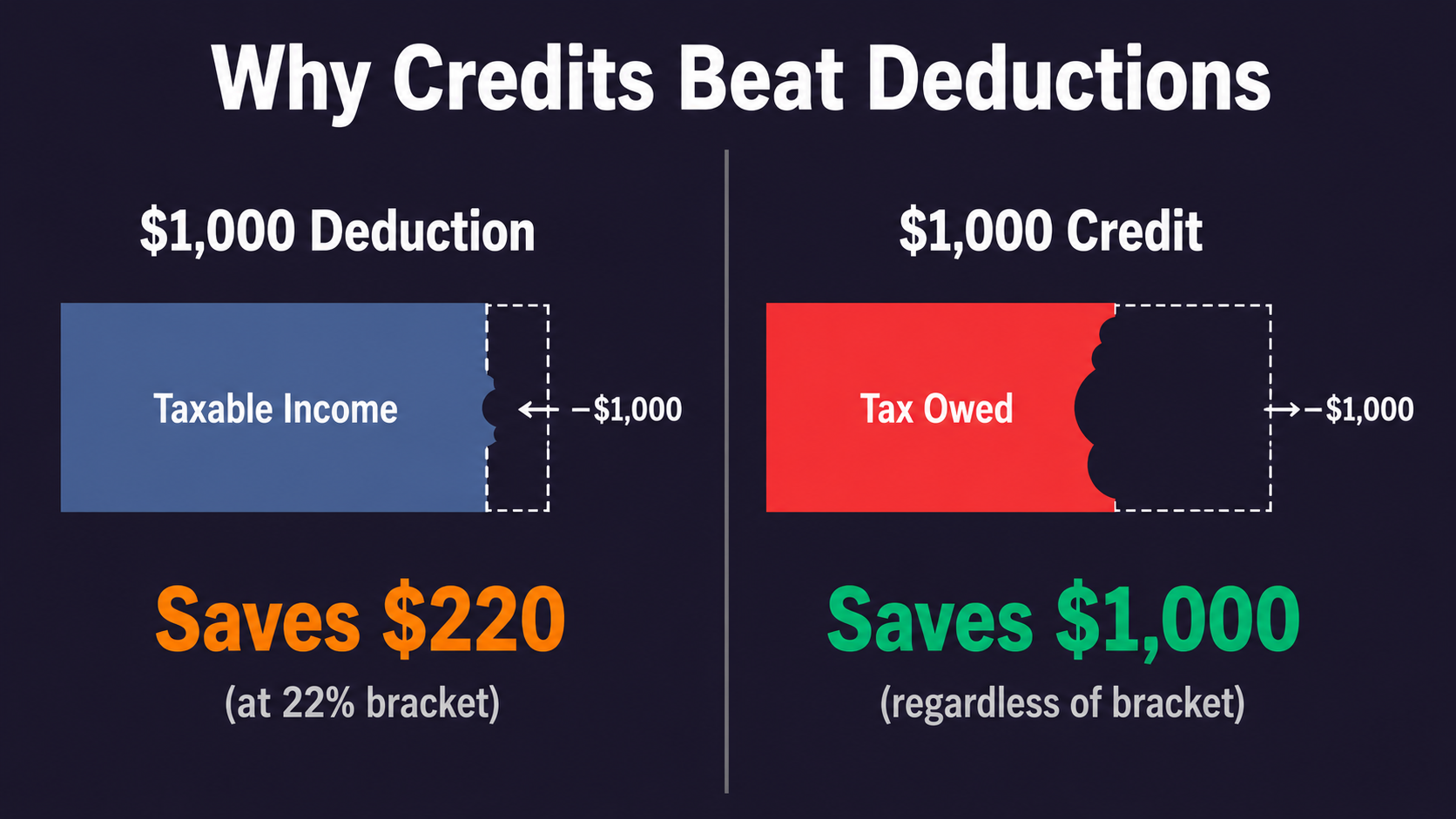
A deduction lowers the amount of income the government can tax.
If you're in the 22% bracket and you get a $1,000 deduction:
- Your taxable income drops by $1,000;
- Your tax bill drops by $220 ($1,000 × 22%).
The benefit of a deduction depends on your bracket. Higher bracket → bigger benefit.
Credit: Reduces The Tax Itself
A credit lowers your tax bill dollar for dollar.
A $1,000 credit = $1,000 off your tax bill. Same in every bracket. Same for everyone.
Refundable Vs Non-Refundable Credits
One more layer to know:
- Non-refundable credit — can bring your tax to $0, but no further. If you owe $300 and have a $1,000 non-refundable credit, the extra $700 just disappears;
- Refundable credit — can take you below $0. The IRS sends you the difference as a refund. The Earned Income Tax Credit (EITC) is the most famous one.
When you see headlines about "people who pay no federal income tax," refundable credits are usually a big part of the story.
Thanks for your feedback!
Ask AI

Ask AI

Ask anything or try one of the suggested questions to begin our chat
