State Taxes and Moving States For Tax Purposes
Swipe to show menu
The Other Tax Bill Nobody Talks About
When people say "tax bracket," they usually mean federal. But most Americans pay a second income tax — to their state. And the variation between states is huge.
- California top rate → 13.3%;
- New York City top rate (state + city) → over 14%;
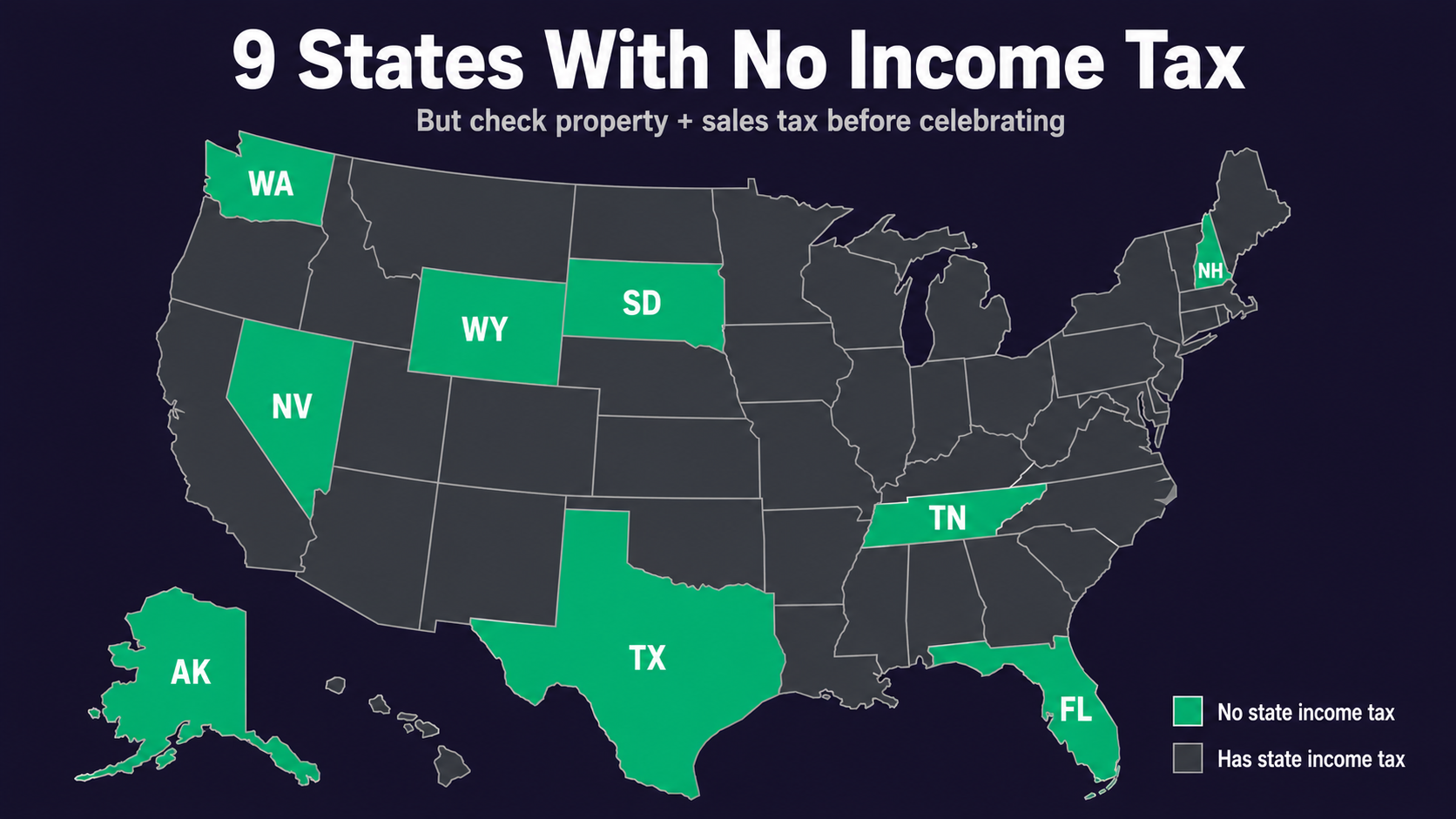
- Florida, Texas, Washington, Nevada, Tennessee, South Dakota, Wyoming, Alaska, New Hampshire → 0% state income tax.
That's not a 1% difference. For a high earner, that's tens of thousands per year.
The Nine No-Income-Tax States
These states do not tax wages or salary at all:
- Alaska;
- Florida;
- Nevada;
- New Hampshire (taxes interest/dividends — phasing out);
- South Dakota;
- Tennessee;
- Texas;
- Washington (does tax some capital gains);
- Wyoming.
But "no income tax" doesn't mean "no taxes." These states usually make up for it through:
- Higher property taxes (Texas, New Hampshire);
- Higher sales taxes (Tennessee, Washington);
- Specific resource or business taxes (Alaska oil, Nevada gambling, Wyoming mineral).
Before you U-Haul to Austin, run the total number, not just the income tax line.
When Moving Actually Makes Sense
Moving to save on taxes can pay off — but only when the numbers genuinely back it up. Real cases:
- High earners working remote — saving $15k+/year for the same job;
- Pre-retirees — about to sell a business or large stock position;
- Crypto or stock-heavy investors — large unrealized gains they'll soon realize;
- Retirees on Social Security — most states don't tax it, but a few still do.
When Moving Is A Trap
- Cost of living is higher in the new state — common in Florida and Texas hot metros, where the property tax can eat the income tax savings;
- You can't actually establish residency — states like California are aggressive about claiming you as a resident even after you "move";
- You'd lose access to community, family, or career networks worth more than the tax savings.
Becoming A Real Resident — Not Just Pretending
States with high income taxes audit "movers" hard. To actually count as a resident of your new state, expect to:
- Spend over 183 days/year physically there;
- Update your driver's license, voter registration, and vehicle registration;
- Move banking, doctor, dentist, gym, mailing address;
- Sell or substantially reduce ties to the old state (especially your old home).
If you keep your Manhattan apartment "for visits," New York may still consider you a New York resident. They will check.
Thanks for your feedback!
Ask AI

Ask AI

Ask anything or try one of the suggested questions to begin our chat
State Taxes and Moving States For Tax Purposes
The Other Tax Bill Nobody Talks About
When people say "tax bracket," they usually mean federal. But most Americans pay a second income tax — to their state. And the variation between states is huge.
- California top rate → 13.3%;
- New York City top rate (state + city) → over 14%;
- Florida, Texas, Washington, Nevada, Tennessee, South Dakota, Wyoming, Alaska, New Hampshire → 0% state income tax.
That's not a 1% difference. For a high earner, that's tens of thousands per year.
The Nine No-Income-Tax States
These states do not tax wages or salary at all:
- Alaska;
- Florida;
- Nevada;
- New Hampshire (taxes interest/dividends — phasing out);
- South Dakota;
- Tennessee;
- Texas;
- Washington (does tax some capital gains);
- Wyoming.
But "no income tax" doesn't mean "no taxes." These states usually make up for it through:
- Higher property taxes (Texas, New Hampshire);
- Higher sales taxes (Tennessee, Washington);
- Specific resource or business taxes (Alaska oil, Nevada gambling, Wyoming mineral).
Before you U-Haul to Austin, run the total number, not just the income tax line.
When Moving Actually Makes Sense
Moving to save on taxes can pay off — but only when the numbers genuinely back it up. Real cases:
- High earners working remote — saving $15k+/year for the same job;
- Pre-retirees — about to sell a business or large stock position;
- Crypto or stock-heavy investors — large unrealized gains they'll soon realize;
- Retirees on Social Security — most states don't tax it, but a few still do.
When Moving Is A Trap
- Cost of living is higher in the new state — common in Florida and Texas hot metros, where the property tax can eat the income tax savings;
- You can't actually establish residency — states like California are aggressive about claiming you as a resident even after you "move";
- You'd lose access to community, family, or career networks worth more than the tax savings.
Becoming A Real Resident — Not Just Pretending
States with high income taxes audit "movers" hard. To actually count as a resident of your new state, expect to:
- Spend over 183 days/year physically there;
- Update your driver's license, voter registration, and vehicle registration;
- Move banking, doctor, dentist, gym, mailing address;
- Sell or substantially reduce ties to the old state (especially your old home).
If you keep your Manhattan apartment "for visits," New York may still consider you a New York resident. They will check.
Thanks for your feedback!
