Dictionary Comprehension with Condition
Swipe to show menu
You can add a condition in a dictionary comprehension to filter items dynamically while creating the dictionary. The syntax for a dictionary comprehension with a condition is:
{key_expression: value_expression for item in iterable if condition}
12345678910111213141516travel_wishlist = [ ['Paris', 'France', 2000], ['Tokyo', 'Japan', 3000], ['New York', 'USA', 2500], ['Kyoto', 'Japan', 1500], ['Sydney', 'Australia', 4000] ] # Filter destinations within a $2500 budget using a for loop affordable_destinations = {} for city, country, budget in travel_wishlist: if budget <= 2500: # Check if the budget is within the limit affordable_destinations[city] = budget print(affordable_destinations)
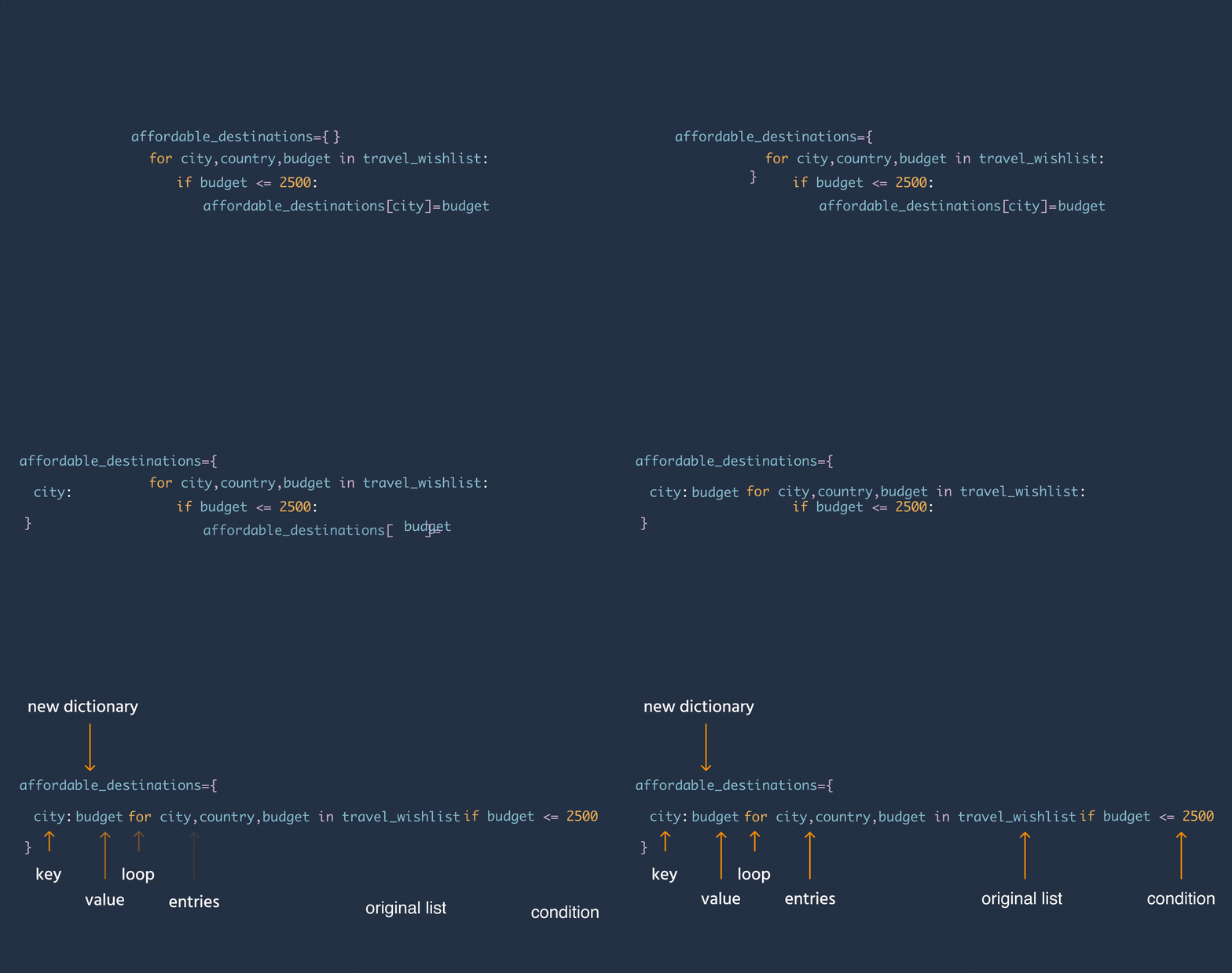
This code iterates through the travel_wishlist list, checking if each destination’s budget is less than or equal to $2500. If the condition is met, the city and its budget are added to the affordable_destinations dictionary.
123456789101112travel_wishlist = [ ['Paris', 'France', 2000], ['Tokyo', 'Japan', 3000], ['New York', 'USA', 2500], ['Kyoto', 'Japan', 1500], ['Sydney', 'Australia', 4000] ] # Use dictionary comprehension to filter destinations affordable_destinations = {city: budget for city, country, budget in travel_wishlist if budget <= 2500} print(affordable_destinations) # Output: {'Paris': 2000, 'New York': 2500, 'Kyoto': 1500}
This example achieves the same result as the previous one but in a more concise and elegant way. The condition if budget <= 2500 filters the destinations based on the budget, and the resulting dictionary includes only the affordable destinations.

If you try to unpack only two variables (city and budget), Python won't be able to correctly process each element of the list, because each sublist contains three elements (city, country, and budget). This will cause an error, as Python will attempt to assign three elements to two variables.
Here's what it would look like:
affordable_destinations = {city: budget for city, budget in travel_wishlist if budget <= 2500}
This code will raise a ValueError: too many values to unpack (expected 2), because each element in the list has three values, and you're trying to unpack only two.
Swipe to start coding
A traveler wants to filter their travel_wishlist to include only destinations in Japan. To achieve this efficiently, you need to extract relevant city-budget pairs into a dictionary.
- Filter the
travel_wishlistto include only destinations where the country is"Japan". - Store the resulting dictionary in
japanese_destinations.
Solution
 Switch to desktop for real-world practiceContinue from where you are using one of the options below
Thanks for your feedback!

single
Ask AI

Ask AI

Ask anything or try one of the suggested questions to begin our chat
