If-else Operator
Swipe to show menu
The if-else statement is a staple in programming. It enables you to direct the flow of your program based on certain conditions. The if-else structure is pretty straightforward:

main.c
123456if (condition) { // Execute this block of code if condition is `true` } else { // Execute this block of code if condition is `false` }
For example, suppose the temperature variable reads from a sensor, and you want a program that alerts when the temperature exceeds a set limit.
main.c
1234567891011121314#include <stdio.h> int main() { int temperature = 200; // In celsius if (temperature > 80) { printf("Temperature is so high: %d degrees Celsius\n", temperature); } else { printf("Temperature is normal: %d degrees Celsius\n", temperature); } return 0; }
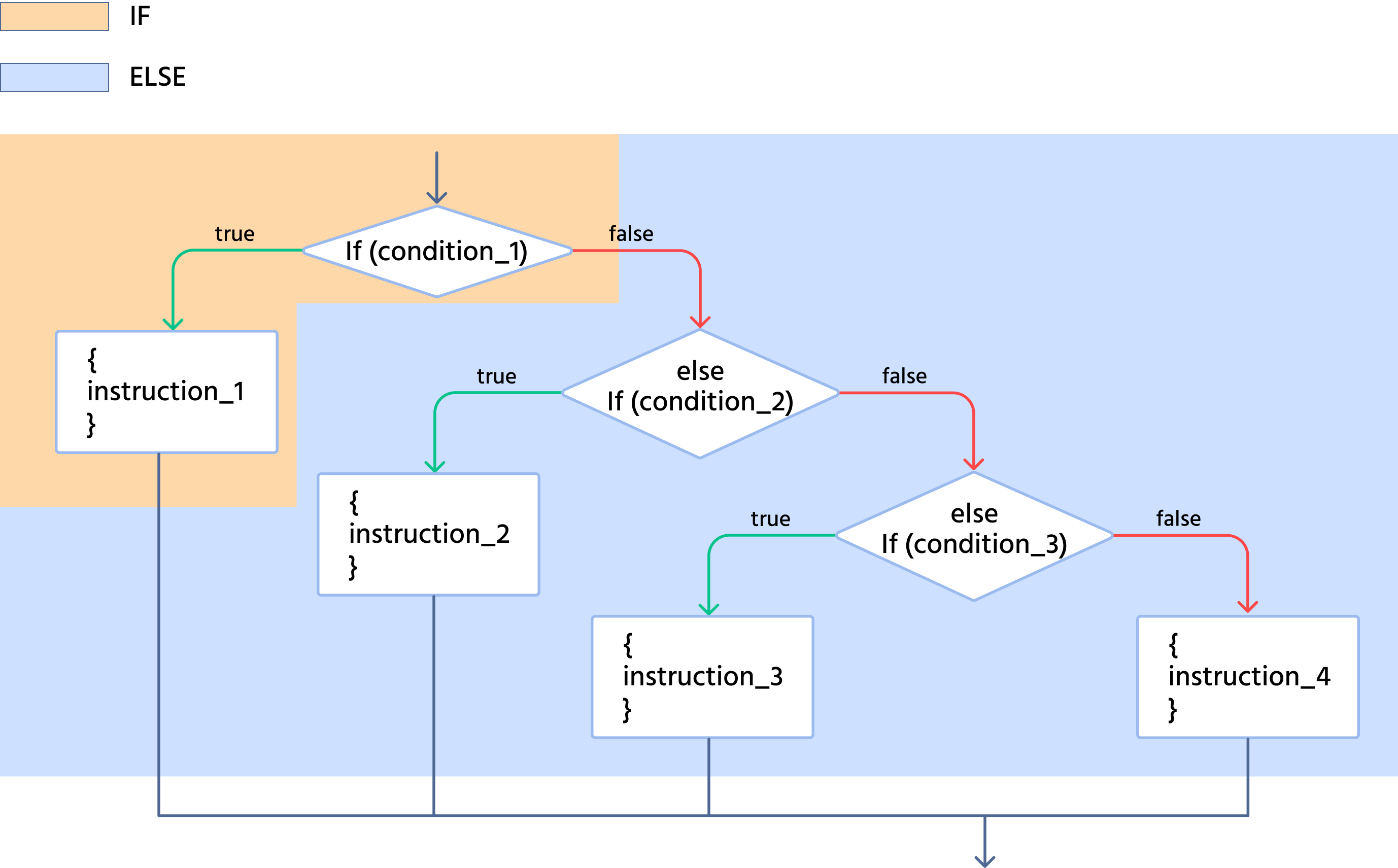
You can incorporate multiple if statements in a program, especially when you need to evaluate various conditions. The if-else statement can be further expanded with else-if:
main.c
123456789101112131415161718192021#include <stdio.h> int main() { int tempereture = 50; // In celsius if (tempereture > 50 && tempereture < 100) { printf("Temperature is high: %d degrees Celsius\n", tempereture); // First instruction } else if (tempereture > 100 && tempereture < 150) { printf("Temperature is so high: %d degrees Celsius\n", tempereture);// Second instruction } else if (tempereture > 150) { printf("Temperature is critically high: %d degrees Celsius\n", tempereture);// Third instruction } else { printf("Temperature is normal: %d degrees Celsius\n", tempereture); // Fourth instruction } return 0; }
1. What is the purpose of an if-else statement in programming?
2. What is a basic structure of an if-else statement in C, including the syntax for code blocks.
Everything was clear?
Thanks for your feedback!
Section 4. Chapter 1
Ask AI

Ask AI

Ask anything or try one of the suggested questions to begin our chat
Section 4. Chapter 1
