Cursos relacionados
Ver Todos os CursosIniciante
AI Ethics 101
An accessible introduction to the foundational ethical principles, challenges, and responsibilities in the development and deployment of Artificial Intelligence. This course is designed for beginners in AI and Data Science, focusing on theory and real-world implications.

Iniciante
Transfer Learning Essentials with Python
Master the core concepts and hands-on techniques of transfer learning. Learn how to leverage pre-trained models for image classification and sentiment analysis, and gain practical experience with CNNs and transformers.

Synthetic Data and the Future of AI Training
How to Train Models When Real Data Is Scarce or Sensitive
by Arsenii Drobotenko
Data Scientist, Ml Engineer
Feb, 2026・
5 min read


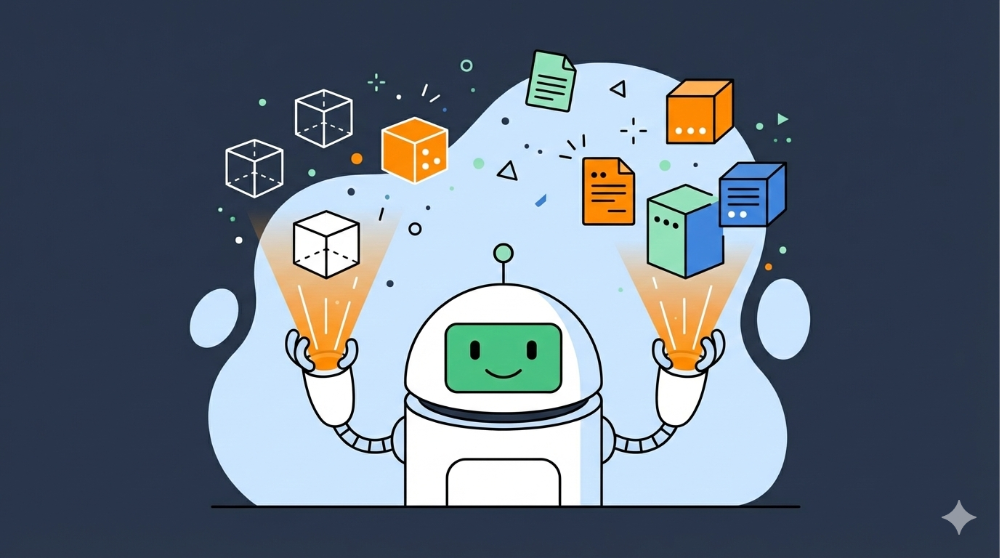
In the early days of Deep Learning, the mantra was "Data is the new oil". Companies scrambled to collect every click, image, and text message they could find. But in 2026, we are facing a new problem. We are running out of oil.
High-quality public data on the internet is finite. Moreover, using real user data is becoming increasingly difficult due to strict privacy regulations like GDPR and HIPAA. If you cannot use real data to train your model, what do you do?
You fake it.
Synthetic Data is data that is artificially generated rather than collected from real-world events. It mirrors the statistical properties of real data but contains no sensitive information. It is not just a workaround; it is becoming the primary way to train robust AI systems.
The Privacy Paradox and Model Collapse
There are two main drivers for the adoption of synthetic data.
- Privacy: a hospital wants to train an AI to predict heart attacks but cannot share patient records. Synthetic data allows them to create a dataset of "fake patients" that statistically look exactly like real ones but do not correspond to any living person;
- Model collapse: s AI generates more content on the web, future models might be trained on AI-generated trash. Controlled synthetic data generation allows engineers to curate high-quality "textbooks" for models to learn from, avoiding this degradation.
How to Generate Synthetic Data
The process typically involves using a powerful "Teacher" model to generate examples for a specific domain. Here is a conceptual example of how you might generate a dataset for a customer support bot using Python.
By running this loop thousands of times with different "temperatures" and instructions, you can build a massive, diverse dataset to train a smaller, local model (SLM).
Comparison of Real vs Synthetic Data
| Feature | Real Data | Synthetic Data |
|---|---|---|
| Cost | High (Collection, cleaning, labeling) | Low (Compute cost only) |
| Privacy | High Risk (Contains PII) | Safe (Artificial by definition) |
| Bias | Inherits historical biases of society | Programmable (Can be balanced explicitly) |
| Availability | Scarce / Hard to access | Infinite |
| Accuracy | 100% true to reality | Approximation of reality |
Use Cases
Synthetic data is already transforming specific industries.
Healthcare
Researchers can share datasets of synthetic MRI scans or genomic sequences. This accelerates cancer research without violating patient confidentiality.
Financial Fraud Detection
Real fraud is rare (maybe 0.1% of transactions). Training a model on such imbalanced data is hard. With synthetic data, you can generate thousands of "fake fraud" scenarios to teach the AI exactly what to look for.
Cold Start Problem
When you launch a new product, you have zero user data. Instead of waiting months to collect it, you can simulate user interactions to train your recommendation engine before the first real user even signs up.
Este artigo foi útil?
Compartilhar:
Este artigo foi útil?
Compartilhar:
Cursos relacionados
Ver Todos os CursosIniciante
AI Ethics 101
An accessible introduction to the foundational ethical principles, challenges, and responsibilities in the development and deployment of Artificial Intelligence. This course is designed for beginners in AI and Data Science, focusing on theory and real-world implications.
Iniciante
Transfer Learning Essentials with Python
Master the core concepts and hands-on techniques of transfer learning. Learn how to leverage pre-trained models for image classification and sentiment analysis, and gain practical experience with CNNs and transformers.
How the 1958 Perceptron Built ChatGPT
From Linear Classifiers to Large Language Models
by Radomanova Sofia
Data Analyst
May, 2026・6 min read
Explainable AI - Why It Matters and How It Works
From Confusion to Clarity: Making AI Decisions Transparent and Accountable
by Arsenii Drobotenko
Data Scientist, Ml Engineer
Jun, 2025・10 min read
Conteúdo deste artigo
