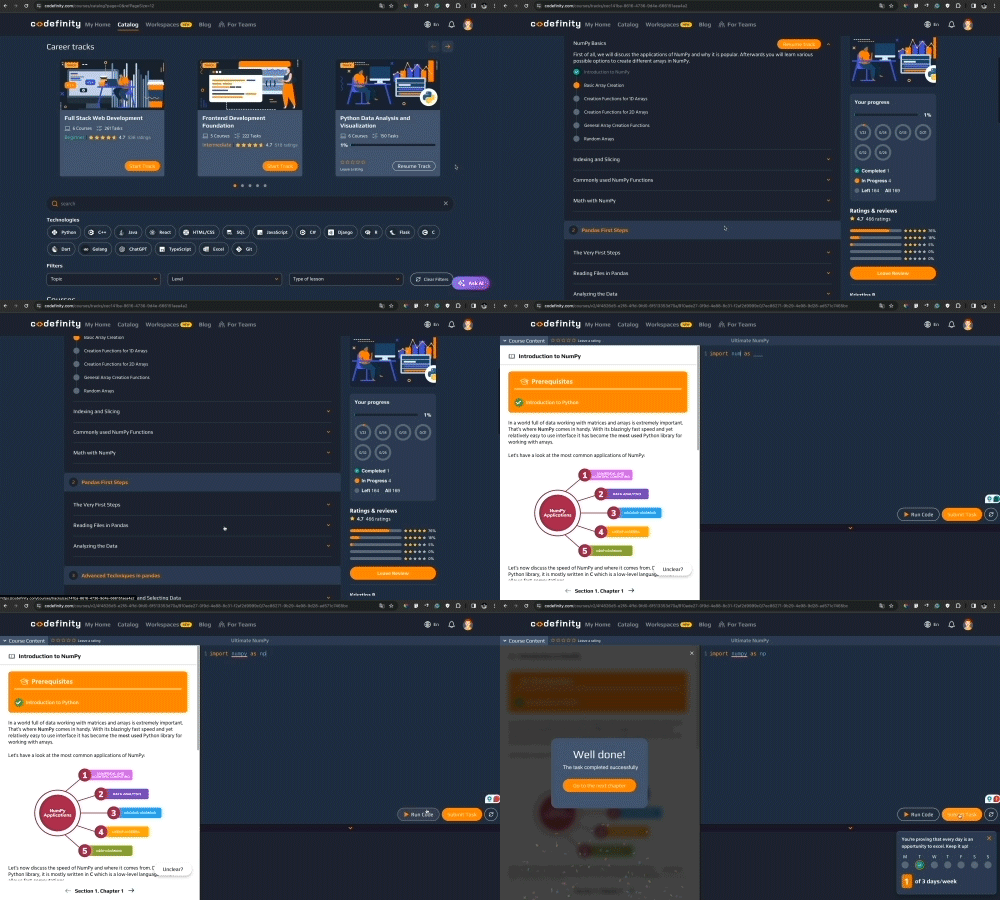
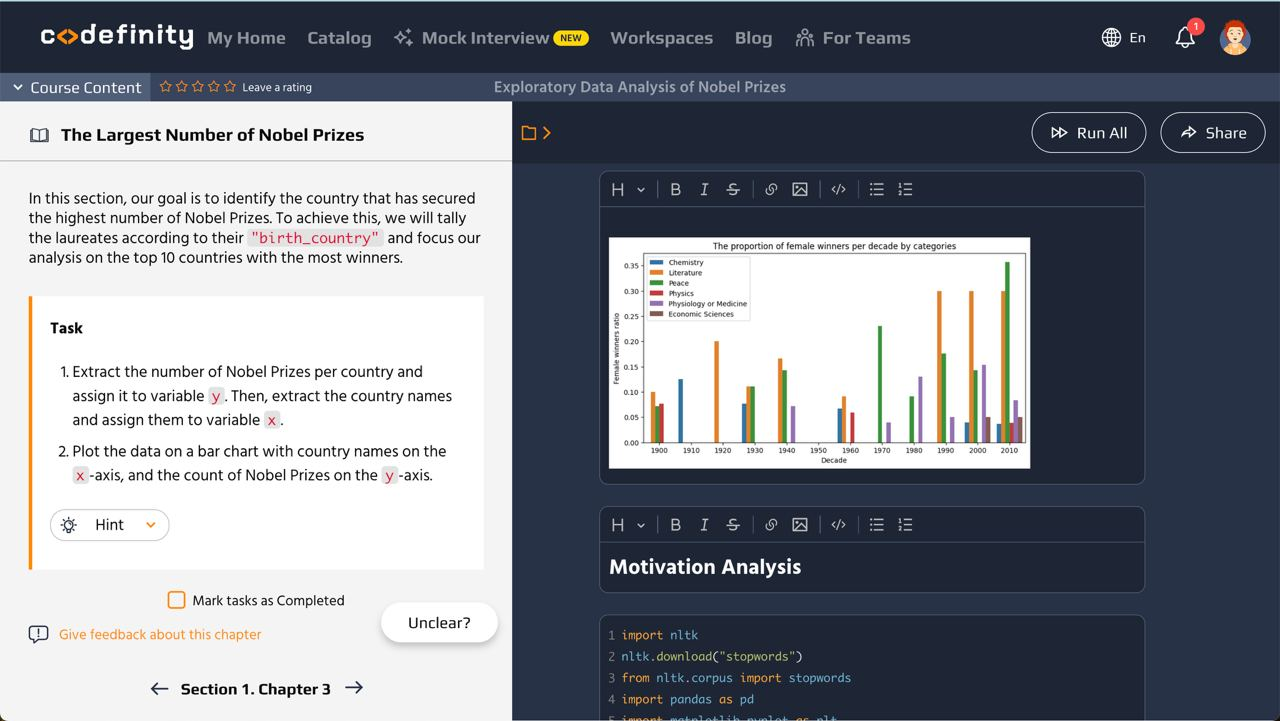
Notice: This page requires JavaScript to function properly.
Please enable JavaScript in your browser settings or update your browser.
Machine Learning Courses Online with Certificate
Machine Learning

Machine Learning Courses

Learn how to teach computers to learn. These courses cover the core concepts and tools in machine learning — from training models to evaluating predictions and building intelligent applications.
4.5
Rated based on 240 reviews.
5,189 Learners
Already enrolled
Gained skills:
A/B Test DesignAI Transparency AwarenessARIMA ModelingActive Learning FundamentalsAdaptive AlgorithmsAdvanced ARIMA TechniquesAdvanced Ensemble IntegrationAdvanced Text CleaningAlgorithm Evaluation and ComparisonAlignment and Generalization RisksAnomaly detection evaluation Applied Calibration WorkflowsApproximate InferenceApproximate ReasoningArrow Data ModelArtificial immune systemsAutomated Search with scikit-learnBackward Difference CodingBagging and Random ForestsBayes' TheoremBayesian NetworksBayesian OptimizationBernoulli DistributionBias–Variance Trade-offs in High DimensionsBias–Variance TradeoffBoosting AlgorithmsCalibration Metrics (ECE, MCE, Brier Score)CatBoost ModelingCategorical Feature HandlingChi-Square AnalysisClassification Loss AnalysisClassification metrics (Accuracy, Precision, Recall, F1, ROC–AUC) Cloud Compute PatternsCloud Data Science WorkflowsCloud Mental ModelsCloud Networking ConceptsCloud Storage ArchitecturesClustering evaluation (Silhouette, Davies–Bouldin, Calinski–Harabasz) Clustering fundamentals and algorithms Coefficient VisualizationColumnar Data RepresentationCommittee-Based QueryingCompactness and ConvergenceConcentration of MeasureConditional IndependenceConjugate PriorsContinuity and BoundednessConvergence TheoryConvex AnalysisCoordinate Reference SystemsCorrelation AnalysisCovariance and eigen decomposition Cross-validation techniquesCurse of DimensionalityDBSCAN: noise handling and irregular shapes Data Access PatternsData Cleaning Data InteroperabilityData Leakage PreventionData PreprocessingData Preprocessing with TransformersData StorytellingData Transformation Data Visualization with matplotlib and seabornData normalization and distance metrics Deduplication AlgorithmsDegrees of TruthDensity-Weighted SamplingDeployment Best PracticesDescriptive StatisticsDimensionality reduction Dimensionality reduction evaluation Distance CollapseDocument ClusteringDocument Similarity MeasuresDrift Detection FundamentalsDynamic Programming MethodsEffective DocumentationEmpirical Risk MinimizationEncoding Leakage PreventionEnsemble Learning FundamentalsEstimator IntrospectionEthical AI PrinciplesEvaluation Under Distribution ShiftEvolutionary optimization Experiment Tracking with MLflowExperimental Data PreparationExplainable AI FundamentalsExploratory Data AnalysisExponential Family UnderstandingFairness in MLFeature Encoding Feature Engineering Feature Engineering for TSFeature ScalingFeature Scaling Feature Selection Feature Selection MethodsForecast Evaluation MetricsForecasting StrategiesFormal Preference ModelingFunctional Analysis FoundationsFunctional Analysis in MLFunctions & SetsFuzzy If–Then RulesFuzzy Inference SystemsFuzzy Logical OperatorsFuzzy Matching in PythonFuzzy SetsGaussian DistributionGaussian Mixture Models: probabilistic clusteringGeneralization BoundsGeneralization in Learning TheoryGenerative Model ConnectionsGenetic algorithms Geometric Implications for ML AlgorithmsGeometric Intuition in High DimensionsGeospatial Data FundamentalsGeospatial VisualizationGradient Boosting for TSGradient DescentGradient Descent Graph Embedding IntuitionGraph LaplaciansGraph Representation in PythonGraph Theory for MLGraphSAGE ConceptsGymnasium BasicsHandling missing and categorical data Helmert CodingHierarchical clustering and dendrograms High-Cardinality Feature EncodingHigh-Dimensional Data InterpretationHigh-Dimensional Geometry IntuitionHigh-Dimensional Statistical TheoryHilbert Spaces in LearningHistogram BinningHybrid Rule-Based SystemsHyperparameter TuningHyperparameter Tuning FundamentalsHypothesis TestingIdentity and Access ManagementImplicit Bias in Machine LearningImplicit Regularization in Deep NetworksImportance SamplingInductive BiasInformation-Theoretic LossesIntegrals Interpreting Generalization BoundsIsolation Forest ImplementationIsotonic RegressionJupyter Notebook ProficiencyK-Means: principles and cluster optimization Kernel MethodsKernel-based RegularizationKnowledge Graph Embedding ModelsKnowledge Graph FundamentalsKolmogorov–Smirnov TestL1, L2, and Elastic Net RegularizationLabel Efficiency TechniquesLearning Curve AnalysisLeave-One-Out EncodingLightGBM ModelingLikelihood vs ProbabilityLimits & Derivatives Linear Algebra FoundationsLinear Regression with PythonLinear Transformations Link PredictionLocal Outlier Factor AnalysisLogistic RegressionLoss Function Selection and ComparisonMLOps FundamentalsMachine Learning with scikit-learnManual Search MethodsMarkov Chain Monte CarloMarkov Random FieldsMathematical Foundations of Loss FunctionsMathematical OptimizationMatrix Decomposition Maximum-Margin SolutionsMean-CenteringMembership FunctionsMinimum-Norm SolutionsMissing Value Imputation Model BlendingModel Deployment with FastAPI and DockerModel Evaluation and DiagnosticsModel Evaluation and GeneralizationModel InterpretabilityModel InterpretationModel Monitoring and CI/CDModel RegularizationModel Selection UtilitiesModel Training and EvaluationModel-Based Drift DetectionMomentum MethodsMonitoring Model DegradationMonte Carlo IntuitionMonte Carlo TechniquesMulti-Armed Bandit AlgorithmsMultinomial DistributionMultivariate AnalysisNeuroevolutionNode ClassificationNormalization (L1, L2, Max)Normed and Banach SpacesNull Handling in ArrowOffline vs Online Evaluation ReasoningOne-Class SVM for Novelty DetectionOperator TheoryOptimization Dynamics in RLHFOutlier Detection Outlier Detection FundamentalsOverfitting and RegularizationPAC Generalization BoundsPGM Inference and LearningParticle swarm optimizationPattern MiningPipeline Automation with AirflowPipeline BuildingPipeline CompositionPipeline ConstructionPlatt ScalingPolynomial CodingPopulation Stability IndexPositive Definite KernelsPreprocessing PipelinesPrincipal Component Analysis TheoryPrincipal component analysis (PCA) Probabilistic Graphical ModelsProbabilistic Model CalibrationProbability DistributionsProbability Distributions IntuitionProbability Rules Probability in Loss FunctionsPyArrow API UsagePython Classification ModelsPython ProgrammingRIPPER AlgorithmRKHS FoundationsRademacher ComplexityRandom Walks on GraphsReasoning over Knowledge GraphsRecord Linkage TechniquesRegression Loss AnalysisRegression metrics (MSE, RMSE, MAE, R²) Regularization and Inductive BiasReinforcement Learning FoundationsReliability DiagramsRepresenter TheoremReproducibility in ML WorkflowsReproducible Analysis HabitsReproducing PropertyReward Model TheoryRisk Minimization TheoryRobust Model AssessmentRule PruningRule Quality MetricsRule-Based ModelingRuleFit AlgorithmSampling Strategies in MLSeries Analysis Serverless and Event-Driven DesignSimilarity Scoring for GraphsSparsity and Effective DimensionalitySpatial Joins and OverlaysSpatial OperationsSpectral Graph TheorySpectral TheoryStandardizationStatistical Anomaly DetectionStatistical Drift MetricsStatistical InterpretationStatistical Measures Stochastic OptimizationStress Testing ML ModelsSwarm intelligenceTF-IDF WeightingTemporal ValidationTemporal-Difference LearningTheoretical OverfittingTime Series AnalysisTime Series WindowingTree-Based ForecastingTriple Scoring FunctionsUncertainty-Based QueryingUniform ConvergenceVC DimensionVector Space ModelingVector and Raster Data HandlingVectors & Matrices Weight-of-Evidence EncodingWhitening and DecorrelationWorkflow AutomationXAI Methods and ConceptsXGBoost Modelingscikit-learn API Usagescikit-learn Active Learning Implementationt-Norms and t-Conormst-test and z-test Application
Show More
Take a short quiz and get closer to your goals!

80,000
Students have already successfully completed the courses and are applying their skills in the workplace
92%
Users find our courses useful
Courses
Courses
Browse Machine Learning courses and projects
Level
Type of lesson
Technologies

course

Reproducing Kernel Hilbert Spaces Theory

Reproducing Kernel Hilbert Spaces Theory

description 2 hours
description 9 chapters

Advanced

Acquired skills: RKHS Foundations, Positive Definite Kernels, Functional Analysis in ML, Reproducing Property, Representer Theorem, Kernel-based Regularization

course

Rule-Based Machine Learning Systems

Rule-Based Machine Learning Systems

description 1 hour
description 16 chapters

Beginner

Acquired skills: Rule-Based Modeling, Rule Quality Metrics, Rule Pruning, RuleFit Algorithm, RIPPER Algorithm, Pattern Mining, Model Interpretability, Hybrid Rule-Based Systems, Fairness in ML

course

Sampling Methods for Machine Learning

Sampling Methods for Machine Learning

description 2 hours
description 9 chapters

Advanced

Acquired skills: Monte Carlo Intuition, Markov Chain Monte Carlo, Importance Sampling, Approximate Inference, Generative Model Connections

course

Text Mining and Document Similarity

Text Mining and Document Similarity

description 1 hour
description 9 chapters

Intermediate

Acquired skills: Vector Space Modeling, TF-IDF Weighting, Document Similarity Measures, Document Clustering, High-Dimensional Data Interpretation

Choose a career pathComprehensive programs to master a career pathway
Codefinity advantages
AI-Assisted Learning

Embrace the fascination of Tech Skills! Our AI-assistant provides real-time feedback, personalized hints, and error explanations, empowering you to learn with confidence.

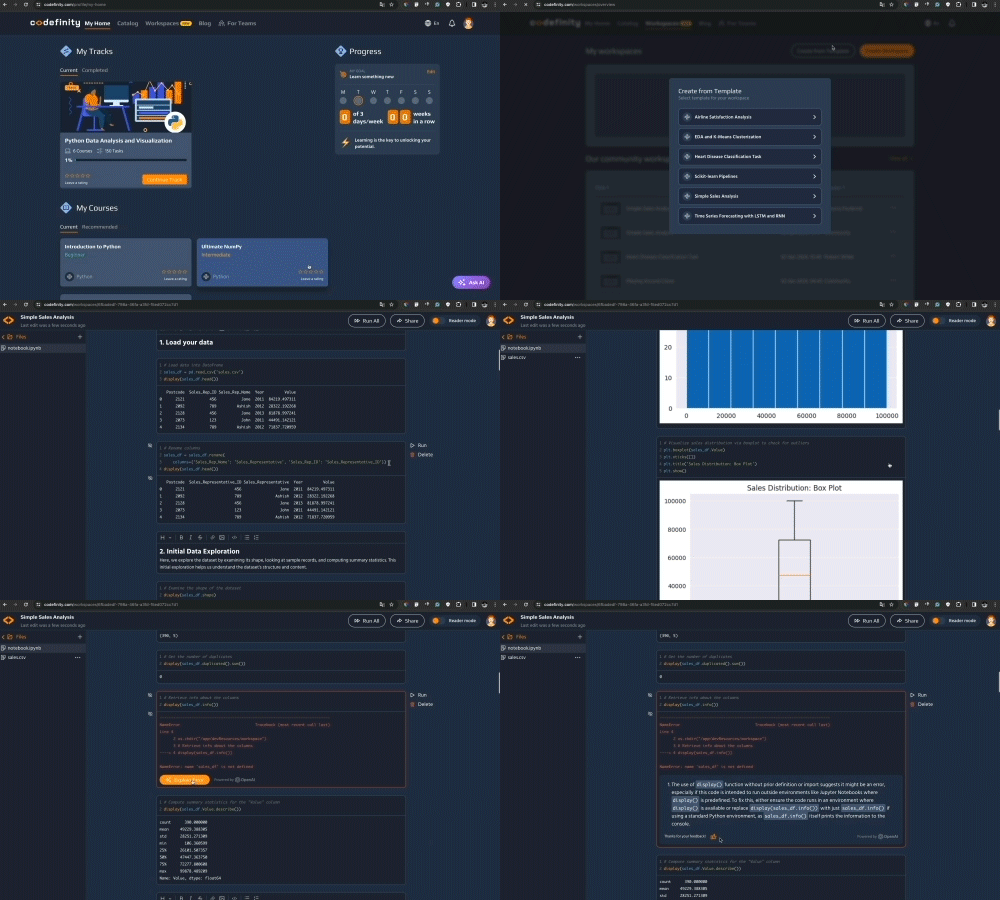
Workspaces

With Workspaces, you can create and share projects directly on our platform. We've prepared templates for your convenience

Learning tracks

Take control of your career development and commence your path into mastering the latest technologies

Real-world projects

Real-world projects elevate your portfolio, showcasing practical skills to impress potential employers
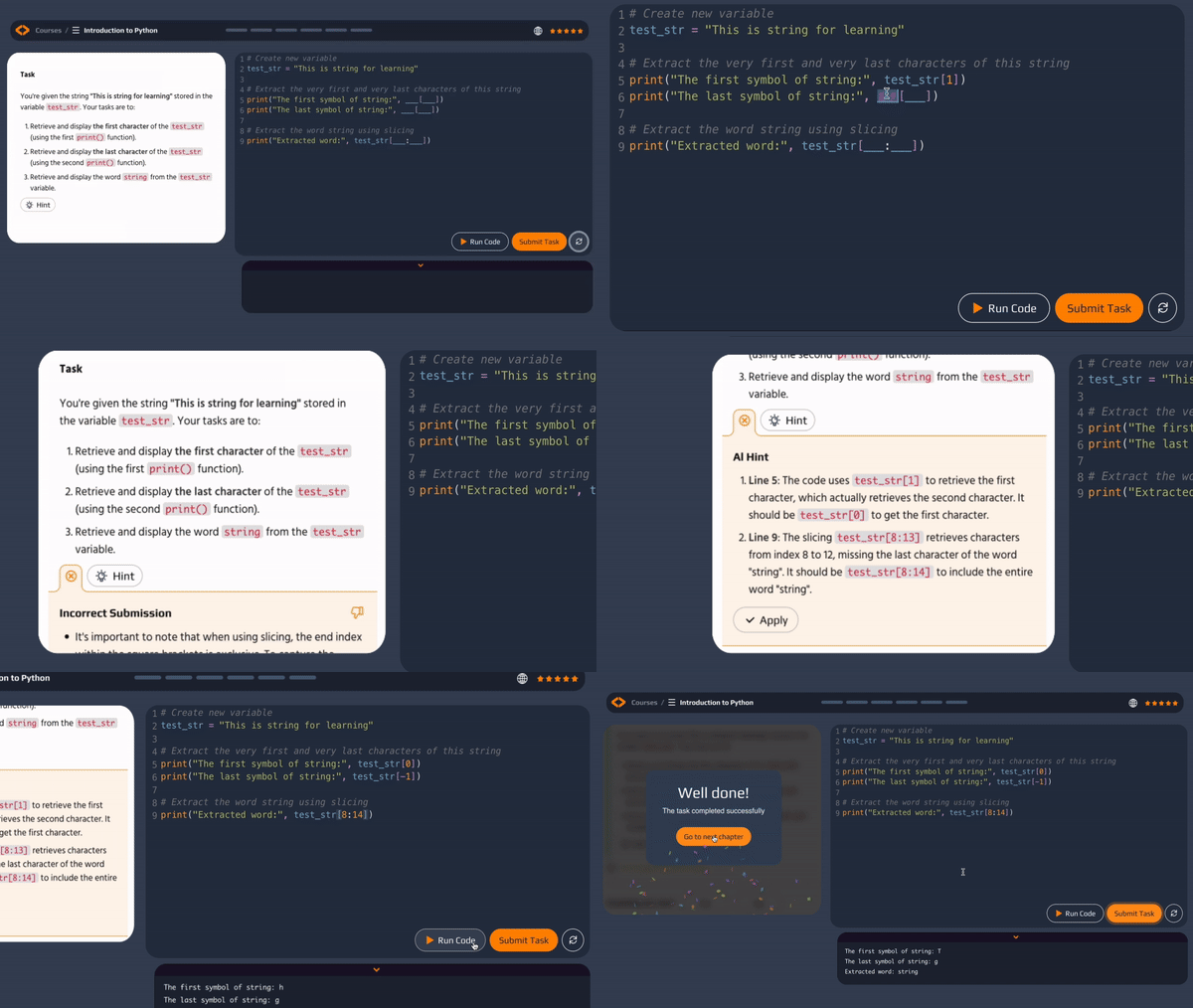
AI-Assisted LearningAI-Assisted LearningAI-Assisted LearningAI-Assisted Learning
Why Codefinity stands out
Video content
Downloadable materials
Esteemed certificates
Interactive learning environment
Error correction
AI assistant
Access to all content with one subscription
Codefinity
yes
yes
yes
yes
yes
yes
yes
Video-based learning platforms
yes
yes
yes
no
no
no
no
Codefinity
Video-based learning platforms
Video content
yesyes
Downloadable materials
yesyes
Esteemed certificates
yesyes
Interactive learning environment
yesno
Error correction
yesno
AI assistant
yesno
Access to all content with one subscription
yesno
Career opportunitiesLearn about the most popular professions, average salaries, and companies actively seeking specialists in this field.
Data Scientist
Machine Learning Engineer
NLP Engineer
Deep Learning Engineer
Machine Learning Scientist
$149k
$197k
$246k
Min
Average
Max
Annual salary
(Average in the US)
Epic!
Roku
Meta
Airbnb
Dropbox
X
Hiring companies
*Source: Glassdoor
Chosen by students of top schools
Including 30 out of top-30 U.S. colleges
virginia
texas
michigan
duke
berkeley
yale
mit
brown
carnegie
rochester
california
connecticut
massachusetts
city-new-york
virginia
texas
michigan
duke
berkeley
yale
mit
virginia
texas
michigan
duke
berkeley
yale
mit
brown
carnegie
rochester
california
connecticut
massachusetts
city-new-york
virginia
texas
michigan
duke
berkeley
yale
mit
florida
illinois
colorado
indiana
new-york
cornell
columbia
notre-dame
florida
illinois
colorado
indiana
florida
illinois
colorado
indiana
new-york
cornell
columbia
notre-dame
florida
illinois
colorado
indiana

Machine Learning Courses: Key Info and Questions

Introduction to Machine Learning Courses
Machine Learning (ML) is a field of AI that enables machines to learn from data and make predictions without explicit programming. Machine learning courses teach the foundational principles of supervised and unsupervised learning, model training, data processing, and evaluation techniques. From linear regression and classification to more advanced methods like reinforcement learning, these courses guide learners through building models that can recognize patterns in data and improve over time. ML is used in various applications, such as recommendation systems, fraud detection, and autonomous systems.
Benefits of our Machine Learning Courses
Our courses provide practical, hands-on experience with real-world data sets, expert instruction, and a flexible learning environment. This robust approach ensures that students not only learn theoretical concepts but also apply them practically.
Career Opportunities after Completion of Machine Learning Courses
Graduates can pursue various roles such as Data Scientist, Machine Learning Engineer, AI Analyst, or Research Scientist across industries like finance, healthcare, automotive, and technology.
Machine Learning Course Options
We offer a range of courses, from beginner-friendly ones like ML Introduction with scikit-learn to more advanced topics such as Classification with Python, Linear Regression with Python. You can also follow the Supervised Machine Learning track for a structured learning path.
Certificate Information
Upon completing any of our Machine Learning courses, students receive a Certificate of Completion, which is recognized across the industry and can help advance your career.
What is machine learning and why is it important?
Machine Learning is a branch of AI that allows software applications to become more accurate at predicting outcomes without being explicitly programmed. It's crucial for creating adaptive algorithms that can process and learn from data in real-time.
Where is machine learning used in the industry?
Machine Learning is widely used in industries such as finance for algorithmic trading, healthcare for predictive diagnostics, automotive for self-driving cars, and in consumer services for personalized experiences.
What are the career opportunities in machine learning?
Careers in Machine Learning include roles like Machine Learning Engineer, Data Analyst, NLP Scientist, and roles in emerging technologies that require data-driven decision making.
How to Choose the Suitable Machine Learning Course?
Consider your current skill level and your career goals. Beginners should start with "ML Introduction with scikit-learn," while those with some background might prefer more specialized courses like Classification with Python and Linear Regression with Python
What is the Cost of Training for Machine Learning Courses?
The cost of training depends on the type of subscription and its duration. For precise and detailed pricing information, along with any available discounts, please visit our payment page.
Which Machine Learning Course is Best Suited for Beginners?
"ML Introduction with scikit-learn" is ideal for beginners unfamiliar with Machine Learning, providing foundational knowledge necessary to progress in this field.
What are the key skills required to excel in Machine Learning?
Key skills include a strong grasp of statistics, programming (Python is preferred), data intuition, and the ability to apply mathematical models to real-world problems.
How does Machine Learning compare to Artificial Intelligence in terms of applications?
Machine Learning is a subset of AI focused on systems that learn from data, while AI encompasses a broader range of technologies that simulate human intelligence. Machine Learning is more specific to data-driven algorithms.
What impact does Machine Learning have on the healthcare industry?
Machine Learning enhances diagnostic accuracy, optimizes treatment plans, and improves patient outcomes through predictive analytics and disease identification.
What are the 4 types of machine learning?
The four main types are supervised learning, unsupervised learning, semi-supervised learning, and reinforcement learning.
Is Python enough for machine learning?
Python is sufficient to start in Machine Learning due to its extensive libraries and frameworks, but understanding underlying algorithms and mathematics is crucial for advancing in the field.
Is machine learning still in demand?
Yes, Machine Learning continues to be in high demand as companies across various sectors rely on data-driven decisions for strategic planning and innovation.
What Our Users Say
Join 1.5+ million advancing in AI and data skills at Codefinity
Ready to get started?
ProBest intro offer$12 /monthBilled annually

benefit250+ Top-Rated courses
benefitCompletion certificates
benefitAI-Assistant in all courses
benefit40+ hands-on Real-world projects
benefitPersonalized study tracks
benefitUnlimited workspaces
UltimateAll you need to boost your career$25 /monthBilled annually

benefit250+ Top-Rated courses
benefitCompletion certificates
benefitAI-Assistant in all courses
benefit40+ hands-on Real-world projects
benefitPersonalized study tracks
benefitUnlimited workspaces
Top courses in the Machine Learning category
1.
Introduction to Machine Learning with Python
time4 hours
chapters32 chapters
2.
Linear Regression with Python
time2 hours
chapters19 chapters
3.
Classification with Python
time3 hours
chapters24 chapters
4.
Cluster Analysis with Python
time4 hours
chapters34 chapters
5.
Mathematics for Data Science with Python
time5 hours
chapters51 chapters
1. Introduction to Machine Learning with Python
timeHours
4
chaptersChapters
32
2. Linear Regression with Python
timeHours
2
chaptersChapters
19
3. Classification with Python
timeHours
3
chaptersChapters
24
4. Cluster Analysis with Python
timeHours
4
chaptersChapters
34
5. Mathematics for Data Science with Python
timeHours
5
chaptersChapters
51

Follow us

trustpilot logo

Address

codefinity
We're sorry to hear that something went wrong. What happened?
some-alt