Related courses
See All CoursesBeginner
Java Basics
Dive into the fundamentals of Java, covering primitive data types, control flow with if-else and switch statements, loops, arrays, and String manipulation. By the end, you'll write and debug basic console Java applications, solving practical tasks like filtering data, building retry logic, and formatting text output.

Beginner
C++ Introduction
Start your path to becoming a skilled developer by mastering the foundational principles of programming through C++. Whether you're starting from scratch or already have some coding experience, this course will provide you with the solid foundation needed to become a proficient developer and open the doors to a wide range of career opportunities in software development and engineering. Let's study C++!

Beginner
C Basics
This course offers a thorough introduction to the C programming language. Participants will delve into the core concepts, syntax, and structures of C, equipping them to craft basic programs. Key areas of focus encompass variables, data types, control structures, functions, arrays, and pointers. Engaging hands-on activities and projects will provide learners with tangible experience in problem-solving using C. Upon concluding this course, participants will possess a robust understanding of C programming and be primed to explore more intricate subjects.

Why Programming Languages Use Curly Braces
The universal way to define code blocks, control scope, and structure programs in modern programming languages

by Ihor Gudzyk
C++ Developer
Mar, 2026・
5 min read


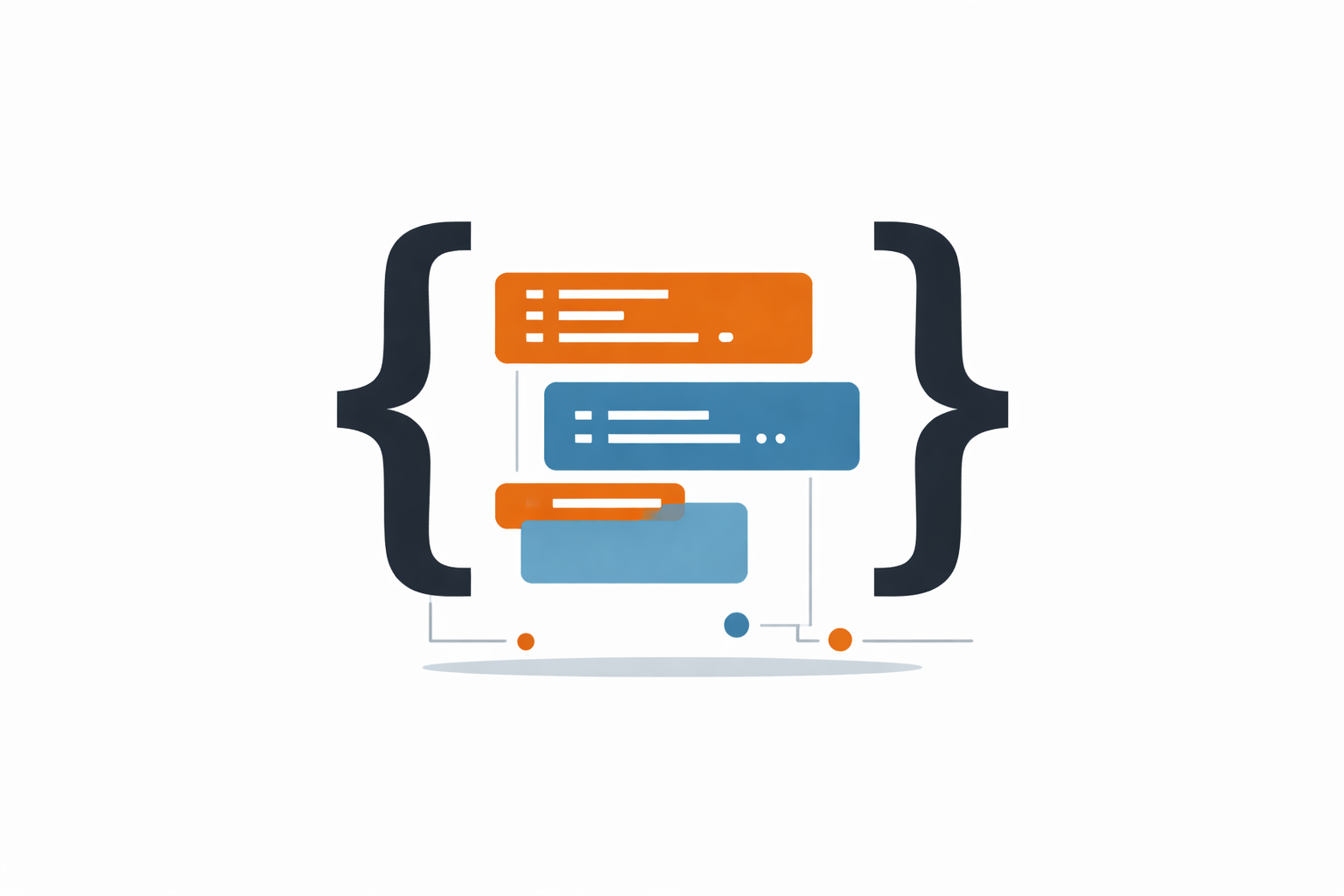
If you have ever written code in languages like C++, Java, or JavaScript, you have definitely seen curly braces { }.
They appear everywhere: after if statements, around functions, inside loops, and around entire classes. At first glance they may look like just another piece of syntax, but curly braces play a fundamental role in how many programming languages structure and understand code.
Defining Code Blocks
The main purpose of curly braces is to define code blocks. A code block is a group of statements that should be treated as a single unit. For example, the body of a function or the set of statements that belong to an if condition.
if (temperature < 0) {
    std::cout << "Water freezes." << std::endl;
    std::cout << "Wear warm clothes." << std::endl;
}
Here the braces indicate that both lines belong to the if statement. Without curly braces, a language would struggle to determine which statements belong together. Braces make the structure explicit and easy for both the compiler and the programmer to understand.
Historical Origins
Curly braces became popular largely due to the influence of the C programming language, created by Dennis Ritchie in the early 1970s. C introduced a simple and consistent rule:
Note
Any sequence of statements can be grouped using
{}to form a block.
Because C became extremely influential, many later languages adopted the same syntax. Languages like C++, Java, and JavaScript inherited this style directly. As a result, curly braces became one of the most recognizable patterns in programming.
Run Code from Your Browser - No Installation Required

Scoping Variables
Curly braces also define scope, which determines where variables are visible.
{
    int x = 10;
    std::cout << x << std::endl;
}

// x no longer exists here
In this example, the variable x only exists inside the braces. Once execution leaves the block, the variable is destroyed. This mechanism helps prevent conflicts between variables and keeps programs organized.
Readability and Structure
Curly braces make code structure visually clear. When properly formatted, they help programmers quickly see how different parts of the program relate to each other.
for (int i = 0; i < 3; i++) {
    if (i % 2 == 0) {
        std::cout << "Even number" << std::endl;
    } else {
        std::cout << "Odd number" << std::endl;
    }
}
Even without reading the code in detail, the braces reveal the nesting structure. This visual organization becomes essential in large programs.
Alternative Approaches
Not all programming languages use curly braces. For example, Python uses indentation to define blocks instead of braces:
if temperature < 0:
    print("Water freezes")
    print("Wear warm clothes")
In Python, indentation is not just stylistic; it is part of the syntax. Other languages have used keywords instead. For instance, Pascal used begin and end to mark blocks.
if temperature < 0 then
begin
  writeln('Water freezes');
end;
Each approach tries to solve the same problem: clearly defining where blocks of code start and end.
Start Learning Coding today and boost your Career Potential
FAQs
Q: Why do programming languages use curly braces?
A: Curly braces { } define code blocks, grouping multiple statements together so the compiler understands they belong to the same structure, such as a function, loop, or conditional statement. This helps organize program logic and makes code structure clear.
Q: Which programming languages use curly braces?
A: Many modern languages inherited curly braces from C. Examples include C++, Java, JavaScript, and C#.
Q: Do curly braces affect variable scope?
A: Yes. In many languages, curly braces define scope, meaning variables declared inside a block are only accessible within that block. Once execution leaves the braces, those variables are no longer available.
Q: Are curly braces required in every situation?
A: In some cases, languages like C++ or Java allow a single statement after a condition or loop without braces. However, many developers still use braces for better readability and to avoid mistakes.
Q: Do all programming languages use curly braces?
A: No. Some languages use different methods to define blocks. For example, Python uses indentation, while Pascal uses keywords like begin and end to mark code blocks.
Was this article helpful?
Share:
Was this article helpful?
Share:
Related courses
See All CoursesBeginner
Java Basics
Dive into the fundamentals of Java, covering primitive data types, control flow with if-else and switch statements, loops, arrays, and String manipulation. By the end, you'll write and debug basic console Java applications, solving practical tasks like filtering data, building retry logic, and formatting text output.
Beginner
C++ Introduction
Start your path to becoming a skilled developer by mastering the foundational principles of programming through C++. Whether you're starting from scratch or already have some coding experience, this course will provide you with the solid foundation needed to become a proficient developer and open the doors to a wide range of career opportunities in software development and engineering. Let's study C++!
Beginner
C Basics
This course offers a thorough introduction to the C programming language. Participants will delve into the core concepts, syntax, and structures of C, equipping them to craft basic programs. Key areas of focus encompass variables, data types, control structures, functions, arrays, and pointers. Engaging hands-on activities and projects will provide learners with tangible experience in problem-solving using C. Upon concluding this course, participants will possess a robust understanding of C programming and be primed to explore more intricate subjects.
The 80 Top Java Interview Questions and Answers
Key Points to Consider When Preparing for an Interview

by Daniil Lypenets
Full Stack Developer
Apr, 2024・30 min read
Top 50 Python Interview Questions for Data Analyst
Common Python questions for DA interview

by Ruslan Shudra
Data Scientist
Apr, 2024・27 min read

The 50 Top SQL Interview Questions and Answers
For Junior and Middle Developers

by Oleh Lohvyn
Backend Developer
Apr, 2024・31 min read
Content of this article
