Corsi correlati
Guarda tutti i corsiPrincipiante
Creating Custom AI Agents with Anthropic Claude
Learn how to create a fully functional MCP (Model Context Protocol) server to integrate AI models like Claude with real-world tools like Excel. Everything from core concepts to setting up your development environment and building your first working server that can analyze real data through natural language prompts. No advanced programming knowledge required, just curiosity and willingness to explore AI automation.

Principiante
Agentic AI for Automating Daily Office Tasks with Anthropic Claude
Transform your daily workflow from overwhelming busywork into streamlined productivity. Discover how AI agents can automatically manage emails, schedule meetings, create documents, and handle routine tasks that consume hours of your day. Through practical setup guides and real-world examples, master the integration of intelligent automation tools with popular platforms like Gmail, Slack, Google Calendar, and Microsoft Office. Stop drowning in repetitive work and start focusing on strategic, creative tasks that truly matter. Build your AI-powered workspace today.
The Architecture Of AI Agent Swarms
Moving Beyond Hierarchical Orchestration To Decentralized Intelligence
by Arsenii Drobotenko
Data Scientist, Ml Engineer
Mar, 2026・
9 min read


The transition from single Large Language Models (LLMs) to Multi-Agent Systems was a monumental leap in software engineering. We learned to divide complex tasks among specialized agents – a "Coder," a "Reviewer," and a "Database Expert." However, as these systems scale, developers are colliding with a fundamental architectural limitation: the bottleneck of centralized orchestration.
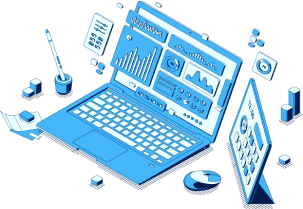
In traditional multi-agent frameworks, a central "Router" or "Supervisor" agent is responsible for analyzing the user's request, breaking it down, and delegating sub-tasks to worker agents. But what happens when the task involves thousands of moving parts? The central supervisor's context window overflows, its reasoning degrades, and if the supervisor fails, the entire system collapses.
To build truly massive, resilient, and scalable AI applications, the industry is looking toward biology for inspiration. We are entering the era of AI Agent Swarms, abandoning rigid corporate hierarchies in favor of decentralized, self-organizing intelligence.
The Bottleneck Of Hierarchical Systems
To appreciate swarm architecture, we must first diagnose the flaws of the current hierarchical models. In a typical Supervisor-Worker architecture, every piece of information must flow up to the central node and back down.
If you have a system of fifty agents attempting to refactor a massive enterprise codebase, the Supervisor must read the outputs of all fifty agents, synthesize the results, resolve merge conflicts, and issue new commands. This creates an impossible computational traffic jam. The system becomes completely synchronous and bound by the limitations of the single highest-ranking LLM. Furthermore, this architecture represents a severe Single Point of Failure (SPOF). If the Supervisor misinterprets a critical instruction early in the execution chain, every subsequent action taken by the workers will be flawed.
What Is Swarm Intelligence
Swarm Intelligence is a concept borrowed from the biological study of social insects – ants, bees, and termites. A single ant is not particularly smart, and there is no "CEO ant" directing traffic or telling others where to find food. Instead, the complex, highly efficient behavior of the colony emerges from simple, local interactions between thousands of autonomous individuals.
In the context of Software 3.0, an AI Agent Swarm is a decentralized network of LLM-powered agents that operate without a central controller. Instead of receiving explicit instructions from a supervisor, swarm agents react to their environment, communicate directly with their peers, and dynamically adjust their behavior to achieve a global objective. This paradigm shift relies on Emergence – the phenomenon where a system is computationally greater than the sum of its parts.
Run Code from Your Browser - No Installation Required
Core Architectural Components Of A Swarm
Building a swarm requires completely different engineering patterns than building a standard REST API or even a directed graph of agents. The infrastructure must support massive concurrency and distributed state management.
1. The Blackboard Pattern For Shared State
Without a supervisor to pass messages, how do agents know what to do? Swarms heavily utilize the "Blackboard" architectural pattern. Think of it as a shared, highly optimized database (often a vector store or a fast in-memory store like Redis). When a swarm agent discovers a piece of information or completes a sub-task, it "pins" the result to the Blackboard. Other agents constantly monitor the Blackboard. If Agent B sees that Agent A has pinned a raw dataset, Agent B autonomously decides to pick it up, clean it, and pin the cleaned version back to the board.
2. Gossip Protocols And Stigmergy
For direct agent-to-agent communication, swarms often use Gossip Protocols – lightweight, peer-to-peer message passing where agents share state updates with their immediate neighbors, which then cascades through the network. Alternatively, they use Stigmergy, a biological concept where agents communicate by modifying their shared environment. An agent leaving a digital "pheromone trail" (metadata indicating a high-priority bug in a file) will attract other debugging agents to that specific area of the codebase without any direct message ever being sent.
3. Dynamic Role Allocation
In a hierarchy, an agent is hardcoded as the "Testing Agent." In a swarm, roles are fluid. An agent might start by writing code, but if it notices the Blackboard is overflowing with un-tested pull requests, it will dynamically switch its system prompt to become a "Testing Agent" to clear the backlog. This creates a self-healing, auto-scaling computational network.
| Feature | Hierarchical Orchestration | Agent Swarm Architecture |
|---|---|---|
| Control Structure | Centralized (Supervisor/Router based) | Decentralized (Peer-to-peer, local rules) |
| Scalability | Limited by the Supervisor's context window | Virtually infinite (Agents operate in parallel) |
| Fault Tolerance | Low (Single Point of Failure at the top) | High (If one agent dies, others take its place) |
| Communication | Vertical (Up and down the chain of command) | Horizontal (Gossip protocols, Blackboard pattern) |
| Best Use Case | Linear, highly predictable workflows | Chaotic, massively parallel, exploratory tasks |
The Future Of Autonomous Computation
The implications of swarm architectures are staggering. In cybersecurity, instead of a single massive AI analyzing logs, a swarm of thousands of micro-agents could be deployed across network nodes, autonomously detecting anomalies, sharing threat intelligence locally, and neutralizing intrusions in milliseconds. In scientific research, swarms could be deployed to run millions of parallel simulations, dynamically shifting computational resources to the most promising molecular structures.
Conclusion
We are witnessing the end of rigid, top-down software design. While hierarchical multi-agent systems were a necessary stepping stone, the future belongs to decentralized, self-organizing networks. By embracing the principles of Swarm Intelligence – shared environments, local communication, and dynamic role allocation – engineers can build AI systems that are infinitely scalable, highly resilient, and capable of solving problems far too complex for any single central controller to comprehend. Software 3.0 is not just about making machines smart; it is about making them organic.
Start Learning Coding today and boost your Career Potential
FAQs
Q: How do you prevent an AI Swarm from going out of control or consuming infinite resources?
A: Controlling a swarm requires strict environmental boundaries rather than direct micro-management. Engineers implement global "kill switches," hard token expenditure limits, and highly specific objective functions. Because the agents operate on a shared Blackboard, you can enforce strict schemas on what data can be written or read, ensuring the swarm stays focused on the intended goal.
Q: Is an AI Swarm just another name for a massive Neural Network?
A: No. A Neural Network is a single mathematical model consisting of weights and biases processing data sequentially through layers. An AI Swarm is a collection of multiple, distinct, autonomous software programs (agents), each powered by its own LLM, that communicate with each other over a network. They are independent entities working collaboratively.
Q: Are there production ready frameworks for building AI Swarms today?
A: The field is highly experimental, but frameworks are rapidly adapting. OpenAI has released an experimental, lightweight framework explicitly called "Swarm" to explore decentralized patterns. Additionally, developers are modifying state-machine frameworks like LangGraph to support concurrent, multi-node peer-to-peer interactions instead of standard cyclic graphs, bringing swarm concepts into production environments.
È utile questo articolo?
Condividi:
È utile questo articolo?
Condividi:
Corsi correlati
Guarda tutti i corsiPrincipiante
Creating Custom AI Agents with Anthropic Claude
Learn how to create a fully functional MCP (Model Context Protocol) server to integrate AI models like Claude with real-world tools like Excel. Everything from core concepts to setting up your development environment and building your first working server that can analyze real data through natural language prompts. No advanced programming knowledge required, just curiosity and willingness to explore AI automation.
Principiante
Agentic AI for Automating Daily Office Tasks with Anthropic Claude
Transform your daily workflow from overwhelming busywork into streamlined productivity. Discover how AI agents can automatically manage emails, schedule meetings, create documents, and handle routine tasks that consume hours of your day. Through practical setup guides and real-world examples, master the integration of intelligent automation tools with popular platforms like Gmail, Slack, Google Calendar, and Microsoft Office. Stop drowning in repetitive work and start focusing on strategic, creative tasks that truly matter. Build your AI-powered workspace today.
Automating AI Evaluation with LLM-as-a-Judge
Replacing Manual Review with Scalable AI Grading
by Arsenii Drobotenko
Data Scientist, Ml Engineer
Feb, 2026・5 min read
Proving Bigger Isn't Always Better Using Small Language Models
How Compact Models Are Revolutionizing Privacy, Cost, and Edge Computing
by Arsenii Drobotenko
Data Scientist, Ml Engineer
Feb, 2026・7 min read
GraphRAG for Connecting the Dots Beyond Vector Search
Unlocking Complex Reasoning in AI with Knowledge Graphs
by Arsenii Drobotenko
Data Scientist, Ml Engineer
Feb, 2026・7 min read
Contenuto di questo articolo
