Gerelateerde cursussen
Bekijk Alle CursussenBeginner
Introduction to JavaScript
Dive into the world of the most popular language for front-end development – JavaScript. JavaScript is a language built into almost every browser and can be used for a wide variety of tasks. Learn the basic functionality and prepare yourself for the challenges and more advanced programming techniques.

Beginner
CSS Fundamentals
Master the essentials of CSS, the styling language that transforms the look and feel of web pages. Explore core concepts such as text styles, colors, spacing, the box model, Flexbox, and decorative effects. Build the skills to create visually engaging and well-structured web pages.

Beginner
HTML Essentials
Master the skills needed to build well-structured and accessible HTML web content. Structure documents with tags, elements, and attributes, format text and lists, and embed images, audio, and video. Create tables for organized data and forms for user input, then apply semantic HTML to build a complete, accessible website from the ground up.
Frontend Architecture Matters More Than Framework Choice
Why Structural Decisions Outlive Technology Stacks

by Oleh Subotin
Full Stack Developer
Feb, 2026・
4 min read


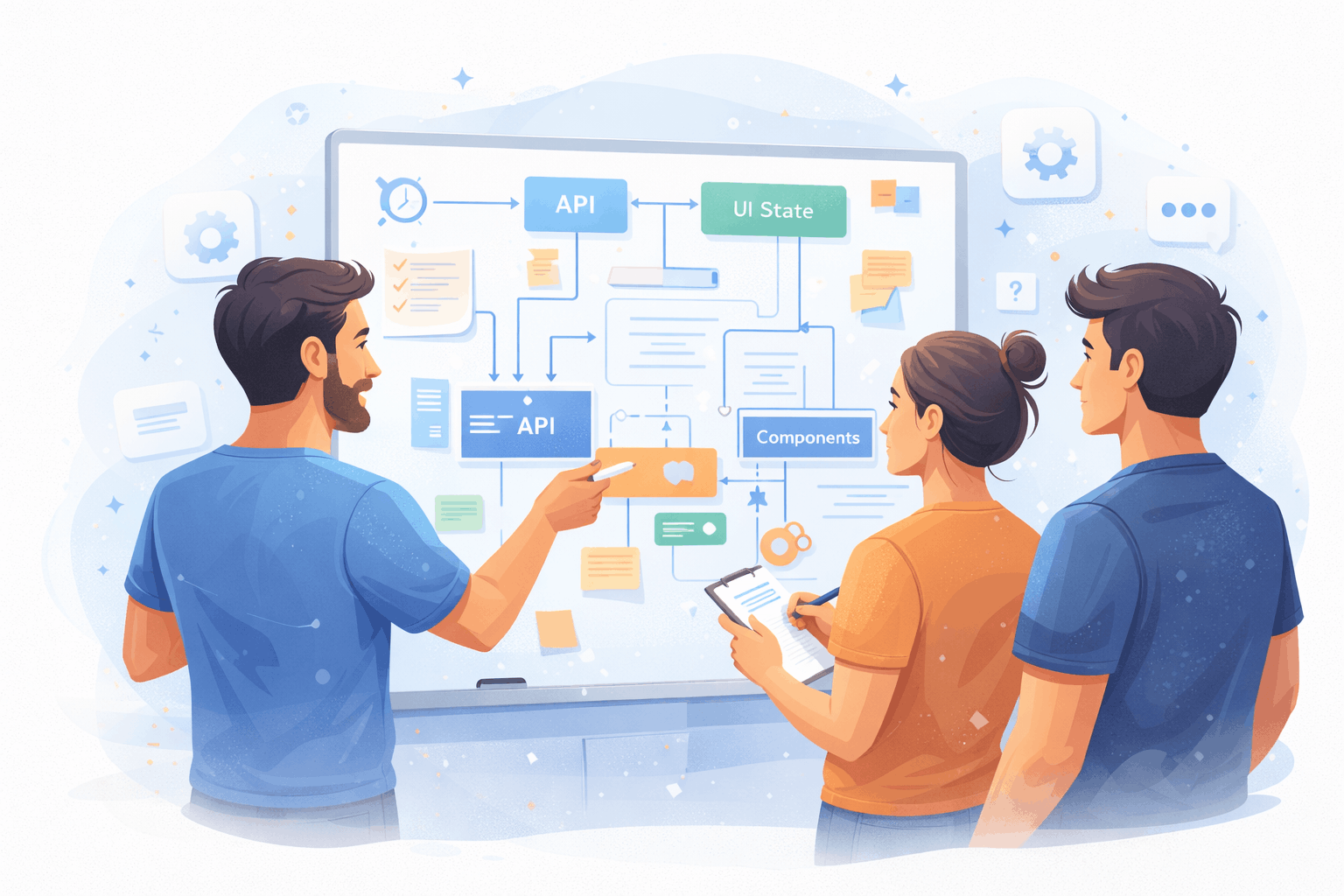
React vs Vue. Next.js vs Remix. Server Components vs client rendering. These debates dominate conferences, social media, and hiring conversations. They create the impression that framework choice defines long-term success.
In practice, frameworks change faster than products do. Applications outlive tooling cycles. Teams migrate stacks. Rendering strategies evolve. What remains constant is the structure underneath, how data flows, how responsibilities are separated, and how systems scale.

Architecture influences longevity.
Structure Shapes Development Velocity
Two teams can use the same framework and experience completely different delivery speeds.
The difference rarely comes from syntax familiarity. It comes from structural clarity. When state boundaries are well-defined, data flows predictably, and responsibilities are separated cleanly, developers move faster because decisions feel obvious.
When structure is unclear, every feature becomes investigative work. Architecture affects velocity through:
- Predictable data flow;
- Clear state ownership;
- Consistent UI patterns;
- Stable loading strategies.
Speed emerges not from tooling, but from how coherently the system is organized.
Run Code from Your Browser - No Installation Required

State Strategy Defines System Complexity
One of the most consequential architectural decisions in frontend is how state is managed.
Poor state boundaries create cascading re-renders, synchronization bugs, and debugging opacity. Overly globalized state makes small changes risky. Hyper-local state fragments logic across the interface. Healthy systems define:
- What belongs in server state;
- What belongs in client state;
- What should never persist;
- What drives rendering vs interaction.
Frameworks provide tools. Architecture defines how those tools are used.
Rendering Decisions Affect User Experience
Architecture extends beyond code organization into rendering strategy. Server-side rendering, static generation, streaming, and client hydration all shape performance perception, SEO visibility, and interaction readiness.
Poorly chosen strategies introduce: delayed interactivity, layout instability, SEO blind spots, unnecessary client load.
Rendering isn't just a framework feature. It's an architectural commitment that affects both users and infrastructure.
Tooling Cannot Compensate for Structural Weakness
Modern frontend tooling is powerful, but it cannot repair poor architecture.
State libraries cannot fix unclear ownership. Build optimizations cannot fix unpredictable rendering. Component libraries cannot fix responsibility sprawl.
When structural foundations are weak, tooling layers often amplify complexity instead of resolving it.
Start Learning Coding today and boost your Career Potential
The Decisions That Actually Matter
Framework selection still matters, but its impact is bounded. More consequential decisions include:
- How data enters the system;
- Where business logic lives;
- How UI composition scales;
- How asynchronous states are handled;
- How boundaries evolve over time.
These choices shape maintainability, performance, and delivery confidence long after frameworks change.
Conclusion
Products rarely succeed or fail because of framework choice alone.
They succeed because systems remain adaptable, understandable, and evolvable as requirements grow.
Frontend maturity isn't defined by what framework teams use. It's defined by whether their architecture enables change without resistance.
Frameworks determine how you build today. Architecture determines how long you can keep building tomorrow.
FAQs
Q: Does framework choice matter at all?
A: Yes, but its impact is limited. Frameworks shape developer experience and tooling, while architecture determines scalability, maintainability, and long-term adaptability.
Q: What is frontend architecture in practical terms?
A: It refers to how systems are structured, including data flow, state management, rendering strategy, component boundaries, and integration patterns.
Q: Why does architecture outlive frameworks?
A: Frameworks evolve and get replaced, but structural decisions, how data moves, and how responsibilities are separated persist across migrations.
Q: How does poor architecture affect development speed?
A: It creates ambiguity. Developers spend more time tracing logic, debugging state issues, and coordinating changes than delivering features.
Q: Is state management the most critical architectural decision?
A: It's one of the most impactful. Poor state boundaries can introduce performance issues, synchronization bugs, and long-term complexity.
Q: Can good tooling compensate for weak architecture?
A: No. Tooling can enhance strong systems, but it cannot fix unclear data flow, responsibility sprawl, or poorly defined rendering strategies.
Was dit artikel nuttig?
Delen:
Was dit artikel nuttig?
Delen:
Gerelateerde cursussen
Bekijk Alle CursussenBeginner
Introduction to JavaScript
Dive into the world of the most popular language for front-end development – JavaScript. JavaScript is a language built into almost every browser and can be used for a wide variety of tasks. Learn the basic functionality and prepare yourself for the challenges and more advanced programming techniques.
Beginner
CSS Fundamentals
Master the essentials of CSS, the styling language that transforms the look and feel of web pages. Explore core concepts such as text styles, colors, spacing, the box model, Flexbox, and decorative effects. Build the skills to create visually engaging and well-structured web pages.
Beginner
HTML Essentials
Master the skills needed to build well-structured and accessible HTML web content. Structure documents with tags, elements, and attributes, format text and lists, and embed images, audio, and video. Create tables for organized data and forms for user input, then apply semantic HTML to build a complete, accessible website from the ground up.
Users Don't See Features — They See Friction
Why Product Quality Starts before Features Load
by Oleh Subotin
Full Stack Developer
Feb, 2026・5 min read

The Hidden Cost of Overengineering in Frontend
Why complexity is easier to add than to remove
by Oleh Subotin
Full Stack Developer
Feb, 2026・4 min read

useState Hook in React with TypeScript
Guide to Using useState in React with TypeScript
by Oleh Subotin
Full Stack Developer
May, 2024・9 min read

Inhoud van dit artikel
