Relaterede kurser
Se alle kurserAvanceret
Backend Development with Node.js and Express.js
Learn to build backend applications with Node.js and Express.js. Set up your environment and create your first Node.js apps. Work with the file system and build simple console tools. Use Express.js to build web apps, handle routes, and manage requests.

Begynder
Backend Development with Spring Boot
This course covers key aspects of backend development on Spring Boot, including the basics of HTTP and Spring, designing and implementing RESTful APIs, working with relational databases, and testing applications. By the end of this course, users will have a solid understanding of backend development using Spring Boot, enabling them to design and implement robust RESTful APIs and manage data effectively with relational databases. They will also gain practical experience in testing applications, ensuring high-quality code and functionality.

Begynder
Node.js Foundations
Understand how Node.js brings JavaScript to the server side and powers modern web development. Explore its architecture, event loop, and asynchronous behavior, then run real programs and manage modules with CommonJS and ES imports. Gain a solid foundation for building scalable, high-performance applications with Node.js.
APIs Are Products Even When No One Treats Them Like One
The Hidden Impact of API Design on Engineering Productivity

by Oleh Subotin
Full Stack Developer
Feb, 2026・
3 min read


API Design Directly Impacts Delivery Speed
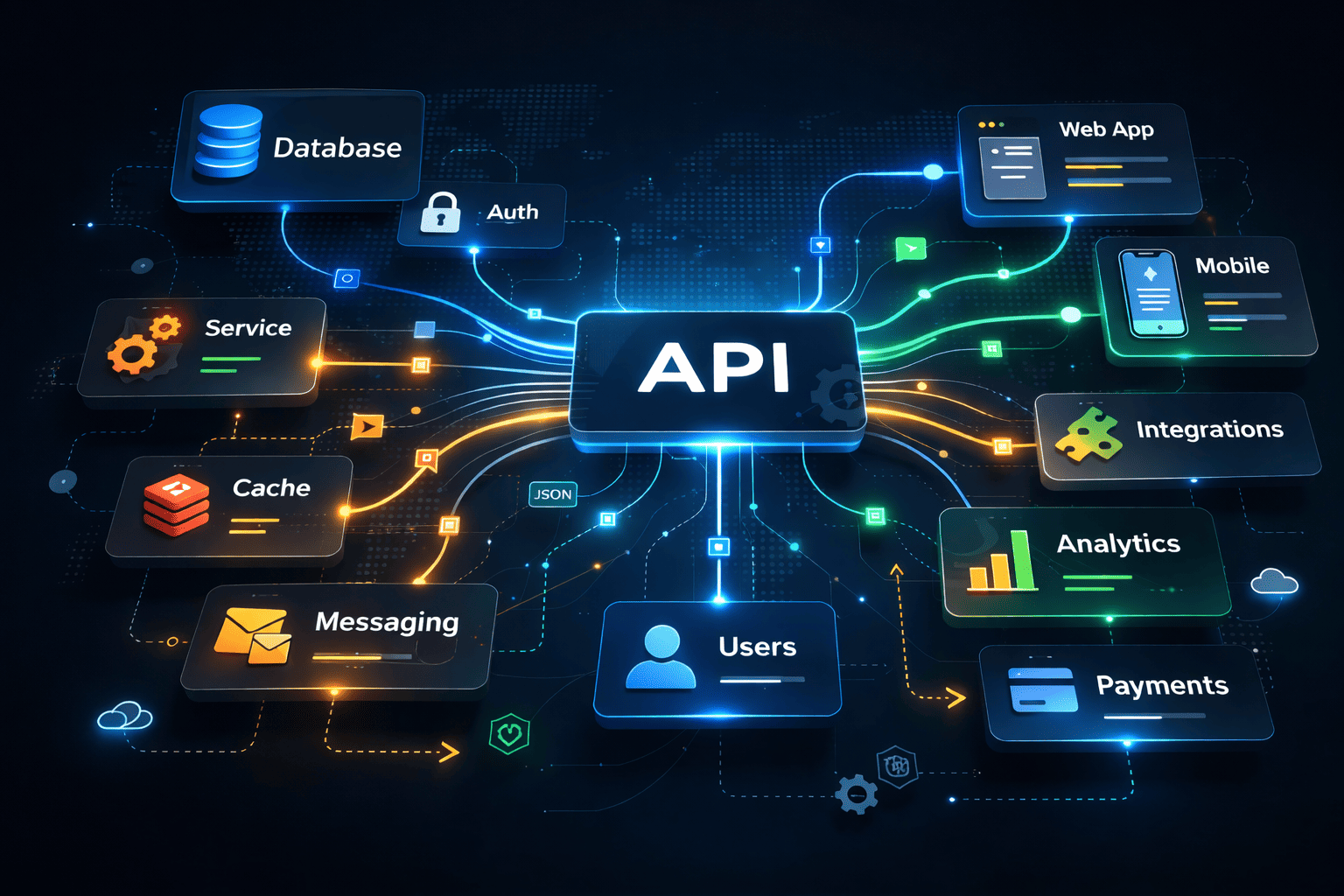
Most teams treat APIs as infrastructure. As long as requests return responses, the job feels complete. But API design directly influences how quickly other teams can ship. When response structures are inconsistent, frontend engineers build transformation layers. When fields are missing or unstable, defensive logic spreads across the UI. When pagination or filtering behaves unpredictably, simple features require extra handling.
None of these issues blocks delivery outright. They slow it down repeatedly.
Over time, velocity degrades not because the product is complex, but because integration is inefficient. Engineers spend more time interpreting data than building experiences. Well-designed APIs remove that friction. Poorly designed ones distribute it across every consuming team.
Contracts Define Debugging Clarity
APIs are system contracts. Their clarity determines how easily failures can be understood.
When schemas are stable, error handling is consistent, and responses are predictable, debugging remains localized. Engineers can quickly isolate whether an issue originates in the client, API layer, or downstream systems.
When contracts are ambiguous, debugging becomes investigative work. Unexpected nulls, undocumented fields, silent response changes, or inconsistent status handling turn simple bugs into cross-team coordination problems.
The time required to resolve production issues often depends less on the defect itself and more on the clarity of the API boundary surrounding it.
Run Code from Your Browser - No Installation Required

Internal APIs Shape Organizational Behavior
Internal APIs rarely receive the same design rigor as public ones. Documentation is lighter. Versioning is informal. Breaking changes happen without structured deprecation paths.
But internal consumers are still consumers. When contracts shift unpredictably, teams hesitate to depend on them. Workarounds emerge duplicated data storage, defensive caching, reduced integration depth.
Over time, this erodes system cohesion. Stable APIs encourage integration and speed. Unstable APIs create hesitation and defensive architecture. API design doesn't just move data. It builds or erodes organizational trust.
Conclusion
Bad UI creates visible user friction. Bad APIs create invisible engineering friction. The difference is visibility, not impact.
And in modern systems, delivery speed depends as much on the quality of internal interfaces as it does on the quality of customer-facing ones.
Treating APIs like products isn't about polish. It's about recognizing that how systems communicate internally shapes how quickly products evolve externally.
Start Learning Coding today and boost your Career Potential
FAQs
Q: Why should internal APIs be treated like products?
A: Because they have users. API design directly affects how quickly developers can build, integrate, and ship features.
Q: How do poorly designed APIs slow delivery?
A: They force consuming teams to write transformation layers, handle inconsistencies, and compensate for unstable contracts adding friction to every feature.
Q: What makes an API contract clear and reliable?
A: Stable schemas, predictable response formats, consistent error handling, and structured versioning practices.
Q: Why does API design affect debugging?
A: Clear contracts localize failures. Ambiguous or shifting responses turn debugging into cross-service investigation.
Q: Do internal APIs really need versioning and deprecation policies?
A: Yes. Internal consumers depend on contract stability just as much as external partners do.
Q: What is the long-term risk of weak API ecosystems?
A: Slower delivery, duplicated logic, fragile integrations, and reduced confidence in system evolution.
Var denne artikel nyttig?
Del:
Var denne artikel nyttig?
Del:
Relaterede kurser
Se alle kurserAvanceret
Backend Development with Node.js and Express.js
Learn to build backend applications with Node.js and Express.js. Set up your environment and create your first Node.js apps. Work with the file system and build simple console tools. Use Express.js to build web apps, handle routes, and manage requests.
Begynder
Backend Development with Spring Boot
This course covers key aspects of backend development on Spring Boot, including the basics of HTTP and Spring, designing and implementing RESTful APIs, working with relational databases, and testing applications. By the end of this course, users will have a solid understanding of backend development using Spring Boot, enabling them to design and implement robust RESTful APIs and manage data effectively with relational databases. They will also gain practical experience in testing applications, ensuring high-quality code and functionality.
Begynder
Node.js Foundations
Understand how Node.js brings JavaScript to the server side and powers modern web development. Explore its architecture, event loop, and asynchronous behavior, then run real programs and manage modules with CommonJS and ES imports. Gain a solid foundation for building scalable, high-performance applications with Node.js.
The 80 Top Java Interview Questions and Answers
Key Points to Consider When Preparing for an Interview

by Daniil Lypenets
Full Stack Developer
Apr, 2024・30 min read

The 50 Top SQL Interview Questions and Answers
For Junior and Middle Developers

by Oleh Lohvyn
Backend Developer
Apr, 2024・31 min read

The SOLID Principles in Software Development
The SOLID Principles Overview

by Anastasiia Tsurkan
Backend Developer
Nov, 2023・8 min read

Indhold for denne artikel
