Cours connexes
Voir tous les cours
What Zod Solves in TypeScript Applications
Why Runtime Validation Became a Missing Piece in Many TypeScript Projects

by Oleh Subotin
Full Stack Developer
Mar, 2026・
5 min read


The Gap Between Types and Real Data
TypeScript has become the default choice for many modern JavaScript projects because it helps developers catch mistakes before code runs. By describing the shape of objects, functions, and responses, TypeScript makes large codebases easier to maintain.
However, TypeScript only exists during development. Once the code is compiled and running in the browser or on a server, those type definitions disappear. The application still receives data from APIs, form inputs, environment variables, or external services, and none of that data is guaranteed to match the expected types.
This is where runtime validation becomes necessary. Applications often need a way to verify that incoming data actually matches the structures defined during development.
What Zod Actually Does
Zod is a TypeScript-first schema validation library designed to solve that problem. It allows developers to define a schema that describes the expected shape of data and then validate real values against it at runtime.
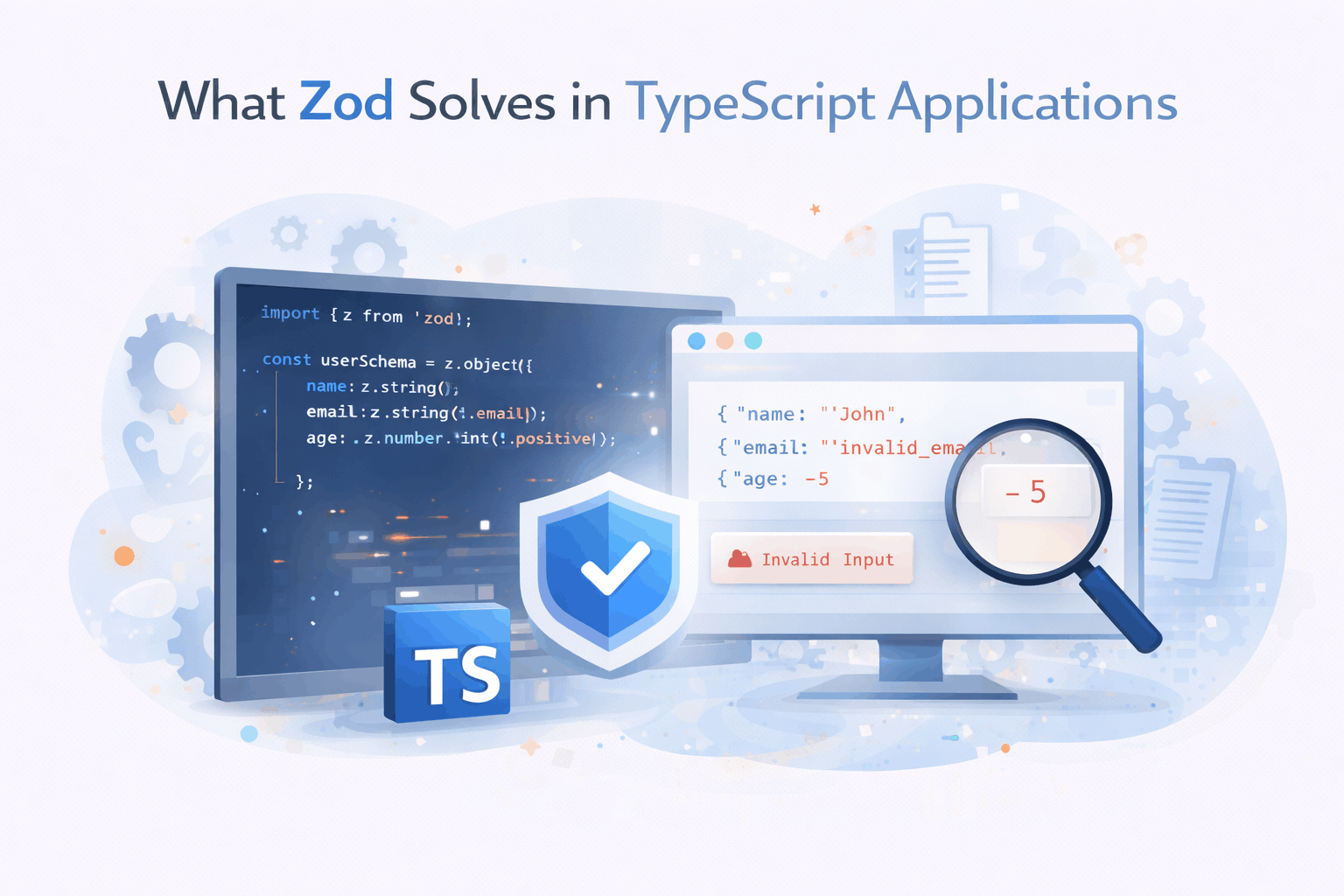
A schema in Zod acts as both a validator and a source of type information. When a schema is defined, Zod can infer the corresponding TypeScript type automatically. This keeps runtime validation and static typing aligned without requiring duplicate definitions.
For example, a schema describing a user object can validate incoming data and simultaneously generate the TypeScript type used throughout the application.
This approach reduces the risk of mismatches between runtime behavior and compile-time expectations.
Why Developers Use Zod
One reason Zod has gained popularity is its developer experience. The library was designed specifically for TypeScript workflows, so schemas integrate naturally with existing types.
Instead of writing separate validation logic and type definitions, developers define a single schema that performs both roles. This becomes particularly useful in situations such as:
- Validating API request bodies;
- Verifying responses from external services;
- Validating form inputs before submission;
- Checking environment configuration values.
By centralizing these checks, applications become more predictable and easier to debug when unexpected data appears.
Run Code from Your Browser - No Installation Required

Where Zod Fits in Modern Applications
Zod often appears in full stack TypeScript projects where the same types need to be shared between different parts of the system.
In frontend applications it is commonly used with form libraries such as React Hook Form, where schemas define the expected structure of user input.
On the backend, Zod can validate incoming requests before business logic runs. This ensures that handlers receive correctly shaped data and reduces the need for defensive checks throughout the codebase.
Because schemas also produce TypeScript types, the same definitions can be reused across client and server code.
When Zod Makes the Most Sense
Zod becomes especially valuable in projects where data crosses boundaries frequently.
Whenever an application receives data from sources outside its control, user input, external APIs, databases, or configuration files, there is always the possibility of invalid structures appearing.
Using a schema validator at those boundaries helps prevent subtle bugs caused by unexpected values. For small scripts or simple applications this may not always be necessary. But as systems grow and interact with more services, runtime validation becomes increasingly useful.
A Small Library With a Focused Role
Zod does not attempt to replace full application frameworks or large validation ecosystems. Its goal is much simpler: provide a clear and reliable way to define data structures that exist both at runtime and in TypeScript's type system.
By closing the gap between types and real data, Zod helps ensure that the structures developers describe during development are the same ones the application actually receives in production.
Start Learning Coding today and boost your Career Potential
FAQs
Q: What is Zod used for?
A: Zod is used to validate data at runtime while also generating TypeScript types from the same schema definition.
Q: Why do TypeScript projects still need validation libraries like Zod?
A: TypeScript checks types during development, but those checks disappear at runtime. Zod verifies that real data matches the expected structure.
Q: Is Zod only useful for backend development?
A: No. Zod is commonly used in both frontend and backend applications, especially for validating form data and API requests.
Q: How is Zod different from libraries like Yup or Joi?
A: Zod was designed specifically for TypeScript and automatically infers types from schemas, which reduces duplication between validation logic and type definitions.
Q: Can Zod types be reused across frontend and backend code?
A: Yes. Zod schemas can generate TypeScript types that are shared across different parts of an application.
Q: When should developers consider using Zod?
A: Zod is useful whenever applications receive data from external sources such as APIs, user input, or configuration files and need to verify its structure.
Cet article a-t-il été utile ?
Partager:
Cet article a-t-il été utile ?
Partager:
Cours connexes
Voir tous les coursWhy Good Developers Spend More Time Reading Code Than Writing It
Understanding Why Code Comprehension Becomes the Most Valuable Engineering Skill
by Oleh Subotin
Full Stack Developer
Mar, 2026・5 min read

What OpenClaw Is and Why Developers Are Paying Attention
How OpenClaw Connects Language Models with Real Tools and Automation Tasks
by Oleh Subotin
Full Stack Developer
Mar, 2026・6 min read

Navigating the YouTube Influencer Maze in Your Tech Career
Staying Focused and Disciplined Amidst Overwhelming Advice
by Oleh Subotin
Full Stack Developer
Jul, 2024・5 min read

Contenu de cet article
