Relaterte kurs
Se alle kursNybegynner
Agentic AI for Automating Daily Office Tasks with Anthropic Claude
Transform your daily workflow from overwhelming busywork into streamlined productivity. Discover how AI agents can automatically manage emails, schedule meetings, create documents, and handle routine tasks that consume hours of your day. Through practical setup guides and real-world examples, master the integration of intelligent automation tools with popular platforms like Gmail, Slack, Google Calendar, and Microsoft Office. Stop drowning in repetitive work and start focusing on strategic, creative tasks that truly matter. Build your AI-powered workspace today.

Nybegynner
AI Automation Workflows with n8n
n8n is a flexible automation platform for connecting apps, transforming data, and building AI-powered workflows. You'll develop strong fundamentals through real, practical examples, covering triggers, JSON handling, data-flow theory, AI integration, webhooks, and complete automation builds. The focus is on understanding how information moves through a workflow and how to structure that information so nodes and APIs behave predictably. The result is the ability to design, debug, and ship reliable automations that work end to end.

Nybegynner
AI Tools for Task Automation
Explore how modern AI tools can transform the way you work and create. Learn to streamline daily tasks, generate high quality content, and speed up production using intuitive platforms built for productivity, design, audio, and video. Write faster, automate repetitive work, design stunning visuals, clean up recordings, and turn ideas into engaging videos with the help of AI. No technical background is required. Perfect for creators, marketers, educators, freelancers, and busy professionals who want to work smarter and get more done with less effort. Gain practical experience with tools that simplify complex tasks and unlock new creative potential.

Does Vibe Coding Really Work
How to use AI for Coding like a pro

by Daniil Lypenets
Full Stack Developer
Feb, 2026・
9 min read


Introduction
What People Mean by "Vibe Coding"
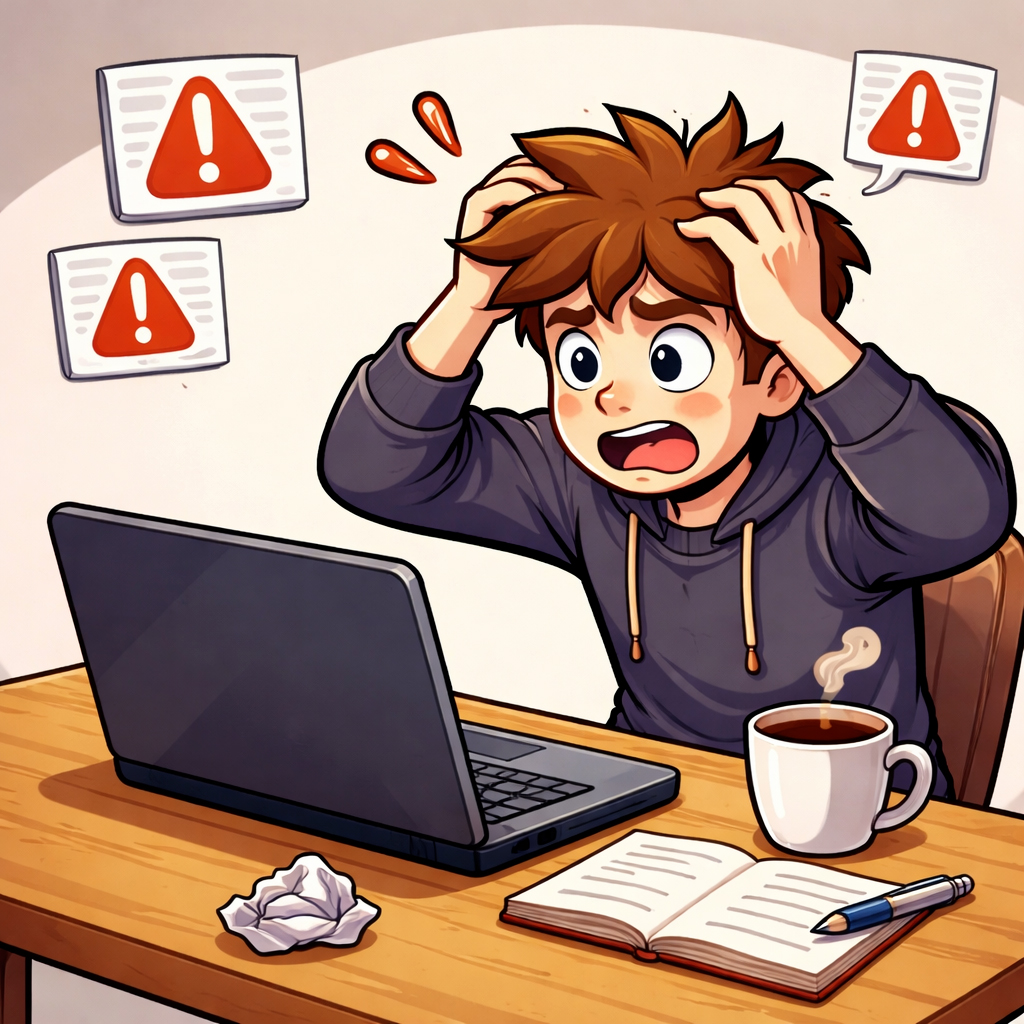
"Vibe coding" has become a popular phrase in developer communities. It usually describes a workflow where a developer relies heavily on AI tools — like large language models — to generate code with minimal manual effort. You describe what you want in natural language, the AI writes the code, and you “go with the vibe” instead of thinking deeply about architecture, syntax, or edge cases.
At first glance, this sounds like the future of programming. No boilerplate, no debugging, no deep technical knowledge — just ideas turned into working software.
But does vibe coding actually work in real projects?
The short answer is: yes, but only under strict conditions. And the most important one is this:
Vibe coding works only if you already understand the fundamentals of programming and can read, evaluate, and fix the code the AI produces.
Without that foundation, vibe coding doesn't remove complexity — it hides it, until it breaks.
Why Vibe Coding Fails Without Fundamentals
AI models do not understand your project. They predict plausible code based on patterns they have seen before. This means:
-
The code may look correct, but be logically wrong;
-
It may work for simple cases, but fail in production;
-
It may violate best practices, security rules, or performance constraints.
If you don't understand what the AI generated, you are effectively copying unknown code into your project.
This creates several problems at once.
First, you cannot debug what you don't understand. When something breaks — and it will — you won't know whether the issue is in state management, async handling, database queries, or business logic. The code becomes a black box.
Second, you cannot safely extend the code. Adding features on top of poorly understood AI-generated code usually leads to fragile systems, regressions, and duplicated logic.
Third, you cannot evaluate code quality. AI can generate code that "works" but is unmaintainable, overly complex, or fundamentally flawed in architecture.
In other words, vibe coding without knowledge doesn't make you faster — it makes technical debt accumulate instantly.
AI Is a Force Multiplier, Not a Replacement
The most productive developers using Vibe coding today share one trait: they already understand what the AI is writing.
For them, AI is not a replacement — it is a force multiplier.
They use it to:
-
Generate boilerplate faster;
-
Explore alternative implementations;
-
Refactor existing code;
-
Write tests, documentation, or edge-case handling.
But crucially, they review everything. They recognize patterns, smells, and mistakes immediately.
This is why two people using the same AI tool can get radically different results:
-
A beginner gets confusing, broken code they can't fix;
-
An experienced developer gets clean, usable output that they can adapt;
The difference is not the AI. The difference is understanding.
Run Code from Your Browser - No Installation Required

Prompting Is Not Magic
It's a Technical Skill
One of the biggest misconceptions around vibe coding is prompting.
Many people believe they can just write something like:
"Build me a clone of Amazon"
And expect a working system.
This does not work, and cannot work, for fundamental reasons.
Large software systems are composed of:
-
Architecture decisions;
-
Data models;
-
APIs and contracts;
-
Security layers;
-
Scalability constraints;
-
Frontend–backend separation;
-
Infrastructure and deployment logic.
When you write a vague prompt, the AI must guess all of these. And its guesses will almost never match real-world requirements.
Effective prompting for coding requires technical specificity.
You need to know and describe:
-
The programming language and framework;
-
The architectural style (monolith, microservices, MVC, etc.);
-
State management approach;
-
Database type and schema expectations;
-
Authentication and authorization model;
-
Performance and scalability assumptions.
Without this, the AI cannot produce meaningful code — only generic demos.
What a "Good" Coding Prompt Looks Like
A strong coding prompt is closer to a technical specification than a wish.
Instead of:
"I want an Amazon-like website"
You need something like:
"Create a basic e-commerce backend using Node.js and NestJS, with REST APIs for products, users, and orders. Use PostgreSQL, JWT-based authentication, role separation for admin and users, and follow clean architecture principles. Focus only on backend logic, no frontend."
Notice the difference:
-
Clear scope;
-
Clear technologies;
-
Clear constraints;
-
Clear expectations.
This level of detail is impossible without understanding core programming concepts and terminology.
Vibe coding does not remove the need for this knowledge — it depends on it.
The Hidden Cost of "Blind" Vibe Coding
When developers rely on AI without understanding the output, several long-term issues appear:
-
Unfixable bugs — no mental model of the system;
-
Security risks — unsafe defaults, missing validation;
-
Performance issues — inefficient queries, unnecessary computation;
-
Maintenance nightmare — no one knows how the system really works;
Eventually, teams reach a point where rewriting from scratch is cheaper than fixing the AI-generated mess.
Ironically, this often happens faster than with human-written bad code — because AI can generate large amounts of flawed code very quickly.
Start Learning Coding today and boost your Career Potential
When Vibe Coding Actually Works Well
Vibe coding does work — extremely well — in the right conditions.
It works best when:
-
You know the language and framework;
-
You understand the problem domain;
-
You can evaluate architecture choices;
-
You treat AI output as a draft, not a final answer.
In this setup, AI becomes:
-
A junior developer that never gets tired;
-
A fast documentation reader;
-
A refactoring assistant;
-
A brainstorming partner.
Not a magic button — but a powerful tool.
Conclusion
Vibe Coding Is Not a Shortcut to Skill
Vibe coding is real. AI-assisted development is here to stay.
But the idea that you can skip learning programming fundamentals is a myth.
The truth is simple:
The better you understand programming, the better vibe coding works. The less you understand programming, the more dangerous vibe coding becomes.
AI doesn't remove the need for thinking — it amplifies the results of your thinking, good or bad.
FAQ
Q: Does vibe coding actually work in real-world projects?
A: Yes, but only when the developer understands the fundamentals of programming and can evaluate the code produced by AI. Without this knowledge, vibe coding often results in fragile, low-quality code that is difficult or impossible to maintain.
Q: Can someone build production software using only AI and no programming knowledge?
A: No. AI can generate code, but it cannot take responsibility for architecture, correctness, security, or long-term maintenance. Without understanding the code, a developer cannot debug issues, make safe changes, or verify that the system behaves as intended.
Q: Why does AI-generated code often break even if it looks correct?
A: AI generates code based on learned patterns, not true understanding. The output may be syntactically valid but logically incorrect, inefficient, insecure, or incompatible with the rest of the system.
Q: Why is prompt quality so important in vibe coding?
A: Because vague prompts force the AI to guess architectural decisions, technologies, and constraints. Effective prompts require precise technical language, clear scope, and an understanding of programming concepts to produce useful and reliable code.
Q: Can I just ask the AI to “build a copy of Amazon” or another large product?
A: No. Large systems require detailed specifications, including architecture, data models, APIs, security, and scalability considerations. Without this information, the AI can only produce shallow demos, not real production systems.
Q: Is prompting for code a soft skill or a technical skill?
A: Prompting for code is a technical skill. It requires knowledge of programming languages, frameworks, system design, and industry terminology to communicate requirements accurately to the AI.
Q: What is the safest way to use vibe coding?
A: Treat AI-generated code as a draft created by a junior developer. Always read, review, test, and refactor the output, and rely on your own understanding to make final decisions.
Var denne artikkelen nyttig?
Del:
Var denne artikkelen nyttig?
Del:
Relaterte kurs
Se alle kursNybegynner
Agentic AI for Automating Daily Office Tasks with Anthropic Claude
Transform your daily workflow from overwhelming busywork into streamlined productivity. Discover how AI agents can automatically manage emails, schedule meetings, create documents, and handle routine tasks that consume hours of your day. Through practical setup guides and real-world examples, master the integration of intelligent automation tools with popular platforms like Gmail, Slack, Google Calendar, and Microsoft Office. Stop drowning in repetitive work and start focusing on strategic, creative tasks that truly matter. Build your AI-powered workspace today.
Nybegynner
AI Automation Workflows with n8n
n8n is a flexible automation platform for connecting apps, transforming data, and building AI-powered workflows. You'll develop strong fundamentals through real, practical examples, covering triggers, JSON handling, data-flow theory, AI integration, webhooks, and complete automation builds. The focus is on understanding how information moves through a workflow and how to structure that information so nodes and APIs behave predictably. The result is the ability to design, debug, and ship reliable automations that work end to end.
Nybegynner
AI Tools for Task Automation
Explore how modern AI tools can transform the way you work and create. Learn to streamline daily tasks, generate high quality content, and speed up production using intuitive platforms built for productivity, design, audio, and video. Write faster, automate repetitive work, design stunning visuals, clean up recordings, and turn ideas into engaging videos with the help of AI. No technical background is required. Perfect for creators, marketers, educators, freelancers, and busy professionals who want to work smarter and get more done with less effort. Gain practical experience with tools that simplify complex tasks and unlock new creative potential.
AI Agent Observability
Beyond Traditional APM
by Daniil Lypenets
Full Stack Developer
May, 2026・14 min read
A2A Protocol
How AI Agents Talk to Each Other
by Daniil Lypenets
Full Stack Developer
May, 2026・13 min read
How to Learn Artificial Intelligence?
A Comprehensive Guide for Beginners

by Andrii Chornyi
Data Scientist, ML Engineer
Nov, 2024・15 min read

Innholdet i denne artikkelen
